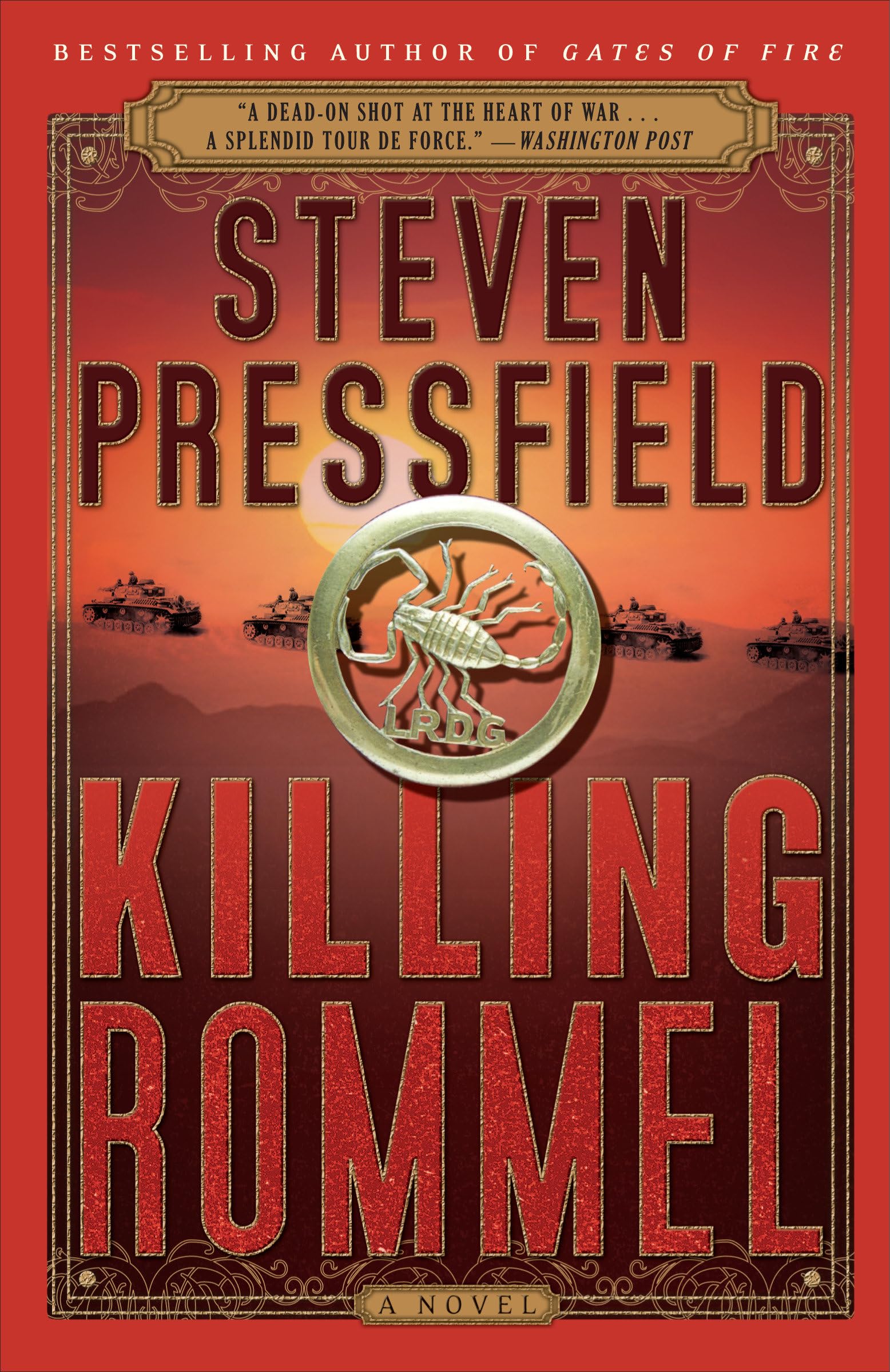



A thrilling WWII tale based on the real-life exploits of the Long Range Desert Group, an elite British special forces unit that took on the German Afrika Korps and its legendary commander, Field Marshal Erwin Rommel, "the Desert Fox." Autumn 1942. Hitler’s legions have swept across Europe; France has fallen; Churchill and the English are isolated on their island. In North Africa, Rommel and his Panzers have routed the British Eighth Army and stand poised to overrun Egypt, Suez, and the oilfields of the Middle East. With the outcome of the war hanging in the balance, the British hatch a desperate plan—send a small, highly mobile, and heavily armed force behind German lines to strike the blow that will stop the Afrika Korps in its tracks. Narrated from the point of view of a young lieutenant, Killing Rommel brings to life the flair, agility, and daring of this extraordinary secret unit, the Long Range Desert Group. Stealthy and lethal as the scorpion that serves as their insignia, they live by their motto: Non Vi Sed Arte — Not by Strength, by Guile as they gather intelligence, set up ambushes, and execute raids. Killing Rommel chronicles the tactics, weaponry, and specialized skills needed for combat, under extreme desert conditions. And it captures the camaraderie of this “band of brothers” as they perform the acts of courage and cunning crucial to the Allies’ victory in North Africa. Combining scrupulous historical detail and accuracy with remarkable narrative momentum, Pressfield powerfully renders the drama and intensity of warfare, the bonds of men in close combat, and the surprising human emotions and frailties that come into play on the battlefield to create a vivid and authoritative depiction of the desert war. "No one writes better historical fiction than Steven Pressfield." — Vince Flynn "The finest military writer alive, bar none." — Stephen Coonts Praise for Steven Pressfield: The Afghan Campaign “Pressfield has done it again. The Afghan Campaign is gripping . . . an intense, fun, and thought-provoking read.” — Marine Corps Gazette Tides of War “Pressfield’s battlefield scenes rank with the most convincing ever written—you can almost feel the slash of sword on skin and sense the shattering mix of panic, bravery, blood lust, and despair." — USA Today Gates of Fire “Vivid and exciting . . . Pressfield gives the read a perspective no ancient historian offers, a soldier’s-eye view . . . remarkable.” — New York Times Book Review STEVEN PRESSFIELD is the author of Gates of Fire , The Virtues of War , Tides of War , Last of the Amazons , and The Afghan Campaign . He lives in Los Angeles, California. 1 DURING THE FINAL months of 1942 and the early weeks of 1943, it was my extraordinary fortune to take part in an operation behind enemy lines whose aim was to locate and kill Field Marshal Erwin Rommel, commander-in-chief of German and Italian forces in North Africa. The operation—the term "raid" was never employed—was authorised by Lieutenant-General Bernard Law Montgomery, commanding Eighth Army; planned by the office of Lieutenant-Colonel John "Shan" Hackett, of G Raiding Force; and carried out by elements of Lieutenant-Colonel David Stirling's SAS, the Special Air Service, reinforced by irregular troopers of Major Vladimir Peniakoff's No. 1 Demolition Squadron, more familiarly known as Popski's Private Army, as well as officers and other ranks of the Long Range Desert Group. The operation placed its hopes of success not in firepower, since its heaviest vehicles were unarmoured one-and-a-half-ton Chevrolet trucks packing no armament bigger than .50-calibre aircraft Brownings and 20mm Breda guns, but on cunning, audacity and surprise. Attempts on Rommel's life had been made before. These, however, had struck at lightly defended rear areas, to which their target had withdrawn temporarily for rest or recuperation. The operation in which I took part aimed to strike at the heart of the German Afrika Korps in the field. If this scheme sounds driven by desperation, it was. At the moment of the operation's initial planning—summer '42—Rommel and Panzerarmee Afrika had just finished routing the British Eighth Army in a series of battles in the Western Desert. German armour had driven our tanks and men across all Libya, over the Egyptian frontier, to the very gates of Alexandria. Churchill had just sacked the army's commanders. In Cairo, the code books were being burned. Rommel stood one push from Suez and the Middle East oilfields. Russia was then reeling under attack from 166 Nazi divisions. With Arab oil, Hitler's war machine could break the Red Army's back. Nor would rescue quickly come from America. The U.S. had barely entered the war; full mobilisation lay months away. The Allies were staring global defeat in the face. Could a commando raid in North Africa make a difference? It could, the planners in Cairo believed, if it could eliminate Rommel. Rommel was the hea