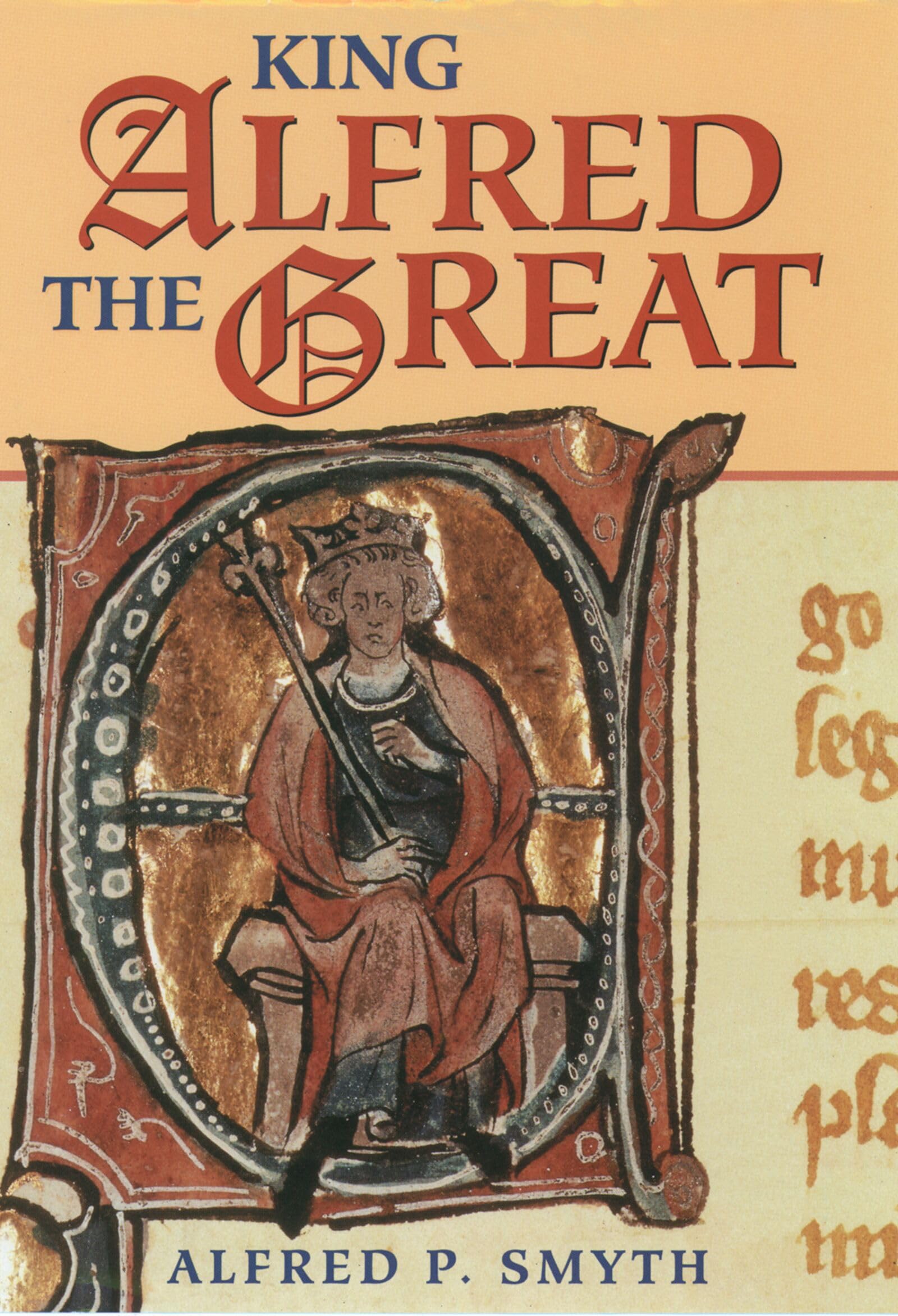



Soldier, statesman, and scholar, Alfred the Great was a fascinating and highly successful king, pushing back the Vikings to command what is now thought of as the heart of England as ruler of Wessex from 871-899. In this, the first major biography of King Alfred since 1902, his life, career and enduring legacy are given a radical new interpretation, putting into question most of our assumptions about this singular monarch. Alfred P. Smyth's portrait of King Alfred rejects the image of a neurotic and invalid king who supposedly remained a pious illiterate until he was almost 40. Instead, we are shown a man of remarkable energy and intelligence who took necessary steps to defend his people from the Norsemen. We see, too, a king who had been a scholar all his life and who used his great knowledge to bolster the powers of his own kingship. Smyth also provides a detailed examination of the much-disputed medieval biography of King Alfred, attributed to the King's tutor, Asser. Alfred Smyth argues that Asser's Life may, in fact, have been a late medieval forgery--a revelation with profound implications for our understanding of the whole of Anglo-Saxon history. Smyth's King Alfred also contains major studies on the writings of this gifted king, on the controversial charters of his reign, and on the origins of the Anglo-Saxon Chronicle. (Smyth shows this work to have been much more closely connected with the court of King Alfred than previously realized and suggests a new date for the completion of the earliest Alfredian section of the Chronicle .) A monumental and intriguing work of historical scholarship, King Alfred the Great will dramatically change the way we understand this early period of western civilization. With his military prowess, administrative skills, and promotion of learning, Alfred is perhaps the most revered of the Anglo-Saxon kings. Yet, much of our knowledge about him is based on fragmentary and unreliable chronicles from a turbulent age when fact and legend constantly mingled. Smyth, a medievalist at England's Kent University, provides a thorough, slow-moving, but often engrossing reexamination of Alfred's life and his significance in the larger context of northern Europe in the ninth century. Occasionally, the character of Alfred and the dynamism of his accomplishment are drowned out by the sheer volume of detail provided; still, Smyth generally succeeds in integrating the man with his times. General readers will probably find this work a bit overwhelming; however, medieval scholars and amateurs with a love of English history will find much here to delight them. Jay Freeman This substantial piece of scholarship challenges traditional academic wisdom surrounding the ninth century king of Wessex whose achievements changed the course of English history prior to the Norman Conquest. When Alfred came to power in the south of England at age 23, his grandfather, father, and four of his brothers had all been kings before him, and Anglo-Saxon society was facing its greatest challenge in the growing incursions of the Vikings and the seemingly invincible progress of the Great Army of Danes. Alfred not only turned the tide of war, so that his sons and grandsons could eventually unite the whole of England under one king, but he was also a scholar whose writings and translations constitute a treasury of Old English prose. Smyth (Medieval History/Univ. of Kent, England) tells how, on the basis of the anecdotal Life ascribed to the king's tutor, Asser, Alfred's reign became part of the English national myth during the Reformation under Elizabeth I and was further romanticized by the Victorians, who saw Alfred as the father of the British Empire. Smyth argues powerfully that Asser's work, which still occupies a central place in Alfredian historiography, was a medieval forgery, written in order to promote monastic reform and characterized by folk legends and literal interpretations of Alfred's rhetorical topoi. For a real picture of Alfred, urges Smyth, we need to turn to his own writings, to the charters of his reign, and to the Anglo-Saxon Chronicle. The Alfred who emerges is a man of genuine piety, extraordinary intellectual and emotional resilience, as well as great physical stamina. Throughout, Smyth remains in serene command of both his complex sources and of the English language. Very much a history for historians, Smyth's work is essential reading for students of Alfredian and early medieval England. (36 b&w illustrations) -- Copyright ©1996, Kirkus Associates, LP. All rights reserved. "Medieval scholars and amateurs with a love of English history will find much here to inspire and delight them."-- Booklist "This substantial piece of scholarship challenges traditional academic wisdom surrounding the ninth century king of Wessex whose achievements changed the course of English history prior to the Norman Conquest...The Alfred who emerges is a man of genuine piety, extraordinary intellectual an