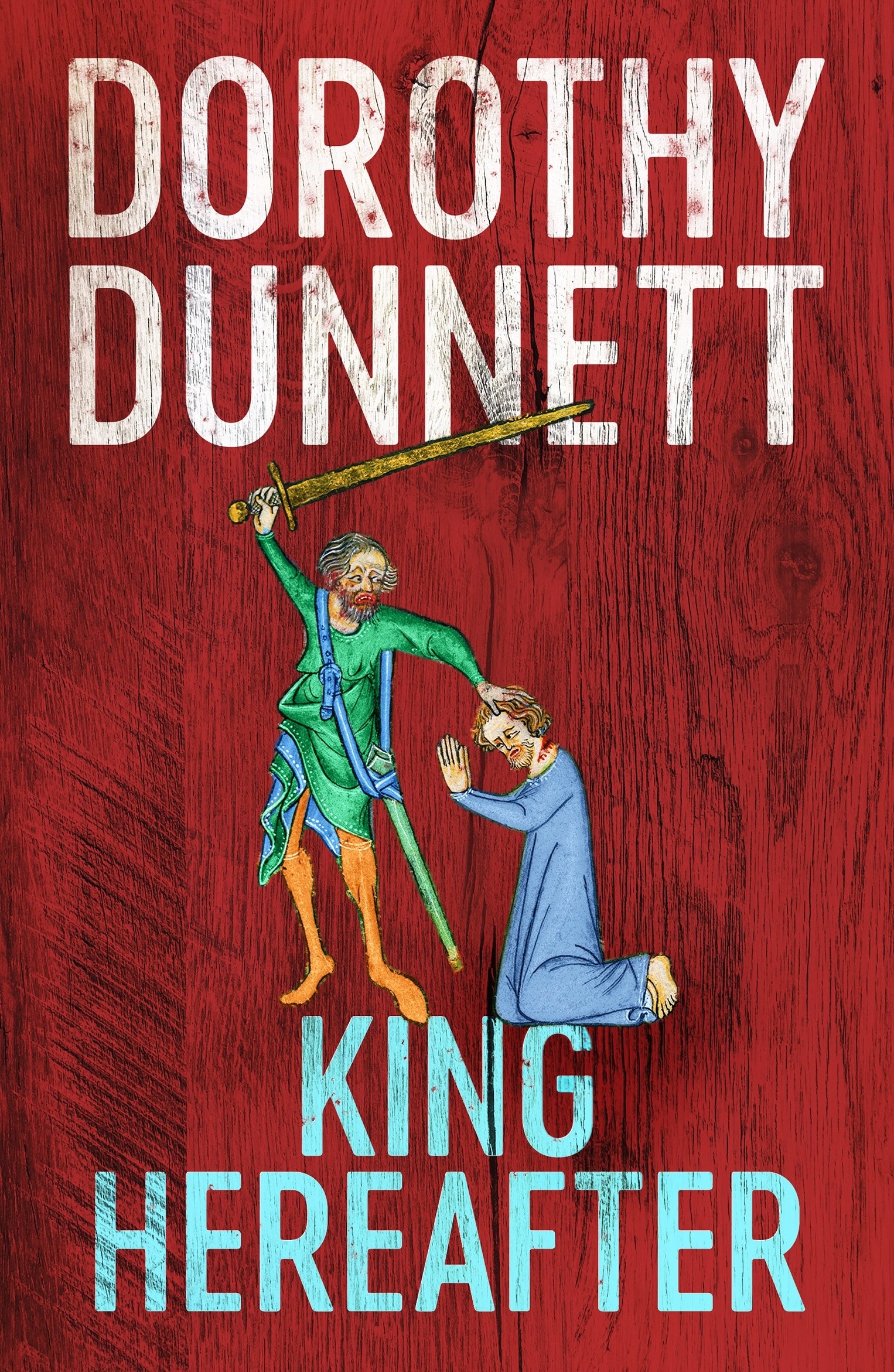



Back in print by popular demand--"A stunning revelation of the historical Macbeth, harsh and brutal and eloquent." -- Washington Post Book World. With the same meticulous scholarship and narrative legerdemain she brought to her hugely popular Lymond Chronicles, our foremost historical novelist travels further into the past. In King Hereafter , Dorothy Dunnett's stage is the wild, half-pagan country of eleventh-century Scotland. Her hero is an ungainly young earl with a lowering brow and a taste for intrigue. He calls himself Thorfinn but his Christian name is Macbeth. Dunnett depicts Macbeth's transformation from an angry boy who refuses to accept his meager share of the Orkney Islands to a suavely accomplished warrior who seizes an empire with the help of a wife as shrewd and valiant as himself. She creates characters who are at once wholly creatures of another time yet always recognizable--and she does so with such realism and immediacy that she once more elevates historical fiction into high art. "A storyteller who could teach Scheherazade a thing or two." -- The New York Times "One of the greatest tale-spinners since Dumas." -- Cleveland Plain Dealer Frequently described as the finest historical fiction writer of her time, Dorothy Dunnett earned worldwide acclaim for her blend of scholarship and imagination. She is best known for her two superb series of historical fiction - The Lymond Chronicles and The House of Niccolo - set in the fifteenth and sixteenth centuries and ranging across Europe and the Mediterranean, and for King Hereafter, the eleventh-century story of Earl Thorfinn of Orkney whom Dorothy believed was also King Macbeth. In 1992, Dorothy Dunnett was awarded the OBE for her services to literature, and in 2014 Dunnett's most enduring hero, Francis Crawford of Lymond, was voted Scotland's favourite literary character - beating the likes of Sherlock Holmes, Harry Potter and Ivanhoe. Dunnett died 9 November 2001, having sold half a million copies internationally. ONE When the year one thousand came, Thorkel Amundason was five years old, and hardly noticed how frightened everyone was. By the time Canute ruled England, Thorkel was nineteen and had heard as much about the old scare as he wanted, from the naked lips of men who might be able to read and to write, but who wouldn't know one end of a longship from the other. He understood that folk had thought the Day of Judgement was coming, because a thousand years had passed since the White Christ was born, in that age when the Romans had conquered the world. All the world, that is, except for the north. The Romans had not conquered Denmark, or Norway, or Sweden. They had not conquered Ireland, or his own Orkney islands, or Iceland to his north. They had overcome England, beginning in the toe and pushing north until they stuck on the border of Alba and built their frontier wall there, stretching from sea to sea. The barbarians who followed the Romans had learned all about the White Christ by the time that Charlemagne and the Pope had formed their big new Empire over the ocean. The Vikings who followed the barbarians liked the old gods. Thorkel himself had always been partial to Thor. The priests had been amazed, so it was said, at the numbers who became tired of Thor as the year one thousand got nearer. Orkney declared for Christ overnight, followed by Iceland and all those bits of Norway the King could easily get at. Ireland and Alba, of course, had followed the Cross all along. Alba, that men later called Scotland. As a child, Thorkel Amundason had touched Alba often enough, on his father's trading-ship going to Dublin, or as part of a young man's crew looking for booty in England. Alba he never attacked, nor did anyone else from Orkney or Norway. At the height of the Viking invasions, the King of Alba had found a way to buy peace. He had married his only daughter and heiress to the ruler of the Orkney islands, seven miles to his north, which long ago had been settled from Norway. And the baby born of that marriage he had made child-Earl of Caithness, his northernmost province, over which for uncountable years the Earls of Orkney and the Kings of Alba had squabbled. The Orkney-Alban marriage lasted only six years. And when the Earl of Orkney was killed and his widow went back to Alba and married again, it was Thorkel Amundason who was chosen to train and protect the half-Orkney child, their only offspring. Thorkel was twenty, then. Twenty, and ambitious. Twenty, and the only son of the greatest household in Orkney next to the Earls'. For a while, the sight of Thorkel Amundason rearing a foster-son was the talk of Orkney. Girls who had good cause to know Thorkel's precise views on parenthood scoffed to each other over the dye-pots. Their fathers and brothers said less. Then there came the day when one of the child's three older Earl-brothers died, and the other two suddenly noticed how openly critical Thorkel Amundason had b