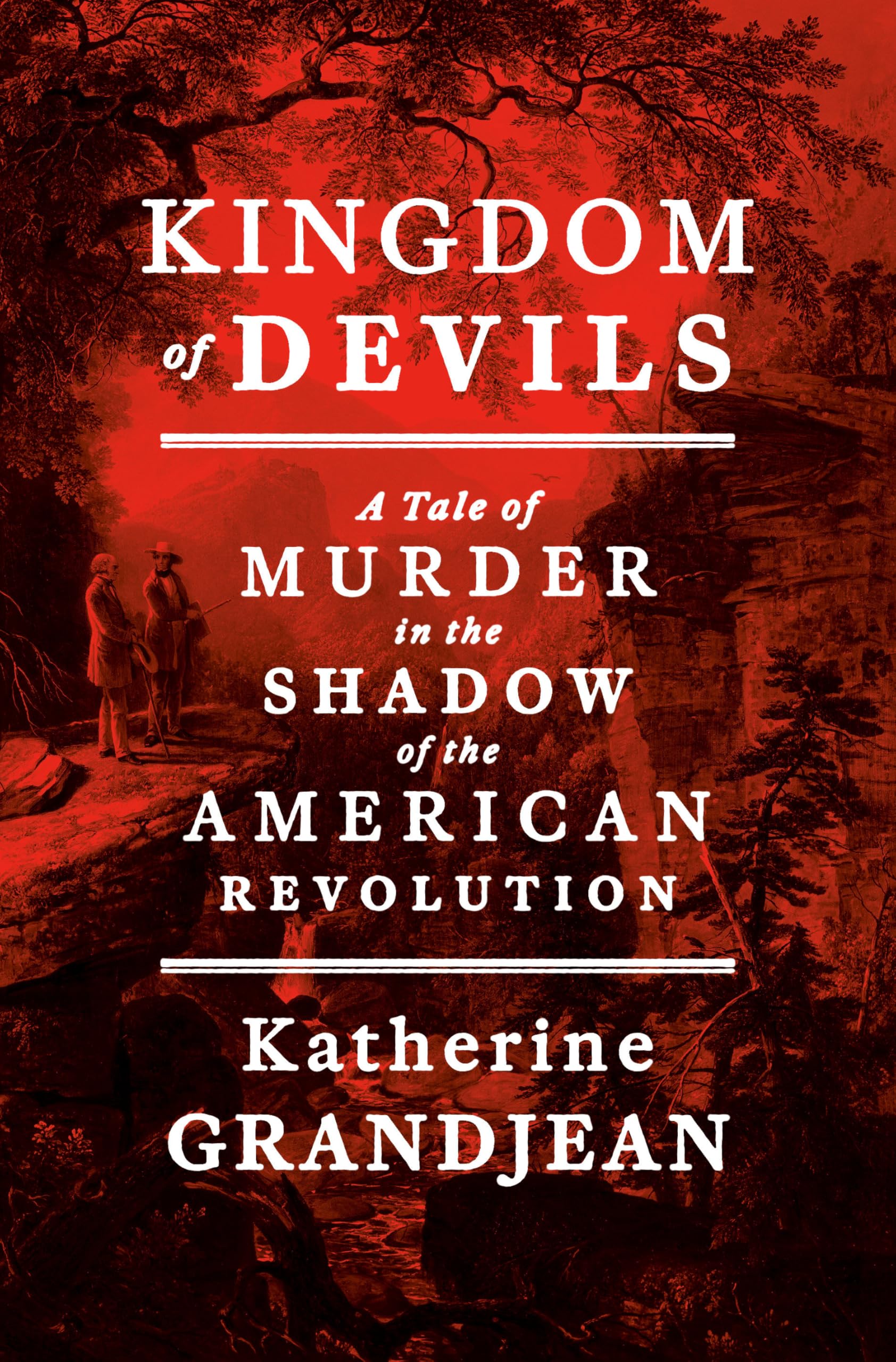
Kingdom of Devils: A Tale of Murder in the Shadow of the American Revolution
$33.00
by Katherine Grandjean



The chilling true story of a brutal string of deaths on the post-Revolutionary frontier that reveal the violence at the heart of the young United States Kentucky, 1798: A harrowing series of murders begins. The first body, discovered by cattle drovers, lies bloody at the bottom of a ridge. Then another—a dead boy staring up from a sinkhole. Bodies turn up along roadsides, stuffed into brush. They float to the surface of muddy brooks. For nine terrifying months, over hundreds of miles of Kentucky and Tennessee countryside, the terror unfolds. The killers—two men with a hazy background—are brothers, named Wiley and Micajah Harp. The Harps killed dozens, but why they did it has eluded folklorists and historians for generations. Almost every story imagines their motive was pure bloodlust: but for historian Katherine Grandjean, that’s too simple. Instead, she uses the Harp murders to reveal the dark side of the early United States’s independence. These were uncertain and dangerous years—a time when the fledgling federal government could do little to protect its citizens. And if the Revolution was liberating, it was also deeply destabilizing, politically and socially. Even as it built up some men, it stacked the deck against others, propelling them into the punishments of volatile markets and lost safety nets and shattered aspirations. Unspooling the mystery of what sent the Harps reeling exposes the hidden, violent legacies of the American Revolution. Bristling with tense, page-turning storytelling—and driven by a historian’s obsessive detective work— Kingdom of Devils recovers these long-forgotten murders as a haunting tale about the darkness at the heart of the American dream. Katherine Grandjean is an associate professor of history at Wellesley College, where her research explores early American history, environmental history, and violence in American history. Her first book is American Passage: The Communications Frontier in Early New England. She has been the recipient of several major research fellowships from the National Endowment for the Humanities, American Antiquarian Society, and the American Council of Learned Societies, among others.