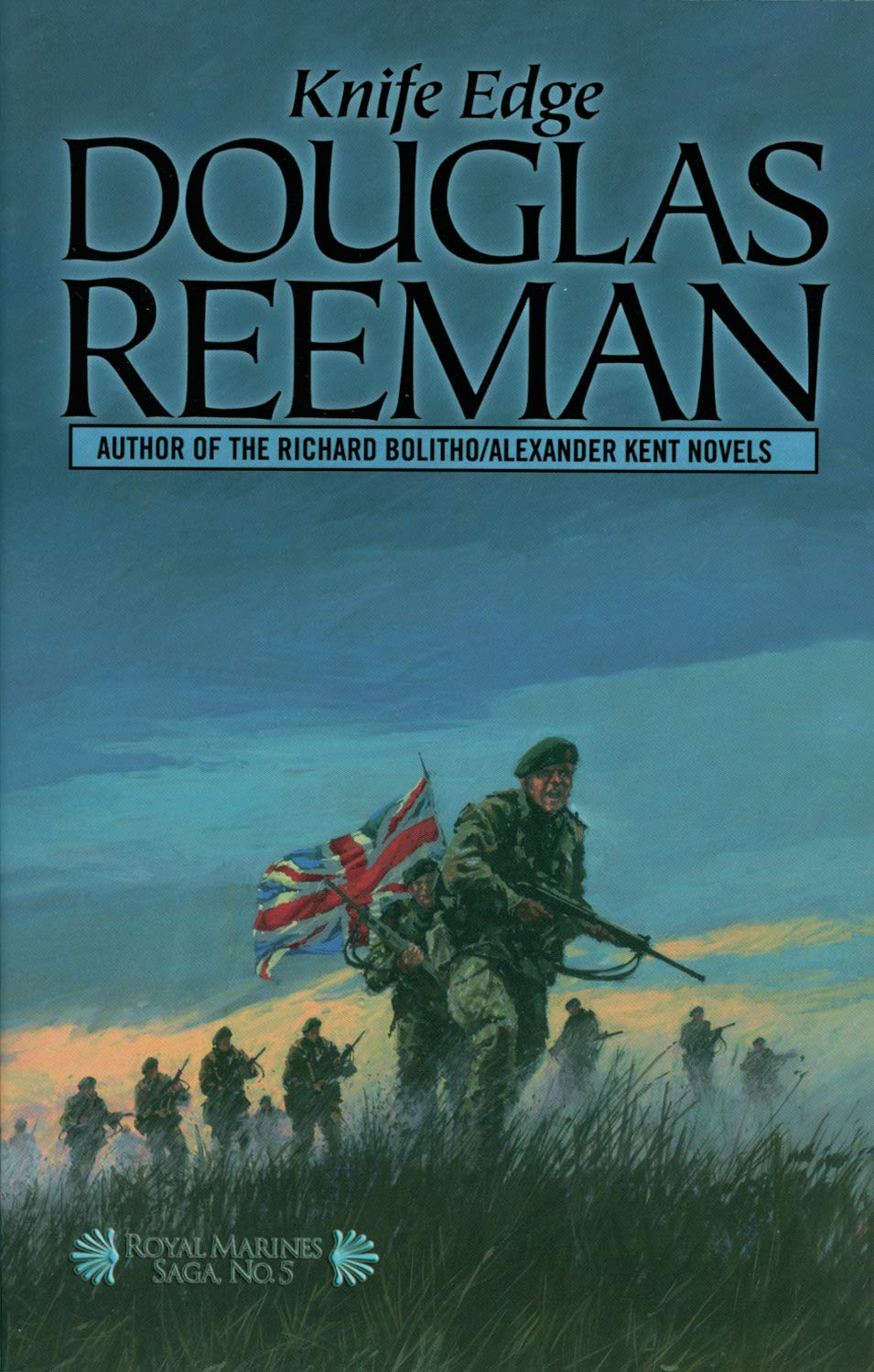



After the murder of his father, Lieutenant-Colonel Mike Blackwood, Ross Blackwood finds himself assigned to the Far East, taking on rebels and illegal-arms dealers in Hong Kong and Malaysia. Along the way he meets another Blackwood, his cousin Steve, who has made a life for himself in the Corp, as an explosives expert. The two Blackwoods uphold the honor of their family and their chosen profession while negotiating the fallout of Britain's post-colonial politics. "What makes Reeman's books a cut above the rest is his sensitivity to relationships played out against the background of extraordinary times." -- Sunday Mercury Douglas Edward Reeman, who also writes under the name Alexander Kent, joined the British Navy at 16, serving on destroyers and small craft during World War II, eventually rising to the rank of lieutenant. He has taught navigation to yachtsmen and has served as a script adviser for television and films. As Alexander Kent, Reeman is the author of the best-selling Richard Bolitho Novels. His books have been translated into nearly two dozen languages. Knife Edge By Douglas Reeman McBooks Press, Inc. Copyright © 2004 Bolitho Maritime Productions Ltd. All rights reserved. ISBN: 978-1-59013-099-5 CHAPTER 1 "Are there any further bids, gentlemen?" The auctioneer's gavel hovered momentarily above the table. "Thank you, Mr Roberts." It sounded loud after the sudden stillness. The end of a long two days. It was over, until the next time. John Masterman, senior partner of the company which bore his name, closed the leather folder around his papers and a well-thumbed catalogue. He felt tired. Drained, perhaps more than usual, but would not admit it. The faded lettering on the folder said it all. Masterman International Valuers and Auctioneers. Established 1802. He glanced through the nearest window. It was only noon, but it looked like dusk in the dull grey light. The new year of 1970 was just three weeks old, and it felt like it, he thought. He was sixty and then some, and his junior partners, especially, often hinted that he should think about retiring. He half smiled. And do what? The big room was emptying. A lot of the faces he knew; some were strangers, hoping for a rare bargain, or here out of curiosity. His assistants were removing the last item, an old campaign chest from the Crimean period, while outside, lining the drive, the vans awaited instructions. Like undertakers ... A few dealers were already collecting in little groups, taking their own bids now that the main event was over. He touched the date on the leather folder. 1802. Just a few weeks ago he had been at another auction in another fine old house. There had been some plates from the Horatia Service made by Chamberlains of Worcester and commissioned by Lord Nelson at that same time, three years before the little admiral had fallen at Trafalgar. They had gone under the hammer for far more than he would have dreamed possible. He looked at the lines of tall trees, stark and leafless against the surrounding fields. Would they, like this old house, be destroyed when the new road came through? Hawks Hill was heavy with memories, overlaid with them, like some of the paintings and furniture which had changed hands here today. Originally a fortified Tudor farmhouse, it had been bought and enlarged by old Major-General Samuel Blackwood, described as "the last soldier." After him, all the other Blackwoods had entered the Corps of Royal Marines. But like so many country houses, it had outlived its time in a modern world of austerity and recovery. During the Great War it had been used as a hospital for officers blinded in the hell of Flanders and the Somme. During the last war it had served in a similar capacity, while the estate had been worked by the Women's Land Army and Italian prisoners of war, the only men of military age available. Twenty miles north of Portsmouth, and some seven miles from Winchester, it had remained almost isolated but for the nearby village of Alresford. Masterman thought suddenly of Lieutenant-Colonel Michael Blackwood. He had been due to retire from the Corps; perhaps in some ways he had been coming to terms with it, if not accepting it completely. He had intended to convert the old stable block into a smaller but more practical home for the Blackwood family. Masterman looked at the walls, the pale rectangles where so many pictures had marked the years, the triumphs and the tragedies. Some of the vans were moving off now; cars too, probably down to the local pub. He wondered where Joanna, the colonel's wife, was at this moment. One last appointment, they had told Michael Blackwood, to visit two separate bases where the Royal Marines, his commandos, were carrying out peacekeeping duties, in Cyprus and in Northern Ireland. Blackwood had been in a lot of tight corners since the war — Korea, Suez, Aden — but as one marine had said, he had the touch. The lads looked to him when the going got rough. I