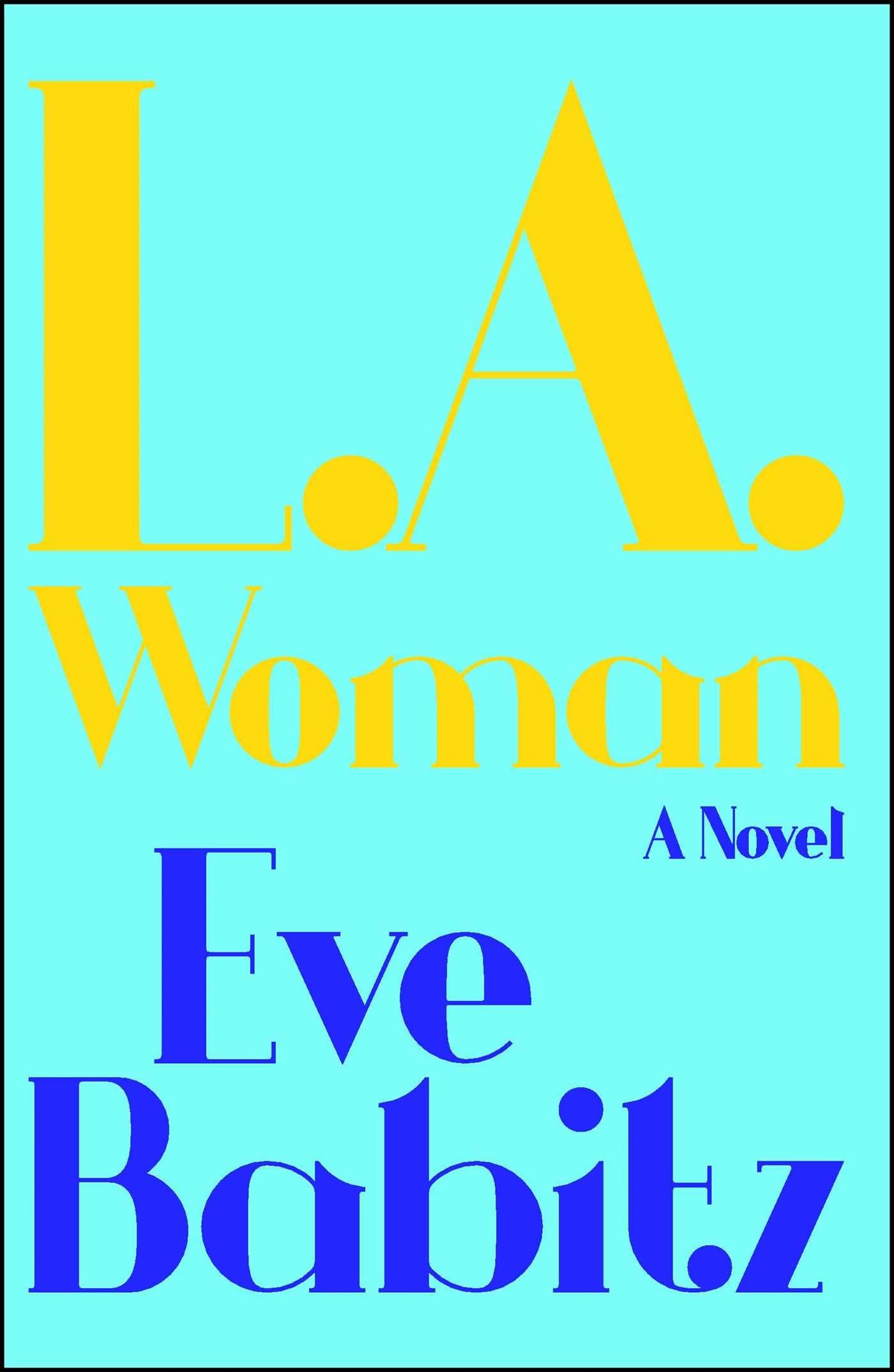



Soon to be a TV show on Hulu Eve Babitz is a writer like no other—she “is to prose what Chet Baker is to jazz” ( Vanity Fair)— and she has influenced a generation of writers and readers with her sophisticated, witty, and delightful work. L.A. Woman is quintessential Babitz, the story of Sophie, a twenty-something blonde Jim Morrison groupie gliding through a golden existence in L.A. and Lola, a German immigrant who settles in Hollywood in the twenties to drive Pierce Arrows recklessly down Sunset Boulevard and who knows that Maybelline mascara cakes and Rudolph Valentino are the essence of life. Sophie and Lola, like the many other women who move in and out of this electric saga know that while L.A. is constantly changing it is essentially eternal; through their eyes we see the mixture of high culture and low, the promises of youth and the fulfillment of nostalgia, the pink sunsets and the palm trees that are L.A. And through this fantastic tale, Babitz shares what it is to be a woman in what she convinces us is the capital of civilization. "What truly sets Babitz apart from L.A. writers like Didion or Nathanael West... is that no matter what cruel realities she might face, a part of her still buys the Hollywood fantasy, feels its magnetic pull as much as that Midwestern hopeful who heads to the coast in pursuit of 'movie dreams.'" ― Los Angeles Review of Books “Eve Babitz is to prose what Chet Baker, with his light, airy style, lyrical but also rhythmic, detached but also sensuous, is to jazz.” ― Vanity Fair "Perfect fin de siecle Southern California." ― New York Times Eve Babitz was born and grew up in Hollywood. She began to write in 1972 after designing album covers for such artists as Linda Ronstadt, Buffalo Springfield, The Byrds, and Lord Buckley. Her articles and short stories have appeared in Vogue, Rolling Stone, Esquire, and The New York Times Book Review. Her books include Eve’s Hollywood, Slow Days, Fast Company, Two by Two, and Sex and Rage. She died in 2021. L.A.WOMAN ONE SUMMER MORNING while I was still a virgin though my virginity was on its last legs, I woke up and didn’t want to go to New Jersey. It wasn’t fair that they wanted me to go to New Jersey; I didn’t want to go—I was seventeen and no seventeen-year-old L.A. woman would go to New Jersey if she could get out of it, especially a seventeen-year-old with a boyfriend like mine—a dream-boat who was twenty-five, was under contract to Fox as a leading man, black wavy hair and blue eyes, his father a French leading man who’d once starred in a tearjerker with my Great Aunt Golda and made a million dollars which he lost on a misadventure. Anybody who went to New Jersey just to visit Aunt Helen, I supposed with outraged sensibilities, would have to be nuts. Aunt Helen was nuts to have moved to New Jersey at all, and she was really insane inviting decent L.A. people to visit her on the fucking East Coast. But my father and mother kept up their demand, even if I did remain in L.A., about the people they would allow me to remain with. I refused hands down. Not my grandmother, period—I mean, staying with my grandmother would be like not being in L.A. at all. My Aunt Goldie’s place was big enough but my cousin Ophelia had been such a drag in those days and gone to such lengths to antagonize her new stepfather by leaving joints around in 1960 where he could see them that he’d become embittered against the entire younger generation of Lubins before my sister Bonnie or I even had a chance to try our hand. I wouldn’t stay with the people across the street who’d been there while I was growing up and whose daughter Shelly Craven was my age and with whom we have everything outwardly in common, because for one thing we didn’t forgive them—they were Stalinists and a line of blood was painted right down the middle of Foothill Drive once they moved in when I was six—and besides, they weren’t home, they were in Rome. Not that I myself wouldn’t have forgiven them for being Stalinists—what I didn’t forgive them for was playing Pablo Casals on the record player and having that melodrama going on in the middle of the afternoon as Molly Craven’s token of cultural refinement. And none of my friends, like Franny Blossom, were people whose families my family would put up with—although Franny’s house, God knows, was a rambling mansion and the whole guest wing was empty since Franny’s “uncle”—who wasn’t really an uncle but who drank as much as her father and mother and thus was a dear family friend—had gone down to Rosarito Beach fishing for three months. But ever since Franny’s father had taken a beebee gun out and begun shooting it at a brass Liberty Bell above the fireplace on the mantel, my mother declared they were “trash” and once she said that, spending even one night was asking for the moon. So it looked like I was going to New Jersey and going to have to spend an entire month on the fucking East Coast. But I knew I wasn’t even t