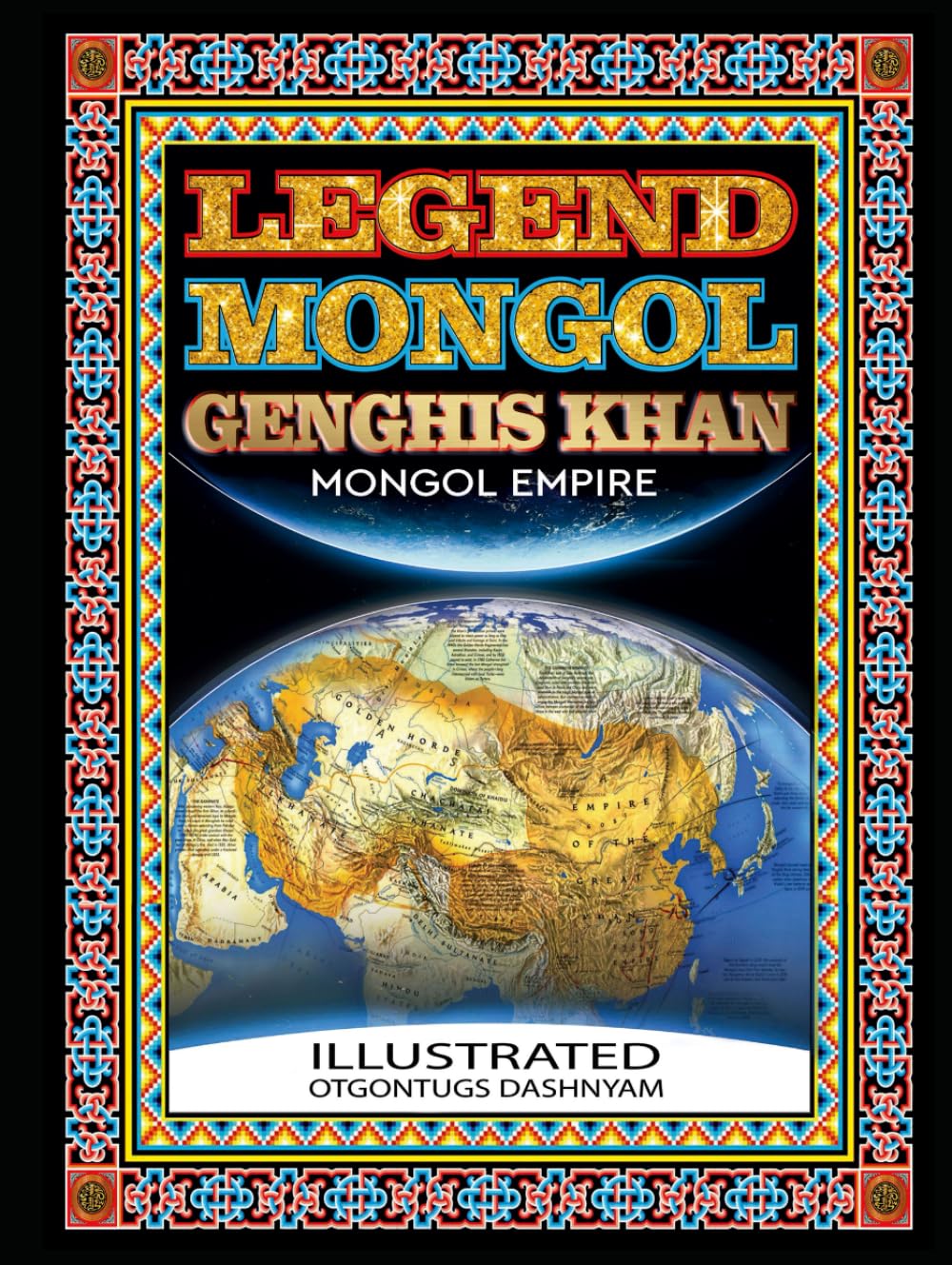
LEGEND MONGOL GENGHIS KHAN MONGOL EMPIRE: LEGEND MONGOL GENGHIS KHAN MONGOL EMPIRE ILLUSTRATED BY: OTGONTUGS DASHNYAM (LEGEND MONGOL ILLUSTRATED BOOK)
$50.00
by Otgontugs Tom Dashnyam



Genghis Khan (born Temujin , c. 1162–1227) was the founder and first Great Khan of the Mongol Empire , which became the largest contiguous land empire in history. He is credited with uniting the disparate nomadic tribes of the Mongolian plateau into a disciplined military state that eventually stretched from the Sea of Japan to Eastern Europe. Rise to Power Early Hardships: Born into the Borjigin clan, Temujin faced a brutal childhood after his father, a Mongol chieftain, was poisoned by rival Tatars. His family was abandoned by their tribe, forcing him to hunt and forage to survive. - Unification (1206): Through strategic alliances and ruthless warfare against rival tribes like the Tatars, Kereits, and Naimans, Temujin consolidated power. In 1206, a grand assembly a kurultai proclaimed him Genghis Khan , a title often translated as "Universal Ruler". Key Military Conquests Northern China: He launched successful campaigns against the Western Xia (Tanguts) in 1209 and the Jin Dynasty in 1211, eventually capturing their capital, Zhongdu (modern-day Beijing), in 1215. - Khwarezmian Empire: In 1219, after his envoys were executed, Genghis Khan invaded Central Asia, devastating present-day Iran, Uzbekistan, and Afghanistan. - Expansion Tactics: His success was built on highly mobile horse archers, a decimal-based military organization, and the early use of siege technology and psychological warfare. Administrative Reforms & Legacy Yassa Code: He established a body of law called the Yassa , which promoted religious freedom, prohibited the selling of women, and strictly enforced property rights. - The Yam: He created one of the world's first international postal and communication systems, known as the Yam , which used a network of relay stations for rapid information exchange. - Pax Mongolica: His conquests facilitated the Pax Mongolica , a period of relative peace that allowed trade (specifically along the Silk Road), technology, and ideas to flow between East and West. - Death and Burial: Genghis Khan died in 1227 during a final campaign against the Western Xia. His burial site remains a mystery, as legend states his funeral procession slaughtered anyone they met to keep the location secret. Succession and Fragmentation After his death, the empire was divided among his sons and grandsons, eventually fracturing into four major khanates by the late 13th century: The Yuan Dynasty (China) - The Golden Horde (Russia and Eastern Europe) - The Chagatai Khanate (Central Asia) - The Ilkhanate (Persia and the Middle East)