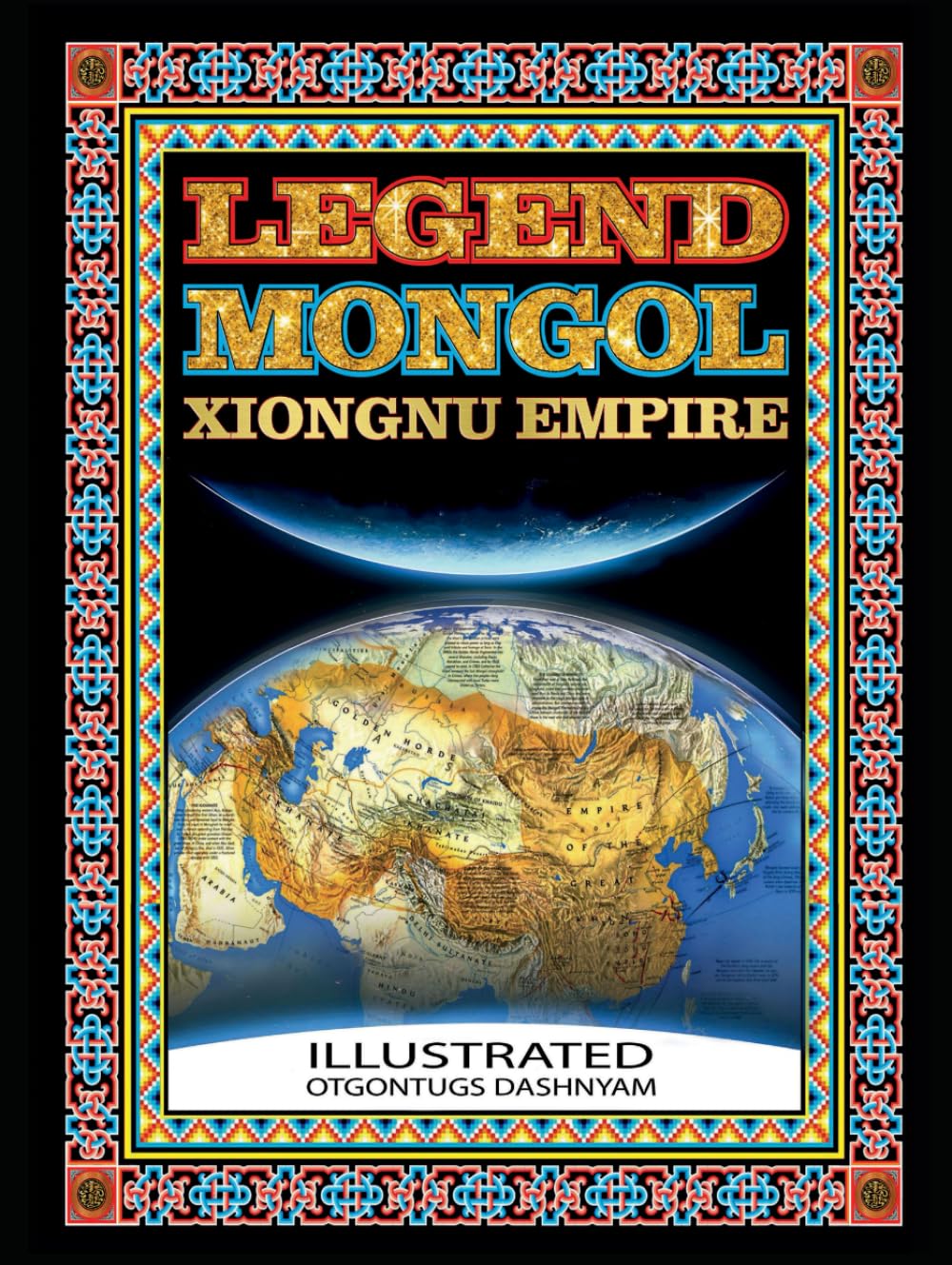
LEGEND MONGOL XIONGNU EMPIRE: LEGEND MONGOL XIONGNU EMPIRE ILLUSTRATED BY: TOM DASHNYAM OTGONTUGS (LEGEND MONGOL ILLUSTRATED BOOK)
$50.00
by Otgontugs Tom Dashnyam



LEGEND MONGOL XIONGNU EMPIRE The Xiongnu were a tribal confederation of nomadic peoples who, according to ancient Chinese sources, inhabited the eastern Eurasian Steppe from the 3rd century BC to the late 1st century AD. Modu Chanyu, the supreme leader after 209 BC, founded the Xiongnu Empire. After overthrowing their previous overlords, the Yuezhi, the Xiongnu became the dominant power on the steppes of East Asia, centred on the Mongolian Plateau. The Xiongnu were also active in areas now part of Siberia, Inner Mongolia, Gansu, and Xinjiang. Their relations with the Chinese dynasties to the south-east were complex, alternating between various periods of peace, war, and subjugation. Ultimately, the Xiongnu were defeated by the Han dynasty in a centuries-long conflict, which led to the confederation splitting in two, and the forcible resettlement of large numbers of Xiongnu within Han borders. During the Sixteen Kingdoms era, listed as one of the "Five Barbarians", their descendants founded the dynastic states of Han-Zhao, Northern Liang, and Helian Xia, and during the Northern and Southern dynasties, founded Northern Zhou (founded by members of the Yuwen tribe of Xiongnu origin) in northern China. Attempts to associate the Xiongnu with the nearby Sakas and Sarmatians were once controversial. However, archaeogenetics has confirmed their interaction with the Xiongnu, and also possibly their relation to the Huns. The identity of the ethnic core of the Xiongnu has been a subject of varied hypotheses, because only a few words, mainly titles and personal names, were preserved in the Chinese sources. The name Xiongnu may be cognate with that of the Huns or the Huna, although this is disputed. Other linguistic links—all of them also controversial—proposed by scholars include Turkic, Iranian, The territories associated with the Xiongnu in central/east Mongolia were previously inhabited by the Slab Grave Culture (Ancient Northeast Asian origin), which persisted until the 3rd century BC. Genetic research indicates that the Slab Grave people were the primary ancestors of the Xiongnu, and that the Xiongnu formed through a substantial and complex mixture with West Eurasians. During the Western Zhou (1045–771 BC), there were numerous conflicts with nomadic tribes from the north and the northwest, variously known as the Xianyun, Guifang, or various "Rong" tribes, such as the Xirong, Shanrong, or Quanrong. These tribes are recorded as harassing Zhou territory, but at the time, the Zhou were expanding northwards, encroaching on their traditional lands, especially into the Wei River valley. Archaeologically, the Zhou expanded to the north and the northwest at the expense of the Siwa culture. The Quanrong put an end to the Western Zhou in 771 BC, sacking the Zhou capital of Haojing and killing the last Western Zhou king, You. Thereafter, the task of dealing with the northern tribes was left to their vassal, the Qin state. To the west, the Pazyryk culture (6th–3rd century BC) immediately preceded the formation of the Xiongnu. A Scythian culture, it was identified by excavated artifacts and mummified humans, such as the Siberian Ice Maiden, found in the Siberian permafrost, in the Altai Mountains, Kazakhstan, and nearby Mongolia. To the south, the Ordos culture had developed in the Ordos Loop (modern Inner Mongolia, China) during the Bronze and early Iron Age from the 6th to 2nd centuries BC. Of unknown ethno-linguistic origin, it is thought to represent the easternmost extension of Indo-European-speakers. The Yuezhi were displaced by the Xiongnu expansion in the 2nd century BC, and had to migrate to Central and Southern Asia.