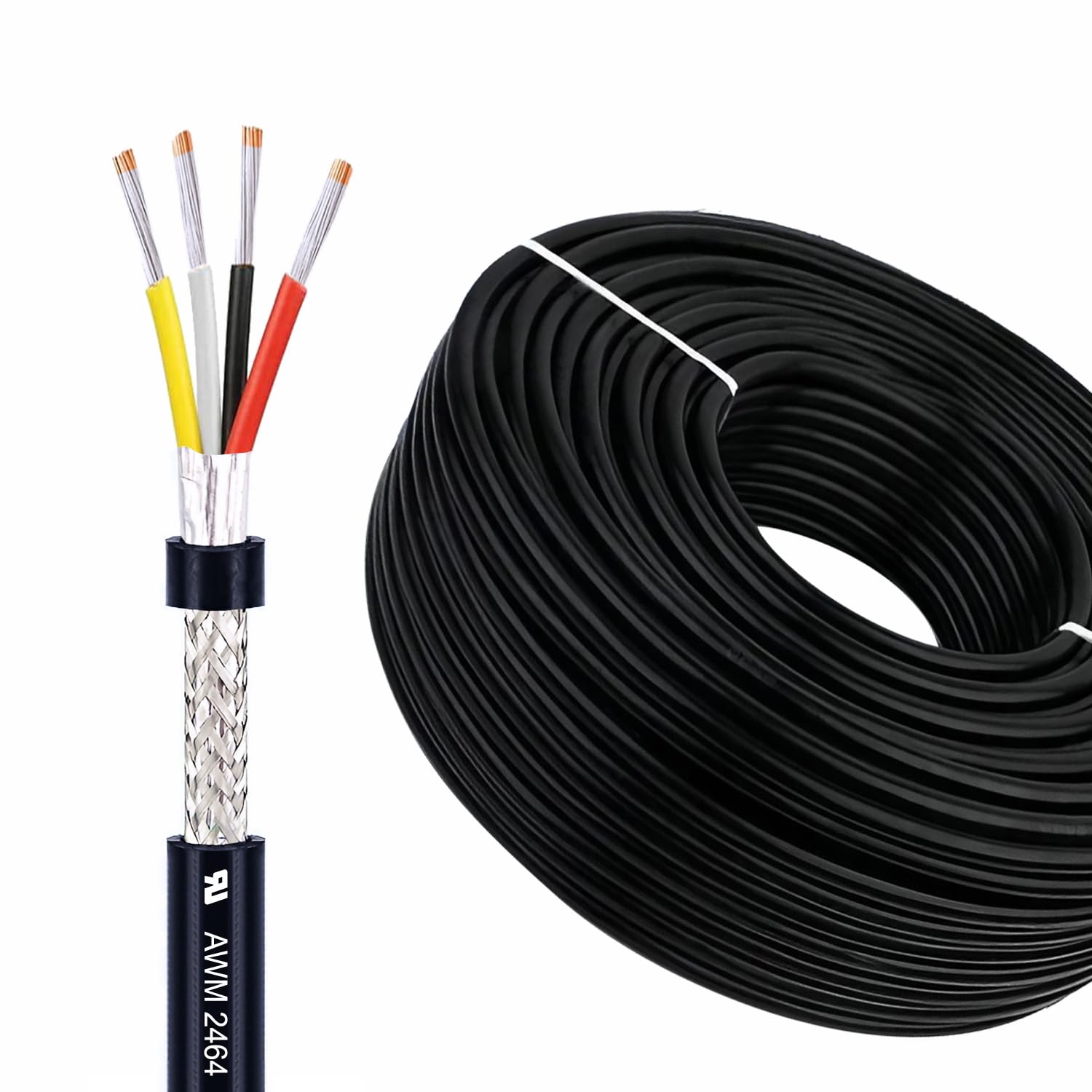



✔ Versatile Configuration: LINKSQ UL2464 wires are available with 2 to 9 conductors, providing flexibility for a wide range of applications, including data transmission, control systems, and industrial automation. The wire supports a gauge range of 22 AWG to 12 AWG, offering options for different current capacities and cable thicknesses. ✔ Voltage Rating and Shielding: Rated for 300 volts, this wire is suitable for low-voltage electrical systems and industrial systems requiring reliable performance. The AL shielding (aluminum foil) provides superior EMI (electromagnetic interference) protection, ensuring stable signal transmission even in environments with high electrical noise. The PVC outer jacket offers additional mechanical durability and flexibility. ✔ Conductor Material: The wire is constructed using tinned oxygen-free copper (OFC). This ensures excellent electrical conductivity, reduces resistance, and minimizes signal loss. The tinned coating provides enhanced corrosion resistance, making it suitable for environments with high humidity or exposure to corrosive elements. ✔ Fire Safety Standards: Certified to meet VW-1 and FT1 fire ratings, the wire exhibits resistance to flame propagation and ensures safety in fire-prone environments. It is designed to emit minimal toxic gases during combustion, making it suitable for critical applications where fire safety is a priority. ✔ Environmental Regulatory Compliance and Multi-Certification Products: Our products comply with EU CE, RoHS 2.0, and REACH standards, ensuring they are free from hazardous substances like lead, mercury, and cadmium. This makes them environmentally friendly and safe for industrial, commercial, and residential use. They also meet UL Listed certification requirements for the U.S. and Canada, highlighting their quality and adherence to international standards. Electrical Conductivity:
Tinned copper cables are stronger and more durable than Copper Clad Aluminum (CCA) cables. The oxygen free copper conductor in tinned copper cables provides inherent strength and durability, making them resistant to physical wear and tear. CCA cables, on the other hand, have an aluminum core that is softer and more prone to damage under mechanical stress. This reduces their overall lifespan and durability compared to tinned copper cables.
Oxidation and Corrosion:
Tinned copper cables have better oxidation and corrosion resistance than CCA cables. The tin coating on tinned copper cables acts as a protective barrier, preventing direct exposure of the copper to the environment and inhibiting the formation of copper oxide. This helps maintain the cable's integrity and conductivity over time. In contrast, CCA cables are more susceptible to oxidation and corrosion due to the exposed aluminum core, which can degrade over time when exposed to moisture and corrosive agents.
Summary:
Overall, the advantages of tinned copper cables, such as corrosion resistance, improved solderability, easy identification, flexibility, and thermal stability, make them a preferred choice in various industries, including marine, automotive, aerospace, and electrical engineering.
P.S. Due to the word limit, please refer to relevant books or seek professional advice for detailed information on the differences between tinnned copper, copper clad aluminum (CCA), and pure copper, including corrosion resistance, solderability, flexibility, high thermal stability, and other characteristics.
Tinned copper cables are stronger and more durable than Copper Clad Aluminum (CCA) cables. The oxygen free copper conductor in tinned copper cables provides inherent strength and durability, making them resistant to physical wear and tear. CCA cables, on the other hand, have an aluminum core that is softer and more prone to damage under mechanical stress. This reduces their overall lifespan and durability compared to tinned copper cables.
Oxidation and Corrosion:
Tinned copper cables have better oxidation and corrosion resistance than CCA cables. The tin coating on tinned copper cables acts as a protective barrier, preventing direct exposure of the copper to the environment and inhibiting the formation of copper oxide. This helps maintain the cable's integrity and conductivity over time. In contrast, CCA cables are more susceptible to oxidation and corrosion due to the exposed aluminum core, which can degrade over time when exposed to moisture and corrosive agents.
Summary:
Overall, the advantages of tinned copper cables, such as corrosion resistance, improved solderability, easy identification, flexibility, and thermal stability, make them a preferred choice in various industries, including marine, automotive, aerospace, and electrical engineering.
P.S. Due to the word limit, please refer to relevant books or seek professional advice for detailed information on the differences between tinnned copper, copper clad aluminum (CCA), and pure copper, including corrosion resistance, solderability, flexibility, high thermal stability, and other characteristics.