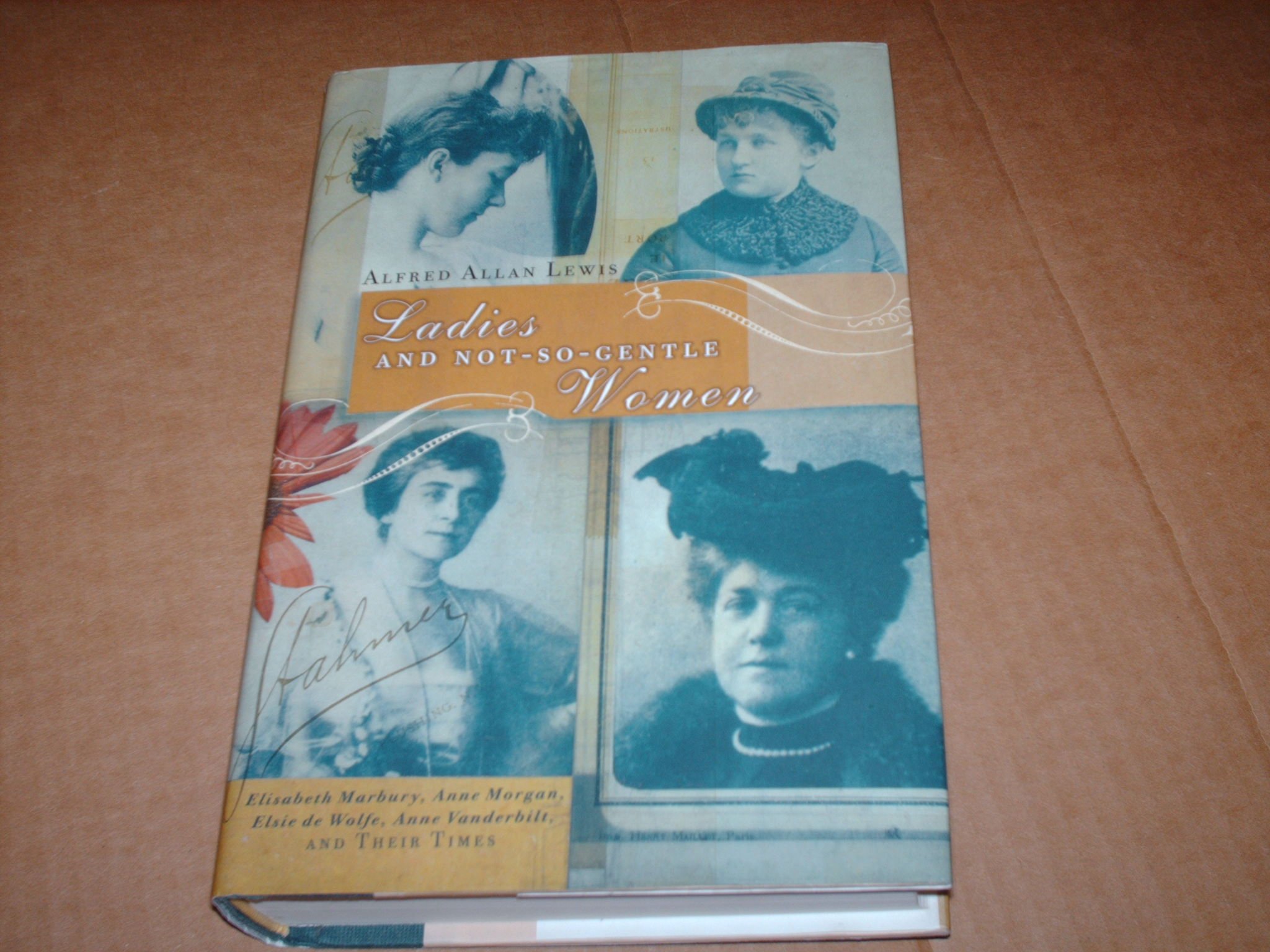



Four biographies of groundbreaking women carry the reader from Edith Wharton's New York City to Hemingway's expatriote Paris, revealing women on the front lines of major events from two World Wars and labor disputes to the parlors of wealth and influence on two continents. Original. Born into New York City's Victorian aristocracy and destined for the constricted lives considered proper for genteel women, the ladies and not-so-gentle women of this book invented new, more fulfilling identities for themselves with all-American aplomb. Bessy Marbury (1856-1933) was a pioneering play agent who fostered the careers of such scandalous writers as Oscar Wilde and George Bernard Shaw. Her longtime companion, Elsie de Wolfe (1858-1950), virtually invented the field of interior decorating, making her name by refining the tastes of the rich. Anne Morgan (1873-1952), who began a passionate affair with Marbury in 1904, used her privileged position as J.P. Morgan's daughter to forcefully advocate the rights of working women; Morgan's close friend Anne Harriman Vanderbilt (1859-1940) surmounted such personal sorrows as the premature deaths of two husbands and a daughter's mental illness by devoting herself to charitable work on behalf of drug addicts, prisoners, and soldiers. Veteran nonfiction author Alfred Allan Lewis deftly juggles the interlocking stories of these remarkable women (and just about every famous name in New York society, the feminist movement, the theater, and American government at the time) in an atmospheric narrative studded with shrewd character sketches and colorful anecdotes. He creates an enjoyable group portrait of the four trailblazers, "neither rabble rousers nor conformists, [but] pragmatists who helped to adapt revolutionary principles in ways that made them palatable to the public." --Wendy Smith In late 19th-century America, as the norms of the Victorian era were slipping into the past, the nascent women's movement was developing its voice. But there were still strict rules by which women, especially those of a certain class, were supposed to live their lives. Peabody Award winner Lewis (Man of the World) has composed a portrait of these times through the group biography of four women who went their own ways: Elisabeth Marbury, Elsie de Wolfe, Anne Morgan, and Anne Vanderbilt made significant contributions in the fields of theater, decorative arts, politics, and social service. Lewis shows that despite the strict rules society placed on women, these four were able to shrug off the conventional roles in favor of independent lives. This biography is filled with gossipy tidbits of the society of Edith Wharton's New York; but, although the narrative is very detailed, the references aren't. Recommended mostly for public libraries. -Roseanne Castellino, Arthur D. Little, Cambridge, MA Copyright 2000 Reed Business Information, Inc. This multiple biography illuminates a curious group of four turn-of-the-century American women, their lives intertwined personally and professionally. Lewis (The Evidence Never Lies, 1984, etc.) does not so much weave together as dart among the lives of Elisabeth (Bessie) Marbury, Elsie de Wolfe, Anne Morgan, and Anne Vanderbiltas well as many of their contemporaries, from Emma Lazarus and Edith Wharton to Eleanor Roosevelt. No dilettante socialites here. De Wolfe came to be a legendary figure in the world of interior decorating, but her work as a volunteer nurse in the horrifying burn units of WWI frontline hospitals is less well known. Morgan, of the noted capitalist family, devoted her life first to working women in the US, then to the civilian relief effort in France during both wars. Vanderbilt, ne Harriman, dedicated herself to the French under siege as well. All three were honored by the French government for their efforts. Marbury, who also worked hard in the French and Allied causes but was ignored when honors were bestowed, is nevertheless probably the most interesting of the four. With charm and chutzpah, she launched herself as a representative of such playwrights as Oscar Wilde, George Bernard Shaw, Nol Coward, and Cole Porter, and built her agency into an international presence. Turning her energies to politics, she became a Democratic National Committeewoman and an early supporter of FDR. Marbury and De Wolfe were personal partners for more than 20 years; Morgan had relationships with both Marbury and Vanderbilt, among others; Sutton Place, where all four had homes, was described as a sapphic enclave. A host of notables, from Stanford White and Bernard Berenson to Fannie Hurst and the Duchess of Windsor, play cameo roles in this saga, which stretches from Marburys birth before the Civil War to Morgans death in 1952. Fragmented, but full of titillating tidbits that whet the appetite for fuller portraits of these remarkable women and their work. -- Copyright ©2000, Kirkus Associates, LP. All rights reserved. "Tells the story of the women's achievements,