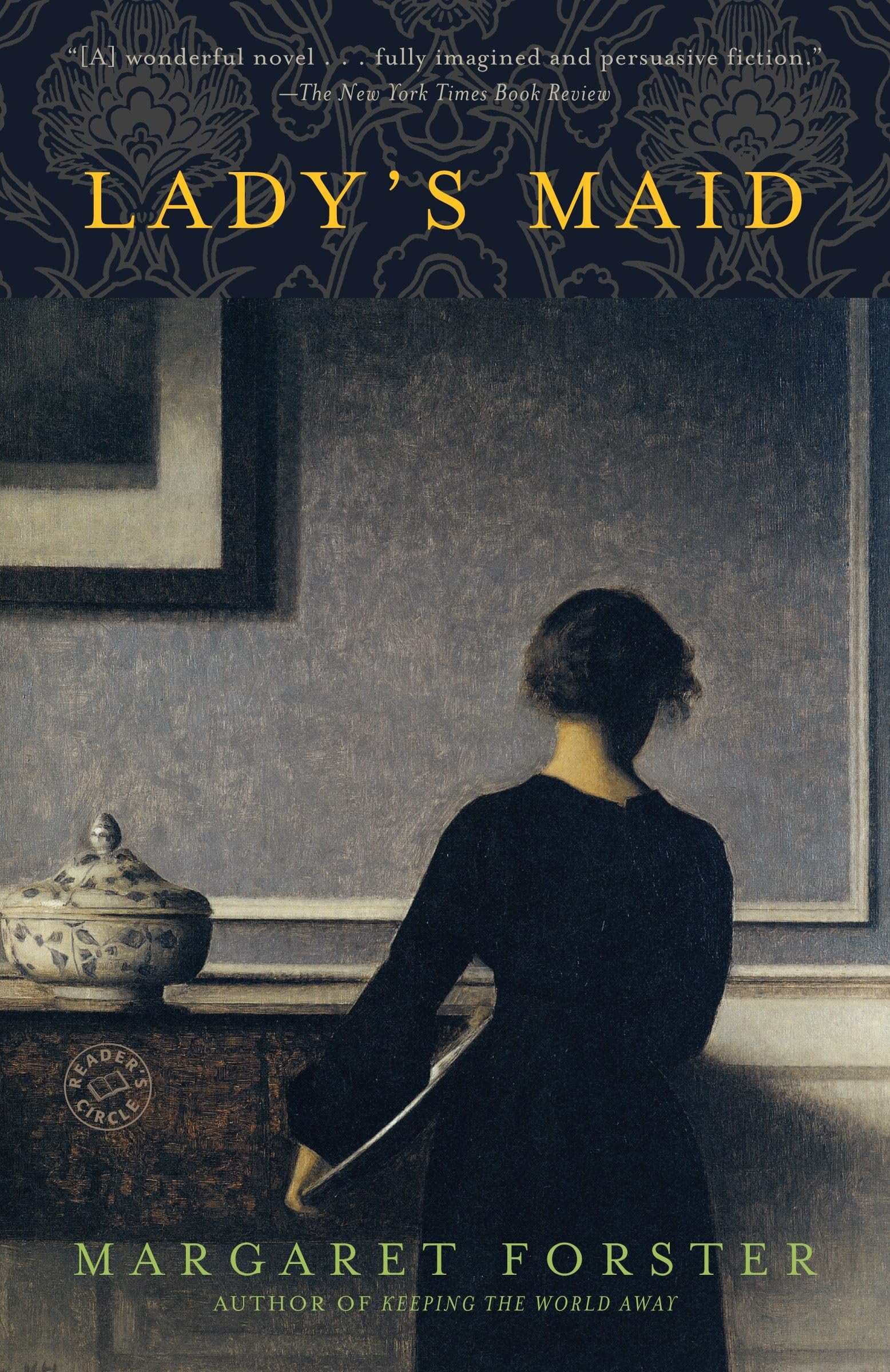



“Fascinating . . . The reader is treated to a revealing account of the passionate romance between Elizabeth Barrett and Robert Browning through the eyes of an intimate observer.”—Booklist Young and timid but full of sturdy good sense and awakening sophistication, Lily Wilson arrives in London in 1844, becoming a lady’s maid to the fragile, housebound Elizabeth Barrett. Lily is quickly drawn to her mistress’ s gaiety and sharp intelligence, the power of her poetry, and her deep emotional need. It is a strange intimacy that will last sixteen years. It is Lily who smuggles Miss Barrett out of the gloomy Wimpole Street house, witnesses her secret wedding to Robert Browning in an empty church, and flees with them to threadbare lodgings and the heat, light, and colors of Italy. As housekeeper, nursemaid, companion, and confidante, Lily is with Elizabeth in every crisis–birth, bereavement, travel, literary triumph. As her devotion turns almost to obsession, Lily forgets her own fleeting loneliness. But when Lily’s own affairs take a dramatic turn, she comes to expect the loyalty from Elizabeth that she herself has always given. Praise for Lady's Maid “[A] wonderful novel . . . fully imagined and persuasive fiction.” — The New York Times Book Review “Absorbing . . . heartbreaking . . . grips the reader's imagination on every page . . . [Margaret] Forster paints a vivid picture of class, station, hypocrisy and survival in Victorian society.” — San Francisco Chronicle “Extremely readable . . . The author's sense of the nineteenth century seems innate.” — The New Yorker “Highly recommended . . . an engrossing novel of the colorful Browning ménage.” — Library Journal “Delightful . . . entertaining.” — Vogue “Fascinating . . . The reader is treated to a revealing account of the passionate romance between Elizabeth Barrett and Robert Browning through the eyes of an intimate observer.” —Booklist “[A] wonderful novel . . . fully imagined and persuasive fiction.” — The New York Times Book Review “Absorbing . . . heartbreaking . . . grips the reader's imagination on every page . . . [Margaret] Forster paints a vivid picture of class, station, hypocrisy and survival in Victorian society.” — San Francisco Chronicle “Extremely readable . . . The author's sense of the nineteenth century seems innate.” — The New Yorker “Highly recommended . . . an engrossing novel of the colorful Browning ménage.” — Library Journal “Delightful . . . entertaining.” — Vogue Born in Carlisle, England, Margaret Forster was the author of many successful and acclaimed novels, including Have the Men Had Enough?, Lady's Maid, Diary of an Ordinary Woman, Is There Anything You Want?, Keeping the World Away, Over, and The Unknown Bridesmaid. She also wrote bestselling memoirs— Hidden Lives, Precious Lives and My Life in Houses— and biographies. She was married to writer and journalist Hunter Davies and lived in London and the Lake District. She died in February 2016, just before her last novel , How to Measure a Cow , was published. CHAPTER ONE Wilson sat up very straight. This was the first letter she had ever written in her life and she wished it to be correct in every particular. The inkwell, Mother’s parting gift and purchased with some difficulty, had traveled with her. It was made of glass, with a hinged lid. The ink itself had traveled separately, tightly stoppered in a small bottle and wrapped for extra security in a piece of green felt. The felt was now spread out with the inkwell resting upon it so that, should there be any spillages, no harm would be done. Taking care to allow the surplus ink to drip off her nib, at last she wrote: Dear Mother, Dear Mother, we left from the Unicorn Inn at five in the morning in a Coach. I was well wrapped up and though the air was Raw not in the least chilled and by nine when the sun had broken through I removed my heavy shawl the same which you dear Mother knitted for me so you can be assured I did not suffer. At ten we made a stop Mrs. Maria Barrett pronouncing she was suffering agony from Backache and so we pulled up at an Inn whereof I have forgot the name Wilson paused. It seemed important, so early in her chronicle, to be exact. Mother had begged her to write down every detail, swearing nothing was too trivial for her and Ellen and May and Fanny to want to know. She could see them now in her head, reading this letter, when it arrived, so many times they would almost memorize it. And she could not remember the name of that first inn. But with no difficulty at all she could remember well enough the noise and confusion and her own fear. Mrs. Maria Barrett was shown into a private room and her sister with her, and both their maids and Wilson did not know what to do. No one directed her, no one troubled about her. Mrs. Barrett’s maid ignored her timid request as to where she should go, but then perhaps she had spoken so softly she had not been heard. So