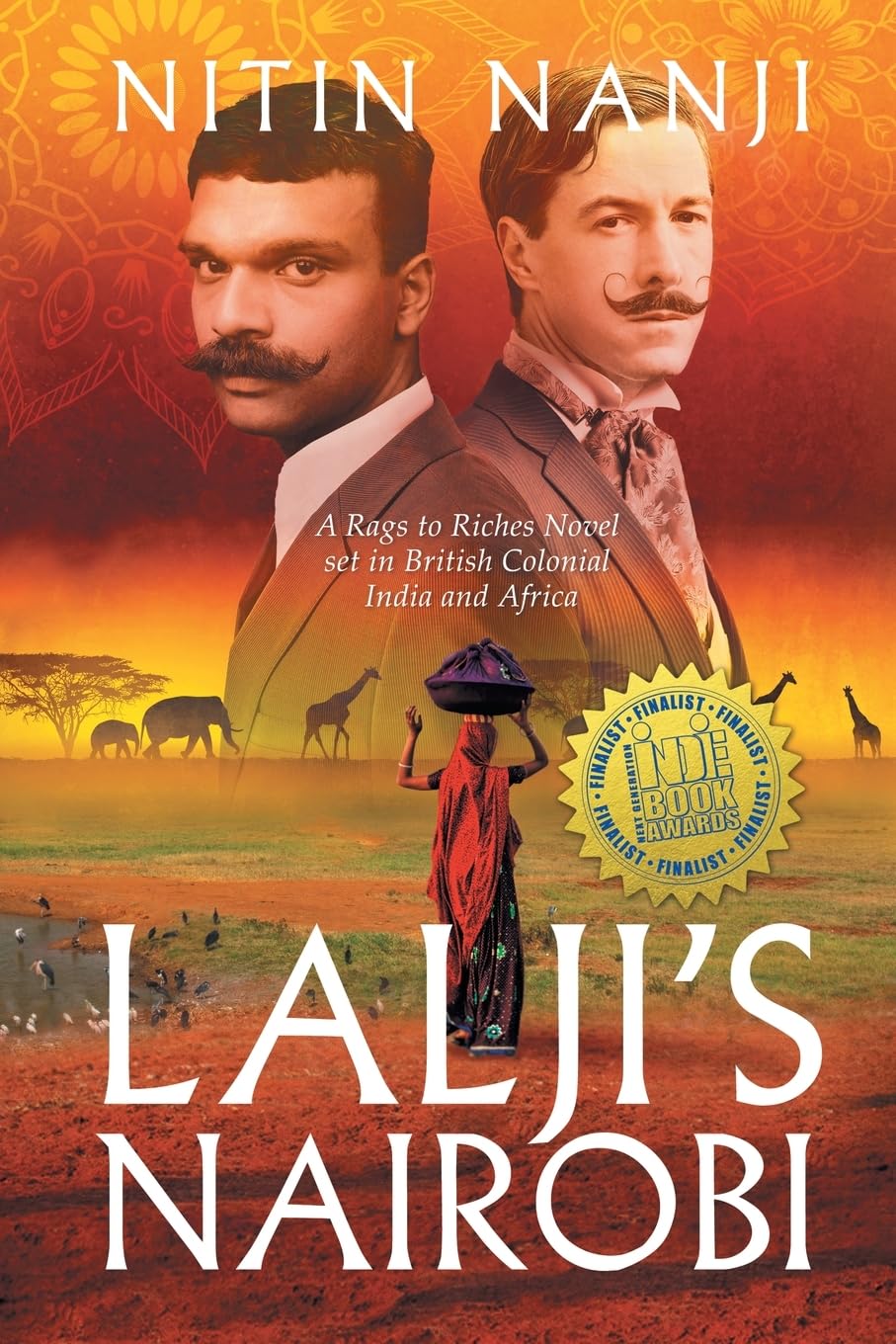
Lalji's Nairobi: A Rags to Riches Novel set in British Colonial India and Africa
$10.99
by Nitin Nanji



British Gujarat, 1905. Despairing of the social injustices and crippling taxes under the British Raj, Lalji, 19, flees to British East Africa hoping to build a better life using his natural business skills and acumen. But he soon finds unexpected dangers in his new home- turbulent politics and war with German East Africa- as well as some surprising opportunities. A combination of luck, coincidence, and his flair for commerce lead to early success. Then, just as he is at his most vulnerable, a new threat emerges from where he least expects: from within his own family. Can Lalji beat overwhelming odds to fulfill his hopes and ambitions? Lalji's Nairobi Review Lalji sensed he was different from those around him. He seemed to understand what the world was about. He was a thinker, but more than that he was a doer. He often saw things differently from others. He was confident in expressing his views on a situation, offering these with a degree of diplomacy which was rare for his young age of eighteen. He was aware he was listened to like an elder. The novel's first sentence and paragraph grab readers' attention right away by introducing us to Lalji and setting the tone from the start that he was different than others in his community. It gives us a teaser into Lalji's journey and implies a larger historical and sociological backdrop. The story's tone is successfully established by the opening hook, which entices readers to keep reading. In "Lalji's Nairobi: A Rags to Riches Colonial Story," Nitin Nanji transports readers from colonial India to East Africa through an imaginative and captivating story. The novel compellingly portrays one man's quest toward a better life by deftly fusing cultural quirks, historical context, and personal struggles. Set against the backdrop of British control in both East Africa and India, the sbook follows 19-year- old Indian immigrant Lalji as he explores themes of ambition, survival, and perseverance in the face of hardship. The story starts in British Gujarat in 1905, when many people of India were struggling with the oppressive social inequities and heavy taxes that came with living under the British Raj. Lalji's choice to emigrate from his native country and pursue prosperity in British East Africa is indicative of a common aspiration for liberty and prospects. This decision creates the framework for an engrossing story of struggles, victories, and surprising turns. For Purshottam, the promise of Africa for his son was seductive. He would sit down in the backyard near the cow shelter with his sons and relay what he had learnt from his reading. "So many different European sarkars (governments) are looking for young men to travel to the new colonies in Africa, to settle and work there," he announced. "But there are differences in how they operate." "How?" asked Lalji. "Most provide a free passage. Not all give you the choice of going where you wish. They have local jobs for migrants which are fixed up by agents before you get on the ship." "Can you say no?" asked Naran. "Not really, since the passage is free. You must sign a bond." "But you can move on if you are unhappy?" asked Lalji. "Not if you have signed a bond, which usually restricts movement for ten years. After ten years, you can stay on or return home," Parshottam said. Lalji faces many difficulties on his journey to Nairobi, including unstable political conditions, fighting German East Africa, and adjusting to a new culture. Notwithstanding these obstacles, Lalji achieves early success due to his inherent aptitude for business and commercial insight. But just when he looks ready to succeed, an unexpected danger from inside his family surfaces, putting his determination and capacity to overcome insurmountable obstacles to the test. Lalji is a well-developed figure who captures the essence of many people who have fled to far-off places. His path from hopelessness to prosperity, from poverty to luxury, shows us the strength and tenacity humans truly possess. The story explores his joys, inner tensions, and hardships to portray a complex picture of a man who is driven to succeed despite all the obstacles. The supporting cast, which consists of friends, family, and business partners, gives the story more nuance and complexity, and through them, we learn more about our main character as well. Their conversations with Lalji shed light on the intricate interplay of cultures and the complexity of colonial control during the period, as well as the social dynamics of the time. The narrative arc of the book is smooth and engrossing, with each chapter building on the one before it to tell a compelling tale. The book moves along steadily toward the finish while allowing readers to fully immerse themselves in Lalji's trip thanks to the well-balanced pacing. Readers are kept interested throughout by the plot's twists and turns, which include an unexpected familial threat and other suspenseful elements. Lalji was