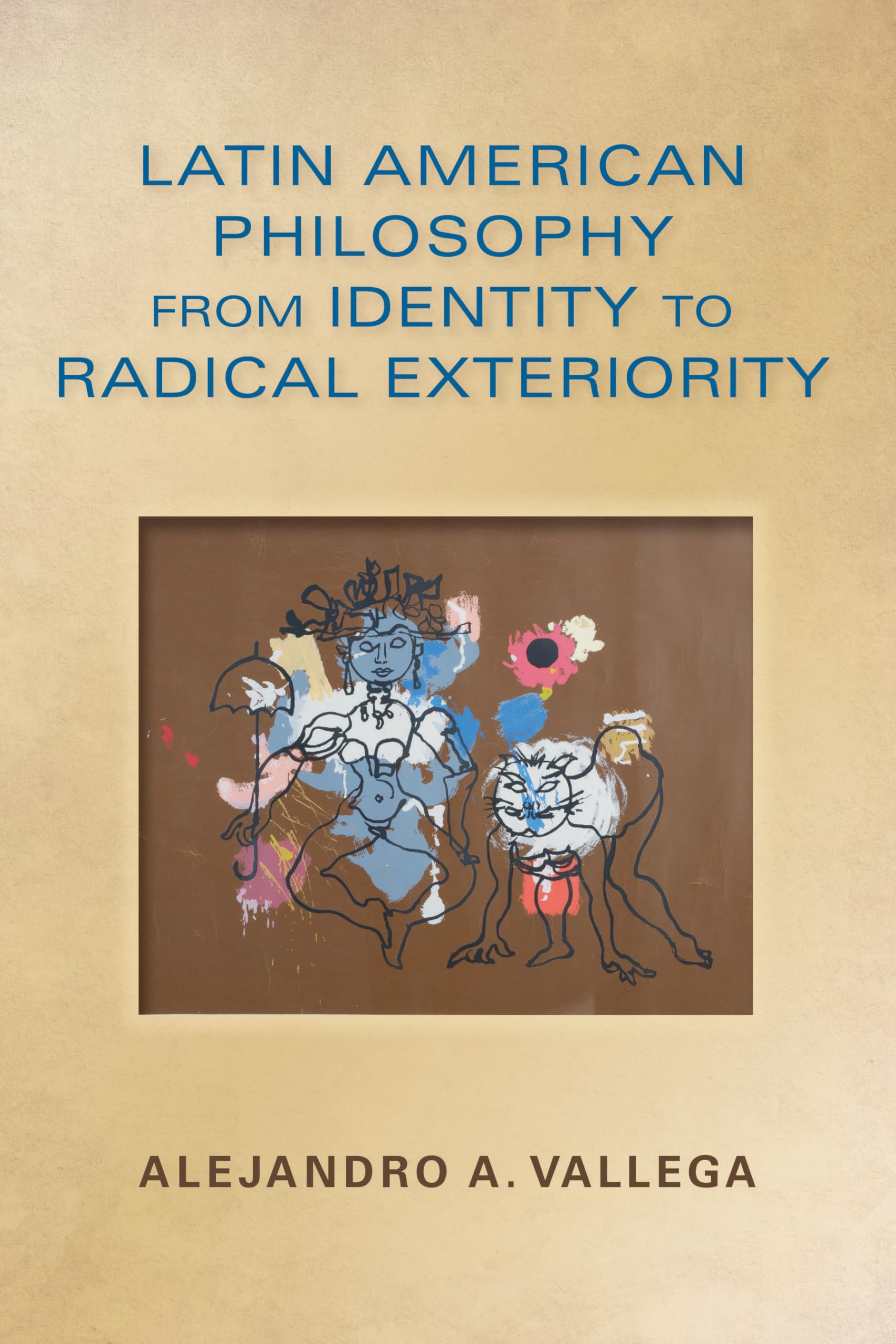
Latin American Philosophy from Identity to Radical Exteriority (World Philosophies)
$35.00
by Alejandro Arturo Vallega



While recognizing its origins and scope, Alejandro A. Vallega offers a new interpretation of Latin American philosophy by looking at its radical and transformative roots. Placing it in dialogue with Western philosophical traditions, Vallega examines developments in gender studies, race theory, postcolonial theory, and the legacy of cultural dependency in light of the Latin American experience. He explores Latin America's engagement with contemporary problems in Western philosophy and describes the transformative impact of this encounter on contemporary thought. "Vallega engages with current debates among those seeking a decolonial approach to concepts of identity, history, and liberation without unhelpful baggage from European colonial modernity. He impressively remaps and advances the debate. Many have been anticipating this book with some excitement; it will exceed their expectations."―Linda Martín Alcoff, Hunter College "No other contemporary philosopher is more engaged with the meaning and sense of philosophy in Latin America than Alejandro A. Vallega."―Omar Rivera, Southwestern University "Vallega's wonderful book demonstrates that the question 'Is there Latin American philosophy?' has outlived its rhetorical usefulness. Instead, it announces that the task before us is to engage with a vast canon that is as dispersed and buried as it is unsuspecting and challenging. If we read Jefferson, Adams and Hamilton as philosophers of the 'American Revolution'―why not read Bolivar and Miranda also as political philosophers par excellence? If we read Martin Luther King, Malcom X, and Angela Davis as radical thinkers, why not do so with Martí, Guevara and Subcomandante Marcos? Those before Vallega had to apologetically introduce some key figures and themes in the U.S. context. After this book, we have been brought to the elevations of thinking from which we can surmise and survey a tradition that reaches across time, beyond the emergence of a putative vanguard of history led by an imagined 'Europe' or 'West,' and beyond equally illusory disciplinary purity and unity. Vallega reminds us that philosophy is homeless by definition and that thinking deserving that name operates under the imperative to be attentive to new questions, which may come from unusual places, in different accents, with different gestures. By exposing us to the vibrancy, richness, relentless tarrying with difference and alterity of Latin American thinking over several centuries, Vallega also gifts philosophy as such."―Eduardo Mendieta, Stony Brook University Alejandro A. Vallega is Assistant Professor of Philosophy at the University of Oregon. He is author of Heidegger and the Issue of Space: Thinking on Exilic Grounds and Sense and Finitude: Encounters at the Limits of Art, Language, and the Political .