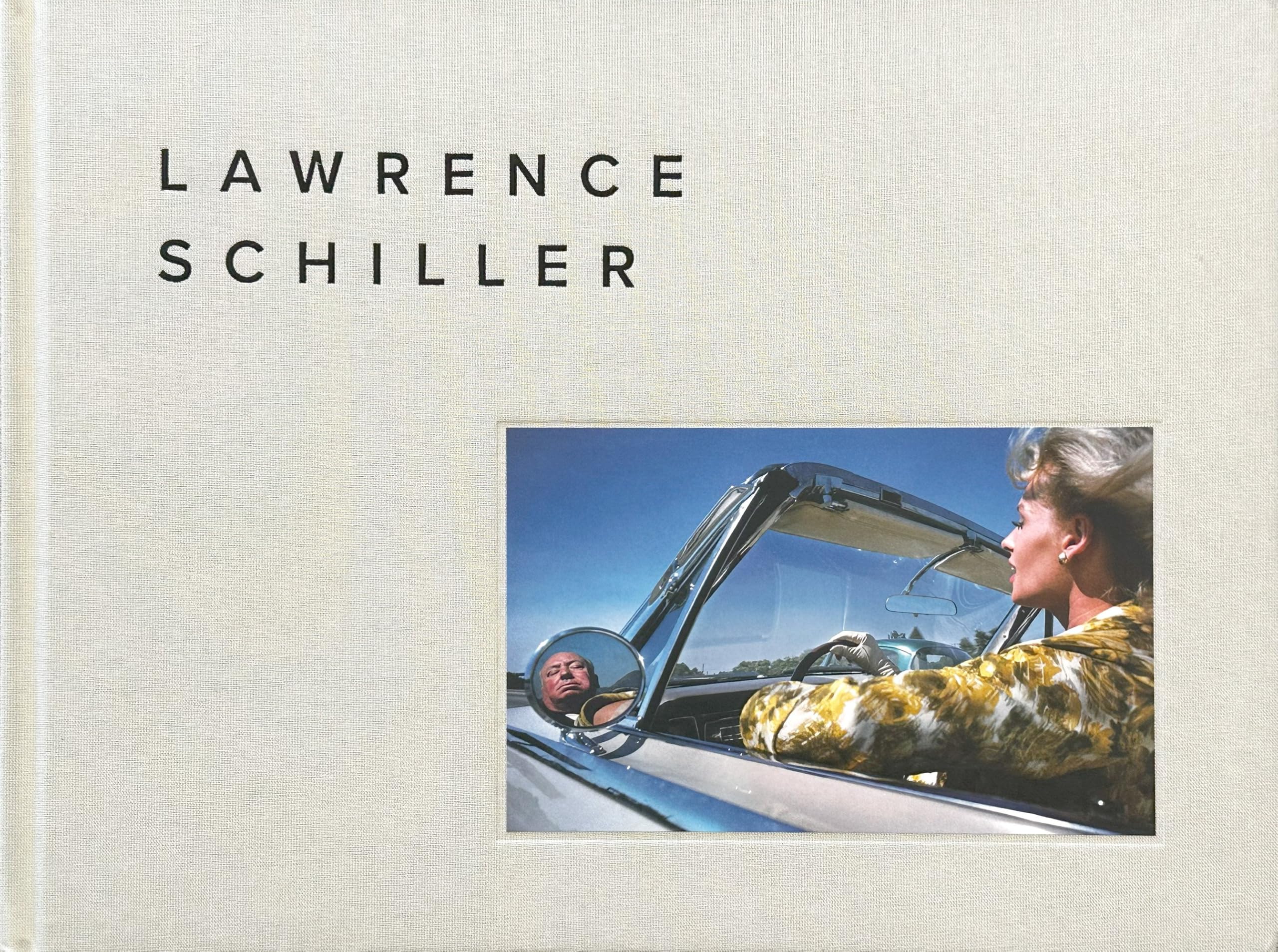



“Photographer Lawrence Schiller’s images of the icons of Sixties America conjure a time and a place of incomparable cool.” — The Times Magazine, London During the transformative 1960s, Lawrence Schiller captured the nation’s political and cultural front lines: whenever a headline-making event occurred, he was there. From Marilyn Monroe in the nude to Muhammad Ali in the boxing ring, Schiller's work features legendary moments, including Paul Newman and Robert Redford playing ping-pong, and a haunting image of Lee Harvey Oswald after the assassination of John F. Kennedy. He documents the powerful advocacy of Martin Luther King Jr. and Robert Kennedy, alongside the private world of LSD experimentation. Drawing from Schiller's vast archive of portraiture and photojournalism, this book includes 67 of his most iconic photographs, presenting more than just a collection of images; it offers an eclectic and intimate portrait of an era that defined modern America. Printed in Italy on archival, acid-free paper, this premium hardcover edition is bound in linen and features a tip-in photograph of Tippi Hedren and Alfred Hitchcock taken during the filming of The Birds . Ideal for photography lovers, history enthusiasts, and anyone fascinated by the cultural icons of the 1960s, this book is a must-have for your collection. The personalities featured include: Muhammad Ali - Clint Eastwood - Bette Davis - Tippi Hedren - Alfred Hitchcock - Dennis Hopper - James Earl Jones - Buster Keaton - Robert Kennedy - Martin Luther King, Jr. - Sophia Loren - Dean Martin - Paul Newman - Robert Redford - Barbra Streisand PRAISE FOR LAWRENCE SCHILLER “Photographer Lawrence Schiller’s images of the icons of Sixties America conjure a time and a place of incomparable cool.” — The Times Magazine, London “As a photojournalist during the tumultuous 1960s, Lawrence Schiller was seemingly everywhere on the nation’s political and cultural front lines.” — Black & White Magazine Lawrence Schiller (b. 1936) is an American photojournalist, film producer, director, and author. His work has been featured in prominent magazines throughout the world. Schiller also directed a number of award-winning motion pictures, notably The American Dreamer , with Dennis Hopper, and The Executioner’s Song, with Tommy Lee Jones. Schiller provided additional direction for The Man Who Skied Down Everest (1972), which won an Oscar for Best Documentary Feature. Schiller has produced many books, his most notable being with his friend and colleague Norman Mailer. Over several decades, the two published Marilyn (1973), The Faith of Graffiti (1974), Oswald’s Tale (1995), Into the Mirror (2002), and The Executioner’s Song (1979), for which Mailer won the Pulitzer Prize. He is the author of the New York Times number-one best-selling American Tragedy , with James Willwerth (1996), Barbra , with Steve Schapiro (2016) and Marilyn & Me (2021). Schiller has consulted for NBC News, the John F. Kennedy Library Foundation, the Ray Bradbury estate, and the Annie Leibovitz Studio. After the death of Norman Mailer, Schiller was named the president and co- founder of the Norman Mailer Center and Writer’s Colony in Provincetown, Massachusetts. In 2023, Schiller’s archives were transferred to the Dolph Briscoe Center for American History at the University of Texas in Austin, Texas. He is married to Nina Wiener and resides in Los Angeles. I first used photography as a way to see the world. My father gave me a camera, an East German Exakta, for my bar mitzvah, and I carried it with me everywhere I went. By the time I was sixteen, I had already won several major photography awards and traveled across the country to cover sporting events. As far as I was concerned, it was more exciting than school. The first time I visited the Time-Life Building in New York City, I was seventeen. I found myself in the elevator looking up at the legendary (and very tall) photographer Margaret Bourke-White. When I asked her for some advice, she replied, “Just remember to make sure you’re alive when you die.” Despite my young age, Paris Match , Life , Look , Stern , Newsweek , Time , the Sunday Times (London), and the Saturday Evening Post — the biggest publications in Europe and the U.S.— soon had enough confidence in my ability as a photographer to trust me with big assignments. So, one month I was working for Sport magazine and the next for Life . And a lot of the time it wasn’t the editors calling me, but me pitching them. The advantage I had by working as a freelancer was that no one editor could pigeonhole or typecast me — so I wasn’t just a sports photographer or a news photographer or a celebrity photographer.