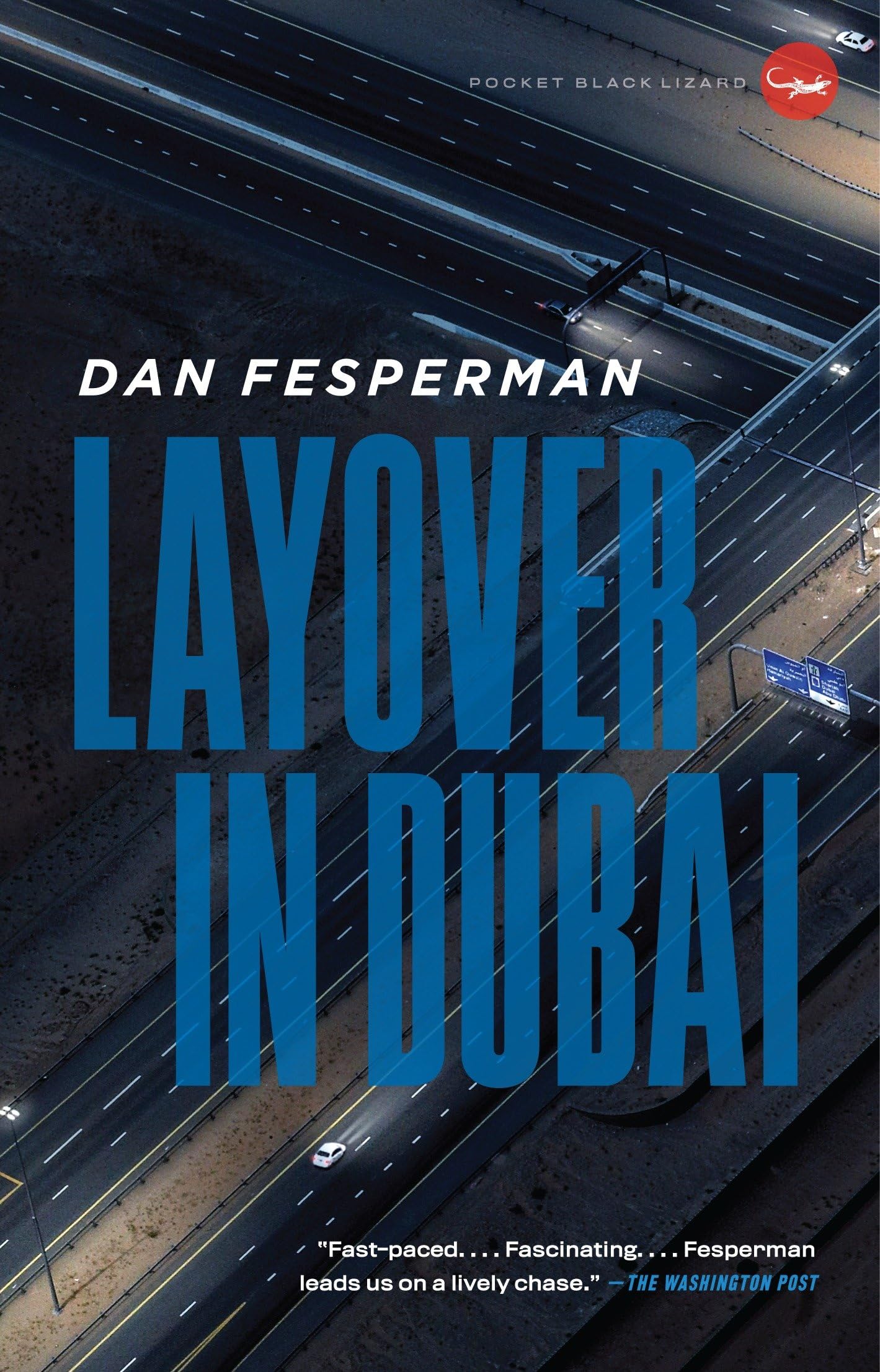



From the acclaimed author of The Cover Wife comes a "fast-paced … fascinating” thriller ( The Washington Post ) featuring a lethal mix of mobsters, prostitutes, crooked cops, consuls, and corporate players in the mysterious and gleaming city of Dubai. Sam Keller, an auditor at a giant pharmaceutical firm, expected a six-hour layover in Dubai. Then his company's corporate security officer asked him to extend his stay two days to keep an eye on a hard-partying colleague. Sam agrees, but against his better judgment, he decides to live it up a little, which has disastrous results. First Hatcher is murdered. Then Sam is arrested. Was he set up? Unsure whether he can trust his employer, Sam forms an unlikely alliance detective with Anwar Sharaf, a former pearl diver and gold smuggler. “Fast-paced. . . . Fascinating. . . . Fesperman leads us on a lively chase.” — The Washington Post “A frantic tale of cold murder, cunning double-crosses, and narrow escapes. . . We plow our way through sharp scenes of brilliant resourcefulness in the face of a towering conspiracy.”— NPR “[Fesperman] has a nose for powder-keg settings that offer social and political insights as well as vicarious thrills.” — Richmond Times-Dispatch “Entertaining. . . . Continues the string of fine work by Fesperman.”— St. Louis Post-Dispatch “A suspenseful, page-turning thriller . . . An exciting, labyrinthine yarn of conspirators and assassins, chases, escapes, near misses, plots within plots, and Dubai lore.”— The Providence Journal “Fesperman sharpens his storytelling acumen to cut through various global issues in his latest thriller . . . Dubai proves to be an ideal spot for excess, intrigue, and nefarious corporate shenanigans.”— Baltimore Magazine “Fascinating. . . . All of Fesperman’s strengths are on display in his latest. . . . Anyone looking for more than just an a la carte thriller will find Layover in Dubai to be a soup to nuts reading experience indeed.”— Daily Bulldog (Franklin County, Maine) “Fesperman makes Dubai his book’s finest character. Fabulous wealth and opulence grind like tectonic plates against traditional Muslim culture. . . . Layover in Dubai has plenty of action, but it’s Fesperman’s portrait of a truly bizarre place that will captivate readers.”— Booklist “A stellar suspense mystery that sizzles in the hot desert sun.”— Las Vegas Review-Journal DAN FESPERMAN’s travels as a writer have taken him to thirty countries and three war zones. Lie in the Dark won the Crime Writers’ Association of Britain’s John Creasey Memorial Dagger Award for best first crime novel, The Small Boat of Great Sorrows won their Ian Fleming Steel Dagger Award for best thriller, and The Prisoner of Guantánamo won the Dashiell Hammett Award from the International Association of Crime Writers. He lives in Baltimore. 3 When he was a boy, diving for pearls among sharks, and gambling with smugglers three times his age, Anwar Sharaf was rarely underestimated by his peers. Nowadays, in his fifties, people did it all the time. Especially Westerners, who needed only one look before writing him off as either incompetent or inconsequential. Sharaf’s police uniform was part of the problem—green with epaulets and red piping, a canvas military belt, laced boots, a silly beret—a getup that would have been right at home in some banana republic far across the waves. He accentuated the effect with a potbelly, a sloppy mustache, and the hangdog jowls of the long-suffering family man. Glimpse him hunched over paperwork at his undersized desk and the word “beleaguered” came instantly to mind. So did “inept” and, possibly, “corrupt.” Because surely here was an underpaid fellow who would soon have his hand out, sighing and grumbling about this rule and that until you bribed him and were merrily on your way. A harmless nuisance, in other words. A scrap of local color to liven up your texts and postcards home: Dumbest cop ever, LOL! The moment Sharaf opened his mouth, impressions began to change. Fluent in English and Russian (his father, hiring tutors at the height of the Cold War, had hedged his bets), Sharaf had also picked up Hindi from the streets and Persian from the wharves. That left him in command of four of Dubai’s main languages of commerce, with his native Arabic murmuring beneath them like an underground stream. His tutors had also schooled him in literature, economics, biology, philosophy—the works. Throw in his seasons of instruction on the high seas at the age of thirteen—a summer of pearling, an autumn of smuggling—and he was arguably better equipped for intellectual combat than many of his contemporaries who had gone abroad to university. Yet Sharaf usually held his fire. For one thing, why blow his cover? Enemies were more easily disarmed when they underestimated you. For another, he was accustomed to dismissive treatment, having endured it since the age of twenty-two, when he enraged his father by refusing to