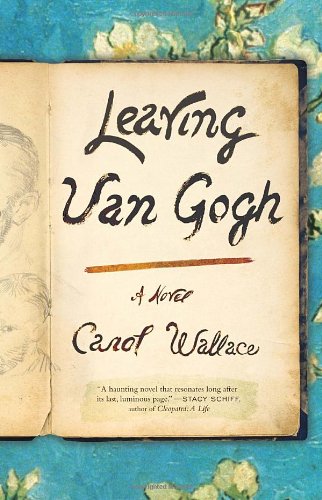



In the summer of 1890, in the French town of Auvers-sur-Oise, Vincent van Gogh shot himself in the chest with a revolver. He died two days later, at the age of thirty-seven, largely unknown despite having completed over two thousand works of art that would go on to become some of the most important and valued in the world. In this riveting novel, Carol Wallace brilliantly navigates the mysteries surrounding the master artist’s death, relying on meticulous research to paint an indelible portrait of Van Gogh’s final days—and the friendship that may or may not have destroyed him. Telling Van Gogh’s story from an utterly new perspective—that of his personal physician, Dr. Gachet, specialist in mental illness and great lover of the arts—Wallace allows us to view the legendary painter as we’ve never seen him before. In our narrator’s eyes, Van Gogh is an irresistible puzzle, a man whose mind, plagued by demons, poses the most potentially rewarding challenge of Gachet’s career. Wallace’s narrative brims with suspense and rich psychological insight as it tackles haunting questions about Van Gogh’s fate. A masterly, gripping novel that explores the price of creativity, Leaving Van Gogh is a luminous story about what it means to live authentically, and the power and limits of friendship. A Letter from Author Carol Wallace Dr. Gachet Vincent van Gogh Dear Readers: Are you a longtime fan of Vincent van Gogh? If so, you’re a step ahead of me. I’ve always loved art and haunted museums, but until I wrote Leaving Van Gogh I could walk past Vincent’s paintings with only a passing glance. Even now I’m a little bit surprised that I’ve written a novel about him. I came across Dr. Paul Gachet while I was researching my master’s thesis in art history, back in 2005. Gachet was a doctor who treated mental illness in Paris in the late 19th century, and was also a friend of many of the great painters of the era. He seemed like a terrific subject for a novel. I thought I’d write about his collection of paintings, many of which ended up at the Musée d’Orsay. And what happened? Vincent van Gogh hijacked the narrative. As I was writing, Vincent walked into Dr. Gachet’s sitting room in Auvers, France, a village northwest of Paris. He put down his portable easel and paint box, and started to talk. The focus of the novel shifted from the doctor’s pictures to the painter’s pain. Well, you can understand why. We novelists are looking for drama. We need pressure and conflict. Vincent van Gogh, in May of 1890, was a man under terrible strain. He wanted more than anything else to paint. But he had been mentally ill, confined to an asylum for a year, and he knew that he was still menaced by his demons. That, obviously, was my story. But before I could write the whole book I needed to do a lot of research. When it became clear that Vincent was going to be the star of the show, I started to read his letters and that is how my affection for him took root. He was such a stoic. He endured such anguish, and scarcely complained. He believed in his art when only his brother Theo and Dr. Gachet shared his enthusiasm. He wrote to Theo, “It is my earnest hope that I am not working for myself alone.” He never knew how much he would matter to us all. Dr. Gachet’s side of the story fascinated me, too. It was a period before doctors had many tools to deal with mental illness, but Gachet took a humane and sympathetic stance toward his patients. A man who had always been fascinated by melancholy, he was in some ways the ideal physician for Van Gogh. He was certainly one of Vincent’s greatest fans, even after the painter’s death. “Riveting…Vincent’s vitality and unique intelligence wash over the reader—much as they do when looking at his paintings. Wallace deepens our thinking about the painter by imagining the conversations he had with Gachet and his family and in the gentle way that she imagines his demeanor between manic episodes...The book is truly delightful.”— Los Angeles Times “This in-depth look at the final few months of van Gogh’s life offers insight into that damning, draining combination of genius and madness.”— Library Journal “Van Gogh’s mix of genius and madness continues to fascinate.”— Kirkus Reviews "A haunting novel of bold strokes and fine-grained gestures, one that resonates long after its last, luminous page. In Carol Wallace’s masterful hands Van Gogh’s pictures spring to life every bit as brilliantly as does the painter himself."—Stacy Schiff , author of Cleopatra: A Life "How did Carol Wallace do this? Her novel so thrillingly and compassionately illuminates the tragic life of Vincent van Gogh that he is now lodged in my heart like a beloved lost relative. I am awed and enthralled, and so grateful for this perfect blend of artistic authority and suberb storytelling."—Elinor Lipman, author of The Family Man "Carol Wallace’s new novel is a wonderfully rich exploration of the deep intercon