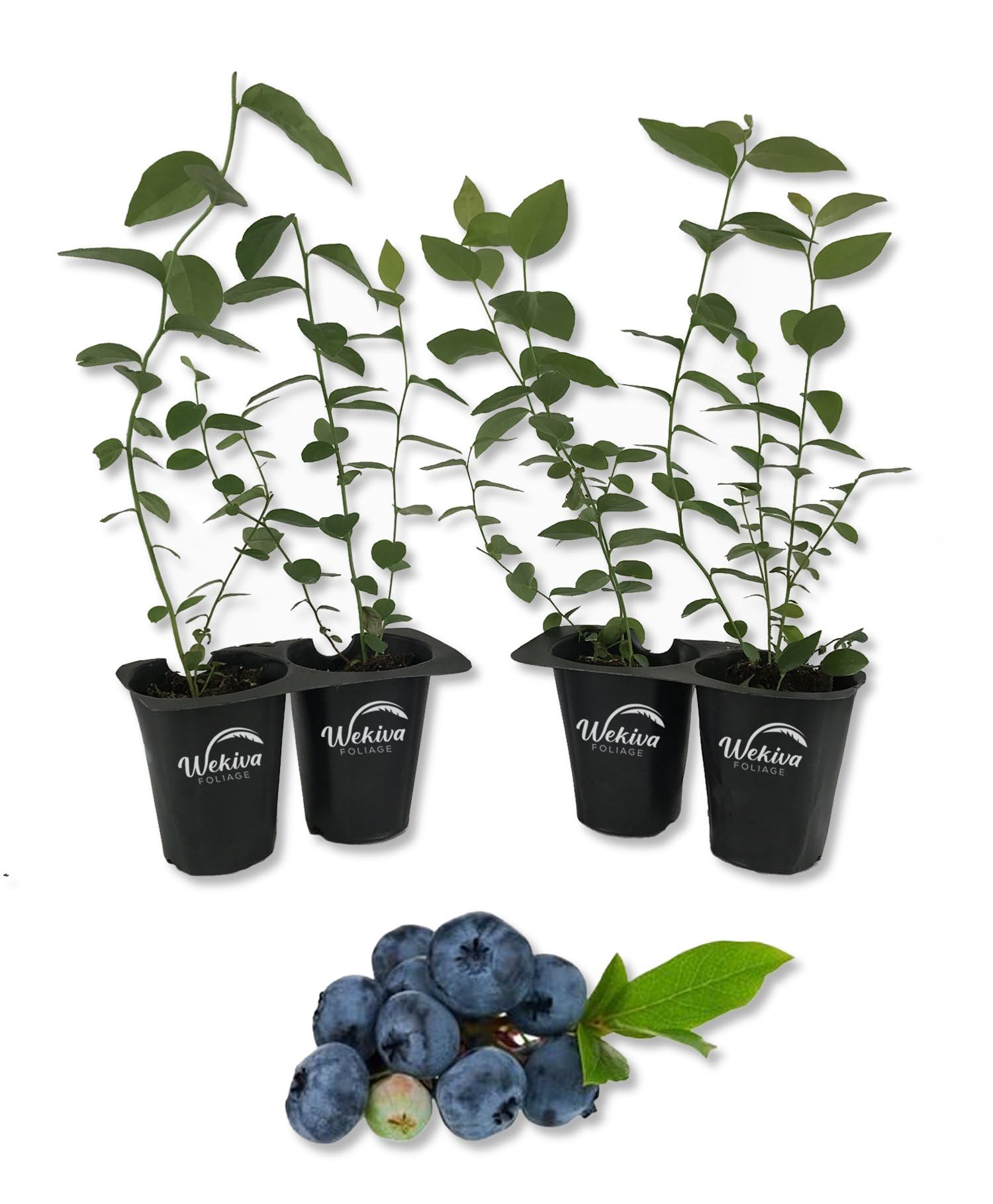
Legacy Blueberry Plant - 4 Live Starter Plants - Vaccinium - Edible Fruit Bearing Tree for The Patio and Garden
$24.97
by Wekiva Foliage



Physical Characteristics: Blueberry bushes are deciduous shrubs with slender, upright stems and dark green, leathery leaves that change to beautiful shades of red and purple in the fall. The small white or pink flowers bloom in spring, followed by clusters of small blue berries in the summer, which are both ornamental and edible. The compact size of certain cultivars makes them perfect for small gardens, containers, or ornamental hedging. Light Requirements: Blueberry bushes thrive in full sun to partial shade. Ideally, they should receive at least 6 hours of direct sunlight each day to produce the best fruit yields. Choose a location with good exposure to sunlight for maximum fruit production and healthy growth. Watering Needs: Blueberries prefer moist, well-drained soil that is consistently moist, especially during the growing season. Water deeply and regularly, particularly during dry periods. Ensure the soil remains moist but not soggy to prevent root rot. Soil Preferences: These plants prefer acidic soil with a pH of 4.5-5.5. Adding peat moss or sulfur can help acidify the soil if necessary. Blueberries grow best in well-drained, loamy soil with high organic content, making them ideal for raised beds or containers. Growth Rate and Size: Blueberry bushes are relatively slow-growing plants, but with patience, they will reach a height of 3 to 6 feet. Highbush varieties are typically taller and bushier, while lowbush varieties remain more compact. In their prime, they produce an impressive yield of berries, which mature in mid-to-late summer. The Blueberry Bush (Vaccinium) is a beloved fruit-bearing shrub known for its delicious, nutrient-rich berries and vibrant foliage. This versatile plant thrives in a variety of garden settings and produces abundant clusters of sweet, juicy blueberries. There are numerous cultivars of blueberry bushes, each with unique characteristics. For instance, the highbush varieties, like 'Bluecrop' and 'Legacy,' are known for their large, flavorful berries and ability to thrive in a wide range of climates. On the other hand, lowbush cultivars such as 'North Blue' are compact, perfect for containers, and yield smaller, intensely sweet berries. There's also the half-high variety, a cross between highbush and lowbush, offering the best of both worlds—compact growth with high yields. Regardless of the cultivar you choose, blueberries offer reliable harvests and enhance any garden with their lovely white flowers in spring, green foliage turning reddish in the fall, and vibrant blue fruit in summer. Whether grown in gardens or containers, blueberry bushes are easy to grow and produce fruit for years to come. With proper care, these bushes can grow to a mature height of 3-6 feet. Depending on the cultivar, blueberries be grown successfully in USDA Hardiness Zones 3-11. In addition to their beauty and fruit production, blueberry bushes are a valuable addition to any landscape, attracting pollinators and providing delicious, homegrown fruit that can be enjoyed fresh or in various recipes.