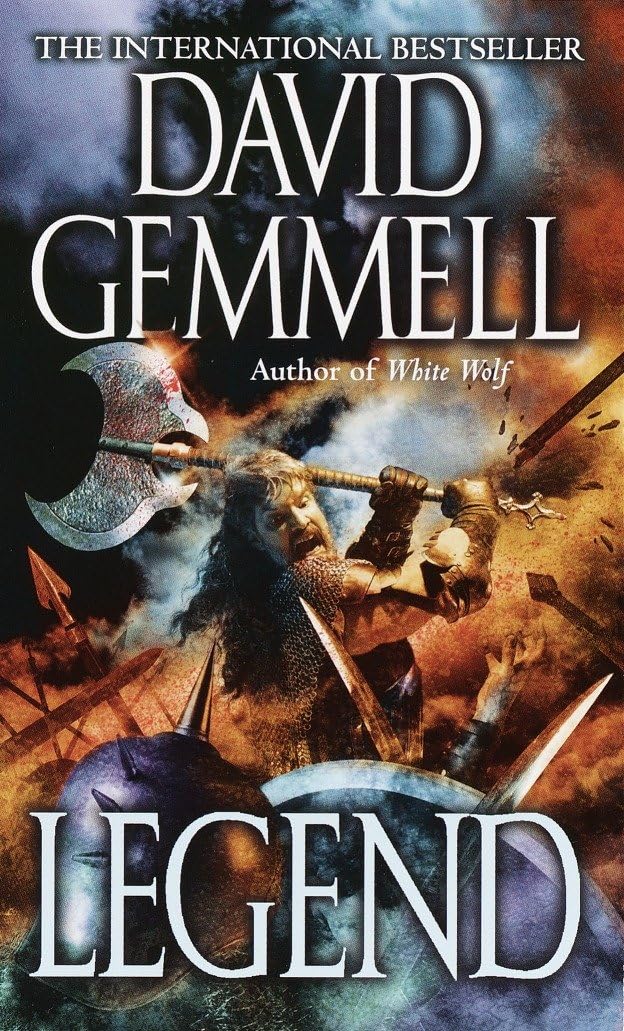



“David Gemmell tells a tale of very real adventure, the stuff of true epic fantasy.”—R. A. Salvatore Druss, Captain of the Ax, is the stuff of legends. Tales of his battles are told throughout the land, and the stories expand with each telling. But Druss himself grows older, until finally, the warrior turns his back on glory and retreats to his mountain lair. There he awaits his old enemy: death. But far below, the barbarian Nadir hordes are on the march. All that stands between them and the Drenai people is a mighty six-walled fortress, Dros Delnoch—a great citadel that seems destined to fall. If it does, the Nadir will sweep inexorably across the land, killing all who oppose them. Reluctantly Druss agrees to come down from his mountaintop to lead this last, hopeless fight. Lost causes mean nothing to him—he has fought in such battles a thousand times in a thousand lands. And he is a hero to inspire a new generation of warriors. He is Druss the Legend. Thus begins David Gemmell’s most celebrated novel—an unrivaled classic of mythic heroism and magnificent adventure. . . . “David Gemmell tells a tale of very real adventure, the stuff of true epic fantasy.” —R. A. Salvatore David Gemmell is so committed to his work that he's offered to leap naked out of an airplane if it would appeal to readers. We haven't taken him up on the offer. However, David has also acknowledged that three of his major influences were Louis Lamour, J.R.R. Tolkien, and Stan Lee. Tolkien wrote back, Lamour passed away before David had any opportunity to contact him, and Stan Lee lived thousands of miles away from David's British home. One out of three wasn't bad, but it could be improved upon. We were at the San Diego ComicCon, rustling up new readers, and David had just finished a two-hour continuous signing. A friend of mine spotted a familiar face, so I excused myself and darted away, returning a few moments later to say, "David Gemmell, I'd like you to meet Stan Lee." A tall, ruddy, and normally poised individual, David was struck speechless. Here was the man who, through his Marvel Comics stories, had reinvented the relationship between heroes and villains, forever blurring the barriers between good and evil. Before long the two fantasists were chatting away happily. Stan's wife, Joan, being British, was especially gracious to the London-born Gemmell. And Stan quickly demanded an autographed copy of LEGEND. David's a dynamic storyteller. His lands live and breathe. His heroes are mighty swordsmen, ax-wielders, and post-apocalyptic adventurers. In their prime they were the best in the business, but in David's tales, they've often passed their prime, so all they really want is peace and quiet. But life (and the author) aren't that kind, and these heroes are forced out of retirement, forced to face bloody hordes of the undead, armies from Hell. Worse, his heroes are generally saddled with young, green heroes. (Nothing drives you crazy more than a cocky kid.) But they overcome, and the cocky kids become heroes, too. This is great reading. --Steve Saffel, Senior Editor in of the Axe, was the stuff of legends. But even as the stories grew in the telling, Druss himself grew older. He turned his back on his own legend and retreated to a mountain lair to await his old enemy, death. Meanwhile, barbarian hordes were on the march. Nothing could stand in their way. Druss reluctantly agreed to come out of retirement. But could even Druss live up to his own legends? 1 Rek was drunk. Not enough to matter but not enough not to matter, he thought, staring at the ruby wine casting blood shadows in the lead crystal glass. A log fire in the hearth warmed his back, the smoke stinging his eyes, the acrid smell of it mixing with the odor of unwashed bodies, forgotten meals, and musty, damp clothing. A lantern flame danced briefly in the icy wind as a shaft of cold air brushed the room. Then it was gone as a newcomer slammed shut the wooden door, muttering his apologies to the crowded inn. Conversation, which had died in the sudden blast of frosty air, now resumed, a dozen voices from different groups merging into a babble of meaningless sounds. Rek sipped his wine. He shivered as someone laughed; the sound was as cold as the winter beating against the wooden walls. Like someone walking over your grave, he thought. He pulled his blue cloak more tightly about his shoulders. He did not need to hear the words to know the topic of every conversation: It had been the same for days. War. Such a little word, such a depth of agony. Blood, death, conquest, starvation, plague, and horror. More laughter burst upon the room. “Barbarians!” roared a voice above the rabble. “Easy meat for Drenai lances.” More laughter. Rek stared at the crystal goblet. So beautiful. So fragile. Crafted with care, even love, multifaceted like a gossamer diamond. He lifted the crystal close to his face, seeing a dozen eyes reflected there. And each accused. For a second he w