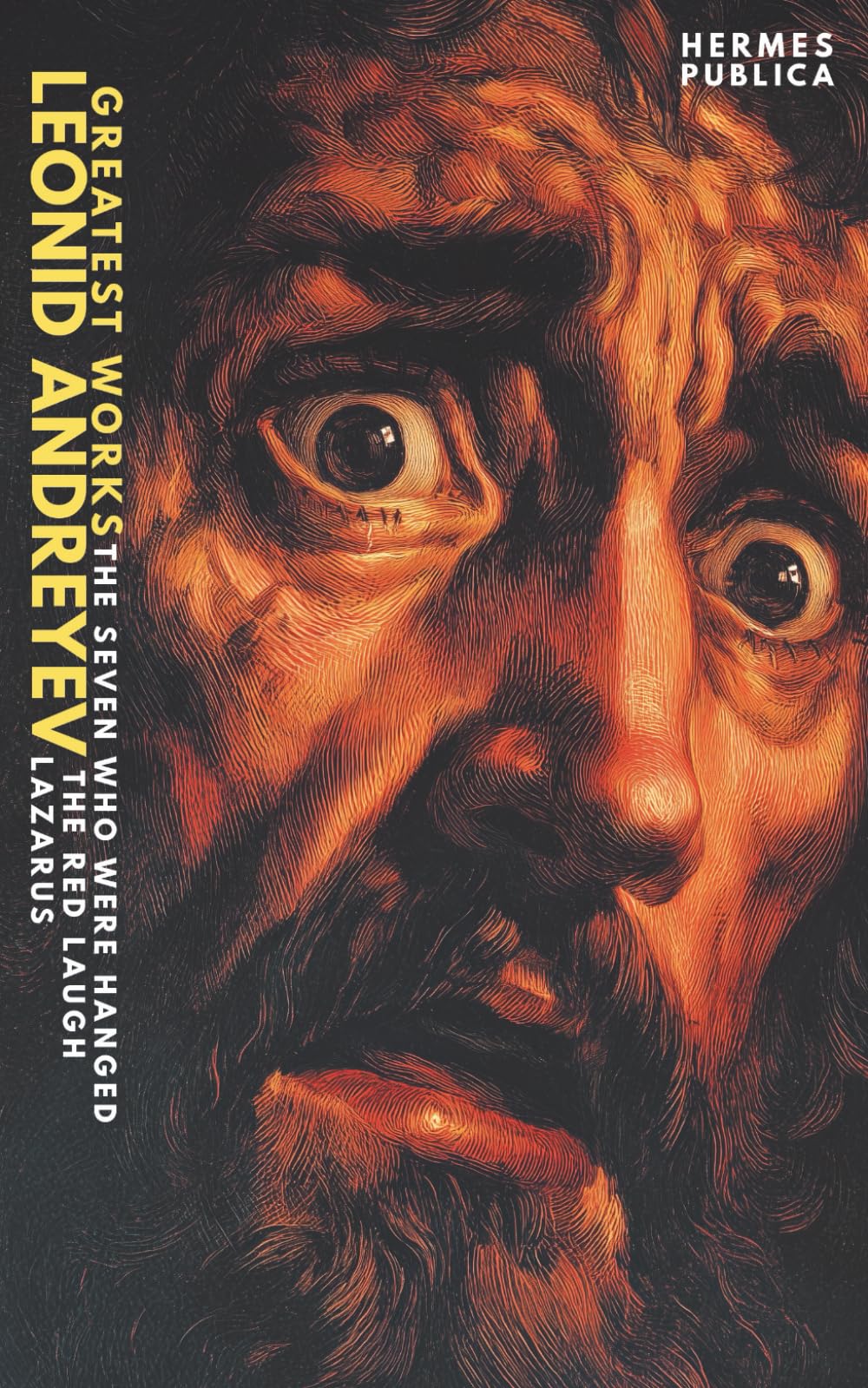
Leonid Andreyev Collection - His Greatest Works including, Lazarus, The Red Laugh, The Seven Who Were Hanged: Cover art by Robert Jordan G (Hermes
$9.99
by Leonid Andreyev



THE SEVEN WHO WERE HANGED (1908) Genre: Psychological Fiction • Political Drama • Existential Horror This novella follows seven prisoners—revolutionaries and ordinary criminals—who are condemned to death in Tsarist Russia. Rather than focusing on political ideology, Andreyev explores the inner lives of the doomed, portraying their fear, denial, dignity, and breakdown in the days before execution. The story is emotionally intense, often bleak, and driven by themes of mortality, identity, and the cruelty of the state. It is widely considered one of Andreyev’s masterpieces. LAZARUS (1906) Genre: Symbolist Horror • Philosophical Horror • Religious Allegory “Lazarus” imagines the life of the biblical Lazarus after he is resurrected by Christ. Instead of returning joyful, Andreyev depicts Lazarus as a traumatized, silent figure whose gaze carries the horror of having seen death’s true nature. His presence warps the worlds of emperors, artists, and ordinary people, spreading dread simply through his eyes. The story is short but profoundly unsettling—often compared to cosmic horror for its bleak depiction of existence. THE RED LAUGH (1904) Genre: War Horror • Experimental Fiction • Dystopian Psychological Horror This novella is one of the most disturbing anti-war works ever written. Told in fragmented, hallucinatory entries, it follows soldiers in a brutal, unnamed war (inspired by the Russo-Japanese War). Madness spreads like a disease as the narrator witnesses atrocities, mutilation, and the breakdown of reality itself. The “Red Laugh” becomes a symbolic force—a kind of deranged spirit of war that consumes minds and nations. The book reads like a nightmare and influenced later surreal and existential horror.