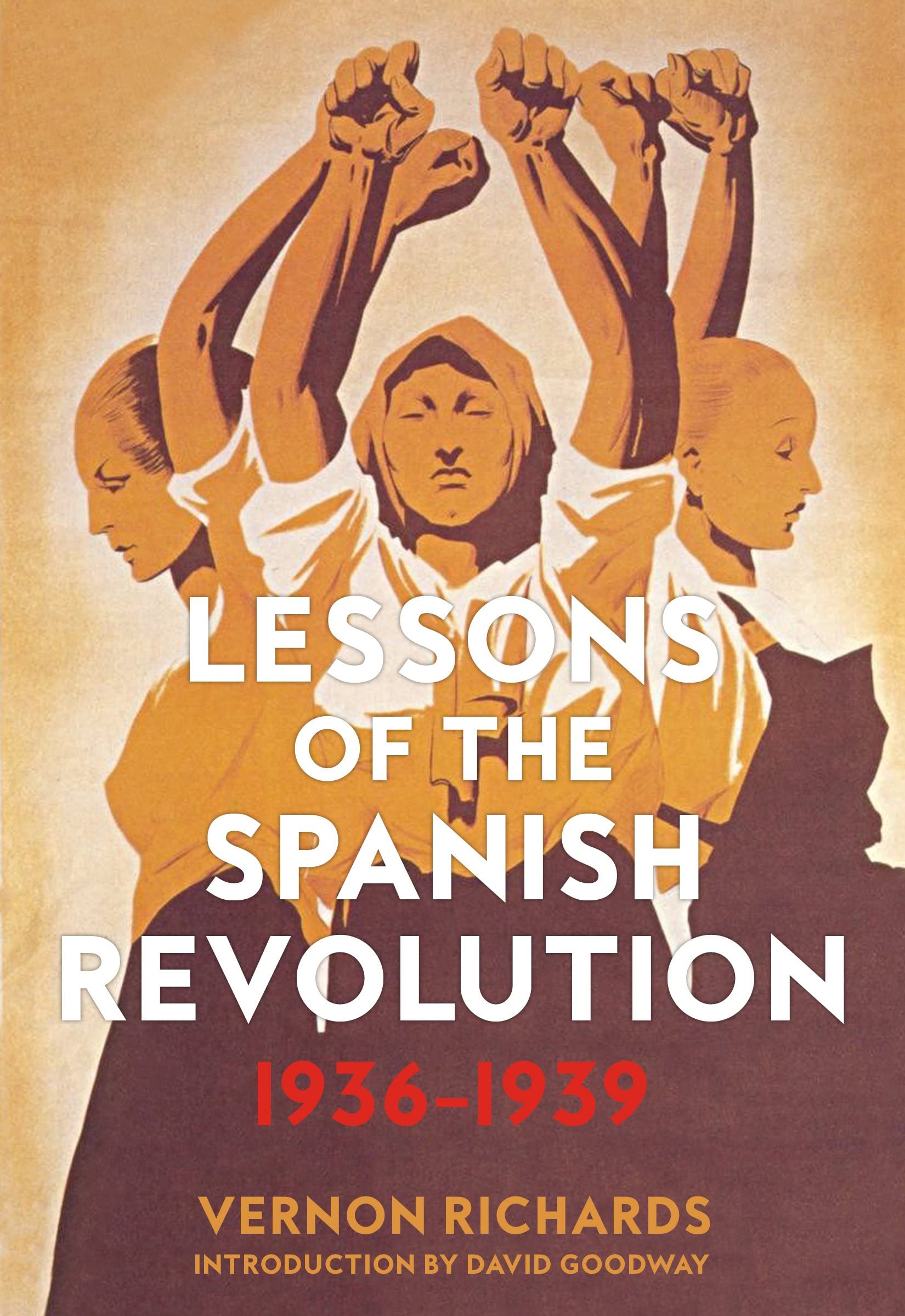



It was the revolutionary movement in Spain which took up Franco's challenge in July 1936, and this book soberly examines the many ways in which Spain’s revolutionary movement contributed to its own defeat. Was it too weak to carry through the Revolution? To what extent was the purchase of arms and materials from outside sources dependent upon the appearance of a constitutional government inside Republican Spain? What chances had an improvised army of guerrillas against a trained fighting force? In seeking to solve these problems, the anarchists and revolutionary syndicalists were confronted with other questions. Could they collaborate with political parties and reformist unions? Should the revolutionary impetus of the first days of resistance be halted in the interests of the struggle against Franco or be allowed to develop as far as the workers were able to take it? Was the situation such that the social revolution could triumph and, if not, what was to be the role of the revolutionary workers? Originally written as a series of weekly articles in the 1950s and expanded, republished, and translated over the years, Vernon Richards’s analysis remains essential reading for all those interested in revolutionary praxis. “The revolution that accompanied the outbreak of the Spanish Civil War was a high point in the history of working-class creativity, internationalism and self-activity. If it is to be a resource for present and future struggles, we must assess the strengths and weaknesses of the movement that propelled it. In this regard, the early endeavours of Vernon Richards remain indispensable.” —Danny Evans, author of Revolution and the State: Anarchism in the Spanish Civil War, 1936–1939 “Vernon Richards’s Lessons of the Spanish Revolution is an excellent critical anarchist work on the revolution and the role of the anarchists.” —Iain McKay, editor of Direct Struggle Against Capital: A Peter Kropotkin Anthology “ Lessons of the Spanish Revolution explores the deeply complex subject of the Spanish workers’ heroic struggle against Franco’s regime exceptionally well. One of the key strengths of the book can be seen in the way Richards unflinchingly lays bare a clutch of deeply sobering truths, particularly through demonstrating how a number of disastrous tactics pursued by Spanish anarchists and syndicalists directly contributed to the defeat of the revolutionary movement.” —Richard J. White, coeditor of The Practice of Freedom: Anarchism, Geography, and the Spirit of Revolt Across seven decades, Vernon Richards maintained an anarchist presence in British publishing. He edited the anarchist paper Freedom , translated the Italian anarchist Errico Malatesta, and photographed George Orwell. David Goodway is a British social and cultural historian. He is the author of Anarchist Seeds beneath the Snow and editor of For Anarchism, Herbert Read Reassessed, and The Letters of John Cowper Powys and Emma Goldman, among others. Lessons of the Spanish Revolution: 1936-1939 By Vernon Richards PM Press Copyright © 2019 PM Press All rights reserved. ISBN: 978-1-62963-647-4 Contents INTRODUCTION: LESSONS OF THE SPANISH REVOLUTION AND VERNON RICHARDS BY DAVID GOODWAY, INTRODUCTION TO THE FIRST ENGLISH EDITION (1953), GLOSSARY OF ACRONYMS, PART I, I The Elections of February 1936, II The Militarists' Uprising of July 1936, III The Revolution at the Crossroads, IV Anarchist Dictatorship or Collaboration and Democracy, V The CNT and the UGT, VI The CNT Joins the Catalan and Central Governments, VII The CNT and Political Action, VIII The Corruption of Power, IX The Agricultural Collectives, X The Collectivised Industries, XI The Communists: Spearhead of the Counter-Revolution, XII The "May Days" in Barcelona, XIII The Revolutionary Significance of the "May Days", XIV The CNT and the Caballero Government Crisis, XV The FAI and the Political Struggle, PART 2, Introduction, XVI From the Militias to Militarization, XVII The Extended National Economic Plenum of January 1938, XVIII The UGT-CNT Pact, XIX The Cult of the Organisation and of Personalities, XX The Rank and File's Responsibility, XXI Some Conclusions, Anarchism and Syndicalism, Anarchism and Violence, Means and Ends, BIBLIOGRAPHY (1957), BIBLIOGRAPHICAL POSTSCRIPT (1972), FOOTNOTES TO THE BIBLIOGRAPHICAL POSTSCRIPT (1983), BIBLIOGRAPHIC ADDENDUM BY DANNY EVANS, INDEX, ABOUT THE AUTHORS, CHAPTER 1 THE ELECTIONS OF FEBRUARY 1936 By its constitution the CNT was independent of all the political parties in Spain and abstained from taking part in parliamentary and other elections. Its objectives were to bring together the exploited masses in the struggle for day-to-day improvements of working and economic conditions and for the revolutionary destruction of capitalism and the state. Its ends were libertarian communism, a social system based on the free commune federated at local, regional, and nati