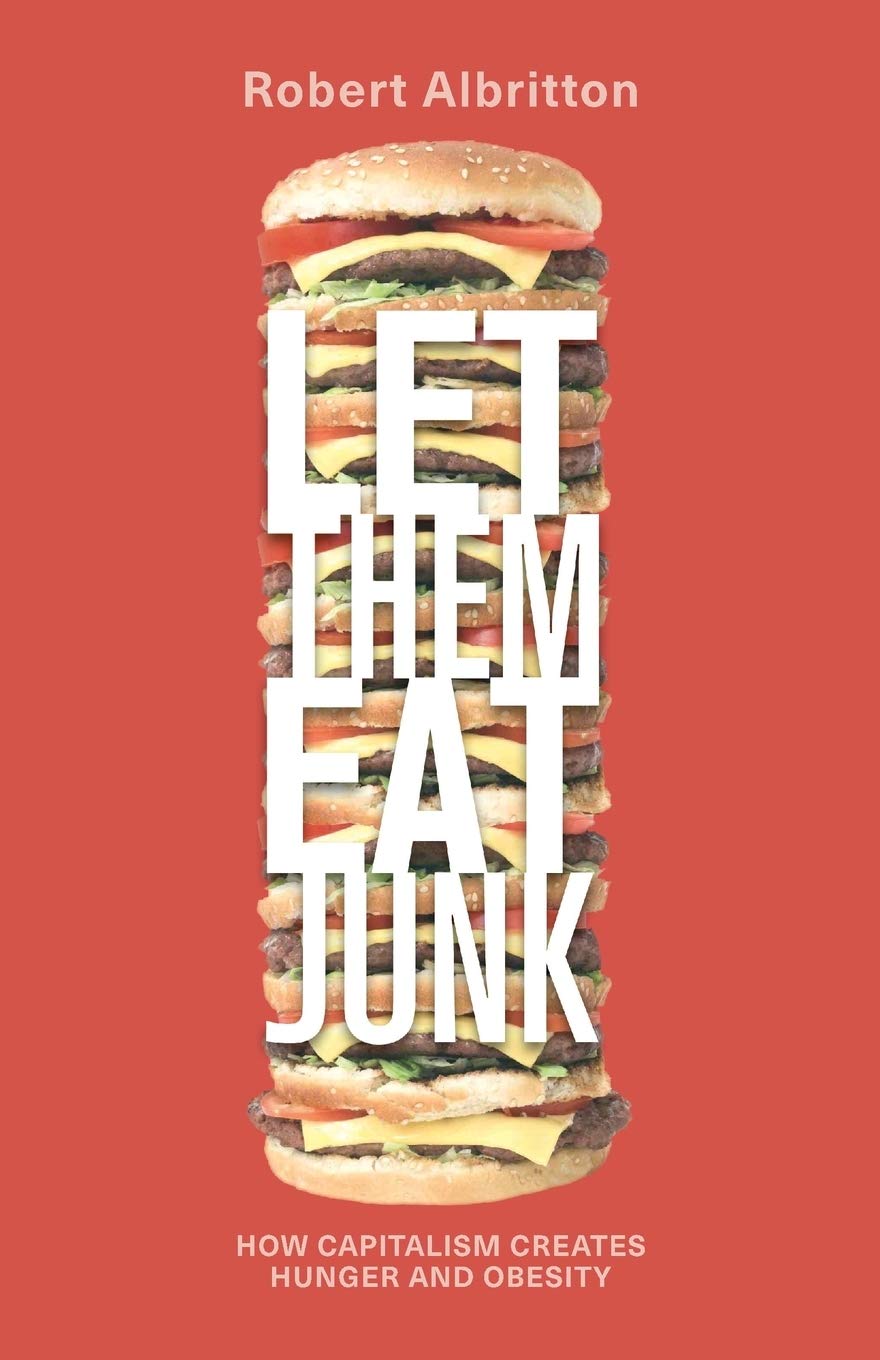



Respected economist Robert Albritton argues that the capitalist system, far from delivering on the promise of cheap, nutritious food for all, has created a world where 25% of the world population are over-fed and 25% are hungry. This malnourishment of 50% of the world's population is explained systematically, a refreshing change from accounts that focus on cultural factors and individual greed. Albritton details the economic relations and connections that have put us in a situation of simultaneous oversupply and undersupply of food. This explosive book provides yet more evidence that the human cost of capitalism is much bigger than those in power will admit. 'Albritton speaks a language that has gone unheard for too long. Karl Marx felt that capitalism's focus on short-term profit was a recipe for disaster when it came to agriculture. Now Albritton shows that, in many ways, the old man was right' New Scientist; 'Pulls no punches in its analysis of the contradictions of 21st Century food systems' Marion Nestle, Paulette Goddard Professor of Nutrition, Food Studies, and Public Health at New York University, author of Food Politics; 'Marx understood the dynamics of the current food crisis over a century ago. Robert Albritton has written a fine primer, bridging the best thinking of the nineteenth century to the urgent needs of the twenty-first' Raj Patel, author of Stuffed and Starved Robert Albritton was Professor Emeritus in the Department of Political Science at York University, Toronto, Canada. He has published seven books on Marxist theory, including Let Them Eat Junk and Economics Transformed . Let Them Eat Junk How Capitalism Creates Hunger and Obesity By Robert Albritton Pluto Press Copyright © 2009 Robert Albritton All rights reserved. ISBN: 978-0-7453-2806-5 Contents Preface, 1 Introduction, Part II Understanding Capitalism, 2 The Management of Agriculture and Food by Capital's Deep Structures, 3 The Phase of Consumerism and the US Roots of the Current Agriculture and Food Regimes, Part III The Historical Analysis of the US-Centred Global Food Regime, 4 The Food Regime and Consumers' Health, 5 The Health of Agriculture and Food Workers, 6 Agriculture, Food Provisioning and the Environment, 7 Food, Marketing and Choice in the United States, 8 Corporate Power, Food and Liberal Democracy, Part IV Conclusions, 9 Agriculture, Food and the Fight for Democracy, Social Justice, Health and Sustainability, Notes, Bibliography, Index, CHAPTER 1 INTRODUCTION ... the very basis for life on earth is declining at an alarming rate. ... the entire spirit of capitalist production, which is oriented towards the most immediate profit, stands in contradiction to agriculture, which has to concern itself with the whole gamut of permanent conditions of life required by the chain of human generations. Around the world, farmers and farm workers are dying, with the connivance of elected officials, and at the whim of the market. Through processed food, consumers are engorged and intoxicated. The agribusiness's food and marketing have contributed to record levels of diet-related disease, harming us today and planting a time-bomb in the bodies of children around the world. ... Most of this happens with consumers ignorant of the suffering that precedes every mouthful of food. On being told that her people had no bread, Marie Antoinette (1755–1793), the soon-to-be beheaded Queen of France, purportedly remarked, "Let them eat cake." Such a callous indifference to the hunger of masses of people speaks volumes about why the French Revolution occurred. Today, the place of Marie Antoinette is taken by giant food corporations and the governments they influence, who, having learned from Marie Antoinette, would never say "Let them eat junk," but who, in the face of massive global malnourishment (one half of the global population is overfed, underfed or badly fed), simply continue to aggressively spread their radically unsustainable systems of agricultural production around the world, topped off as it were with "junk food" high in additives, sugars, fats and salts but low in nutrients. While this junk food is often relatively cheap, even its prices are rising with the diversion of large amounts of corn and soy into ethanol production, particularly since the US government has made the decision to feed the bottomless appetites of US sports utility vehicles (SUVs) rather than the hungry people of the world. GENERAL INTRODUCTION Today we have a truly disturbing situation, with parts of the world having so much food they do not know what to do with it, while nearly half the people in the world suffer malnutrition. Approximately 1 billion people suffer almost continual and acute hunger globally. What is most disturbing, however, is that we are on the brink of a far more massive global starvation because of skyrocketing food prices around the world. And this is only the beginning. Ima