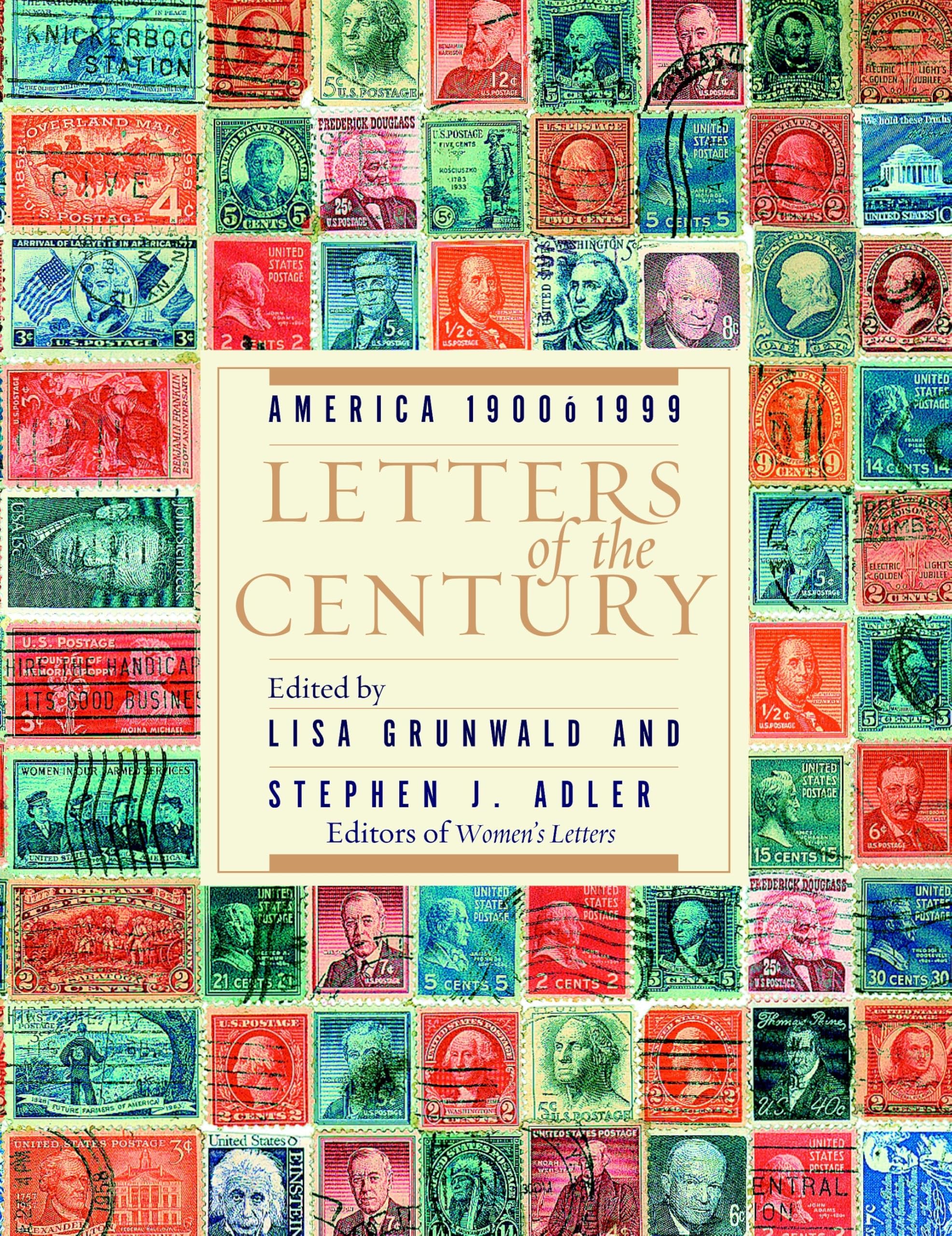



"Immediate and evocative, letters witness and fasten history, catching events as they happen," write Lisa Grunwald and Stephen J. Adler in their introduction to this remarkable book. In more than 400 letters from both famous figures and ordinary citizens, Letters of the Century encapsulates the people and places, events and trends that shaped our nation during the last 100 years. Here is Mark Twain's hilarious letter of complaint to the head of Western Union, an ecstatic letter from a young Charlie Chaplin upon receiving his first movie contract, Einstein's letter to Franklin Roosevelt warning about atomic warfare, Mark Rudd's "generation gap" letter to the president of Columbia University during the student riots of the 60s, and a letter from young Bill Gates imploring hobbyists not to share software so that innovators can make some money... In these pages, our century's most celebrated figures become everyday people and everyday people become part of history. Here is a veteran's wrenching letter left at the Vietnam Wall, a poignant correspondence between two women trying to become mothers, a heart-breaking letter from an AIDS sufferer telling his parents how he wants to be buried, an indignant e-mail from a PC user to his on-line server... "Letters," write Grunwald and Adler, "give history a voice." Arranged chronologically by decade, illustrated with over 100 photographs, Letters of the Century creates an extraordinary chronicle of our history, through the voices of the men and women who have lived its greatest moments. Lisa Grunwald is the author of seven novels, including Time After Time, The Irresistible Henry House, and The Theory of Everything . Along with her husband, former Reuters editor-in-chief Stephen Adler, she edited the anthologies The Marriage Book, Women’s Letters , and Letters of the Century . Grunwald is an occasional essayist and runs a side hustle called ProcrastinationArts, where she sells the other things she makes with pencils and paper. She lives in New York City. Stephen J. Adler is an Assistant Managing Editor at The Wall Street Journal. He is the author of The Jury: Trial And Error In The American Courtroom . Grunwald and Adler live with their two children in New York City. Introduction In 1955, the day after Jonas Salk announced that he had found a vaccine for polio, an expectant mother in Nyack, New York, sat down to write him a letter. The gratitude she expressed in this letter still mingles, on its pages, with a note of relief and longing, and an echo of recent pain. The difference between knowing that Americans were grateful to Jonas Salk and reading this letter to him is like the difference between knowing the words of a song and hearing it sung. Letters give history a voice. This book celebrates that voice, as it has changed and deepened, whispered and shouted, wept and teased, laughed and pleaded, throughout the letters written during the last hundred years in America. Yet this is not a book about letters. It is a book about the twentieth century, as told in letters. The 423 letters printed in this volume are arranged chronologically—with the hope that as you read them, you will feel as if you are hearing successive verses in a national ballad. Throughout the last hundred years—beginning, in fact, with the very first letter in this book—observers have lamented the fact that people don't write letters anymore. Yet letters have described most of the century's major events, have reflected or reflected upon most of its social and cultural trends, have captured most of its political passions, and have been written by most of its principal figures. We may think we've heard the whole story, but that story resonates more deeply when we read the century's letters. Part of the reason for that resonance is the immediacy of letters. Letters are what history sounds like when it is still part of everyday life. While aftershocks from the San Francisco earthquake continue, a man who owns a clothing store recounts the terror of watching it burn. A teacher who doesn't yet know how many friends of hers have been killed describes being forced to leave her home during the St. Louis race riots of 1919. A nurse living in Honolulu tells her brother in Ohio how the smoke looks over Pearl Harbor just a few hours after the bombing. Immediate and evocative, letters witness and fasten history, catching events as they happen. Sometimes letters even shape those events: the order to drop the bomb on Hiroshima; the Lindbergh baby ransom note; Nixon's letter of resignation. In addition to immediacy, letters have intimacy, and this, too, gives history resonance. Lord Byron wrote: "Letter writing is the only device for combining solitude and good company," and the safety of that combination seems to inspire the courage to be honest. Dreams are confided in letters—both the nightmares and the hopes. Love is confided in letters—without fear of hearing laughter. Sex and jea