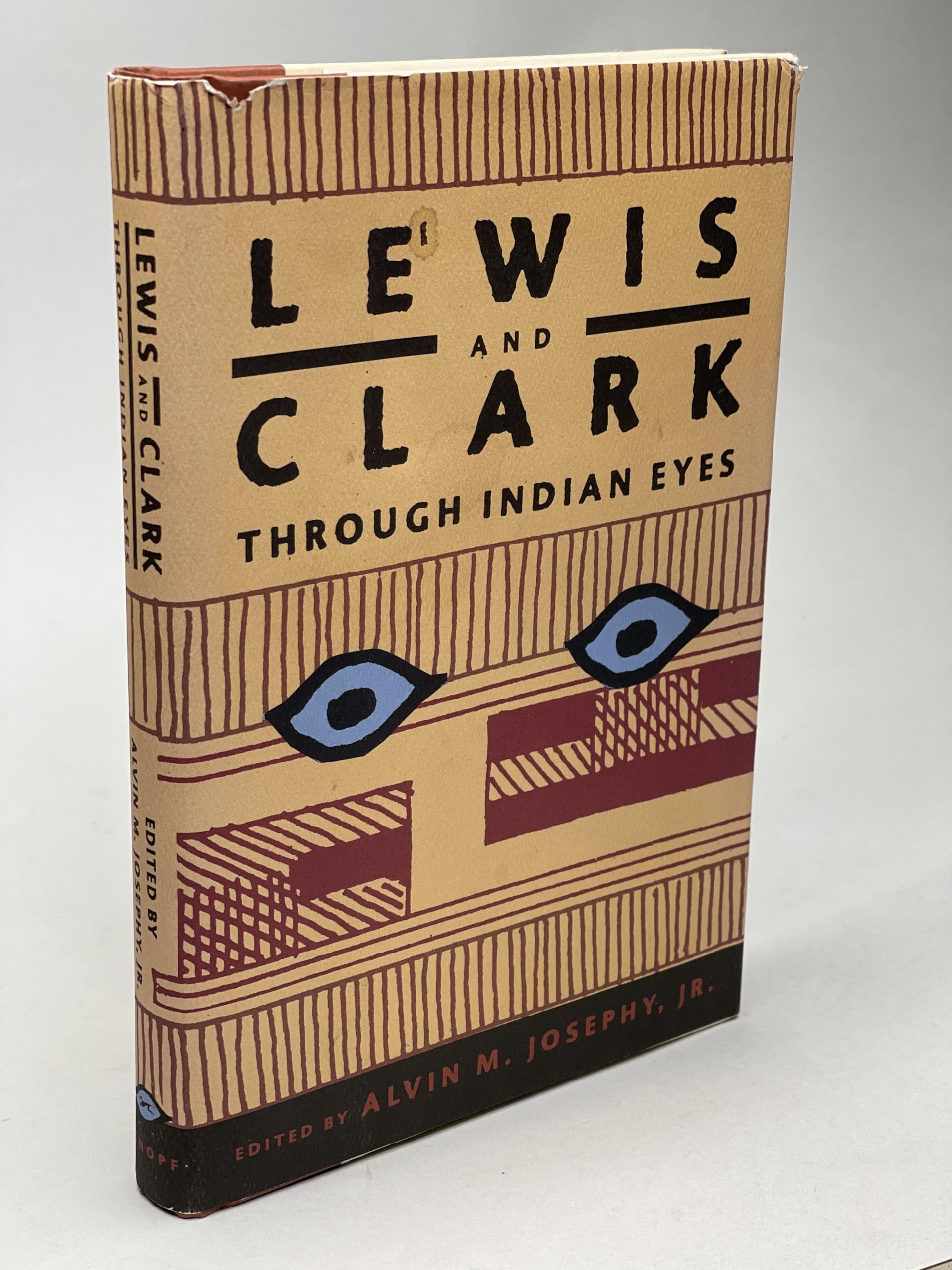



For the first time in the two hundred years since Lewis and Clark led their expedition from St. Louis to the Pacific, we hear the other side of the story—as we listen to nine descendants of the Indians whose homelands were traversed. Among those who speak: Newspaper editor Mark Trahant writes of his childhood belief that he was descended from Clark and what his own research uncovers. Award-winning essayist and fiction writer Debra Magpie Earling describes the tribal ways that helped her nineteenth-century Salish ancestors survive, and that still work their magic today. Montana political figure Bill Yellowtail tells of the efficiency of Indian trade networks, explaining how axes that the expedition traded for food in the Mandan and Hidatsa villages of Kansas had already arrived in Nez Perce country by the time Lewis and Clark got there a few months and 1,000 miles later. Umatilla tribal leader Roberta Conner compares Lewis and Clark’s journal entries about her people with what was actually going on, wittily questioning Clark’s notion that the natives believed the white men “came from the clouds”—in other words, they were gods. Writer and artist N. Scott Momaday ends the book with a moving tribute to the “most difficult of journeys,” calling it, in the truest sense, for both the men who entered the unknown and those who watched, “a vision quest,” with the “visions gained being of profound consequence.” Some of the essays are based on family stories, some on tribal or American history, still others on the particular circumstances of a tribe today—but each reflects the expedition’s impact through the prism of the author’s own, or the tribe’s, point of view. Thoughtful, moving, provocative, Lewis and Clark Through Indian Eyes is an exploration of history—and a study of survival—that expands our knowledge of our country’s first inhabitants. It also provides a fascinating and invaluable new perspective on the Lewis and Clark expedition itself and its place in the long history of our continent. Adult/High School–Native American viewpoints were rare among events celebrating the bicentennial of the Lewis and Clark explorations. Yet during its trek from St. Louis to the Pacific coast (May 1804-December 1806) the Corps of Discovery made contact with many Indian nations, and the expedition's success was dependent on contributions from Native people, most famously Sacagawea. These nine finely crafted essays, all by distinguished Native American writers and scholars descended from those tribes, probe the roles of Indians in the Lewis and Clark experience from a variety of perspectives. Mark N. Trahant's Who's Your Daddy? recounts research into family lore claiming direct descent from William Clark, and in Frenchmen, Bears, and Sandbars, Vine Deloria, Jr. wittily redefines the historical significance of Lewis and Clark's achievement. Other contributors explore oral histories about the expedition, imagine the voices of Indians encountering Lewis and Clark, and explicate complex tribal legal, economic, and social systems and how they were affected by the expedition and its aftermath. This is an informative and moving collection, recommended for classroom and family discussions. –Starr E. Smith, Fairfax County Public Library, VA Copyright © Reed Business Information, a division of Reed Elsevier Inc. All rights reserved. In the aftermath of the nationwide celebration of the 200th anniversary of the Lewis and Clark expedition comes this lucid reminder that few Indian voices were heard in all the festivities. Coverage of the Indian role in that journey and historical developments in its wake was most often conveyed solely from the white perspective. The nine essays gathered here, written by Native historians, authors, professors, and tribal executives, address the impact of the expedition on the Indians Lewis and Clark encountered and the Natives' descendants. Educator Bill Yellowtail discusses "the steady erosion of Indians' economic autonomy." Tribal leader Roberta Conner takes a humorous yet caustic approach, noting that her tribe's homeland was "neither an unoccupied frontier nor a wilderness" when Lewis and Clark arrived. Indian societies possessed philosophy, laws, order, and religion, none of which were ever mentioned in Clark's paternalistic journals, which she quotes extensively. "Our people have always been here," she concludes, and "we intend to be here forever," a sentiment that succinctly encapsulates this unique and provocative collection. Deborah Donovan Copyright © American Library Association. All rights reserved “A remarkable book…gives both the event and the era a fresh perspective.” — The St. Louis Post-Dispatch “Every story has two sides, and until now, the Indian point of view has scarcely been heard.” — San Francisco Chronicle “[A] compulsively readable book…should be required reading for all Americans.” — Santa Cruz Sentinel From the Trade Paperback edition. Alvin M. Josephy, Jr., a