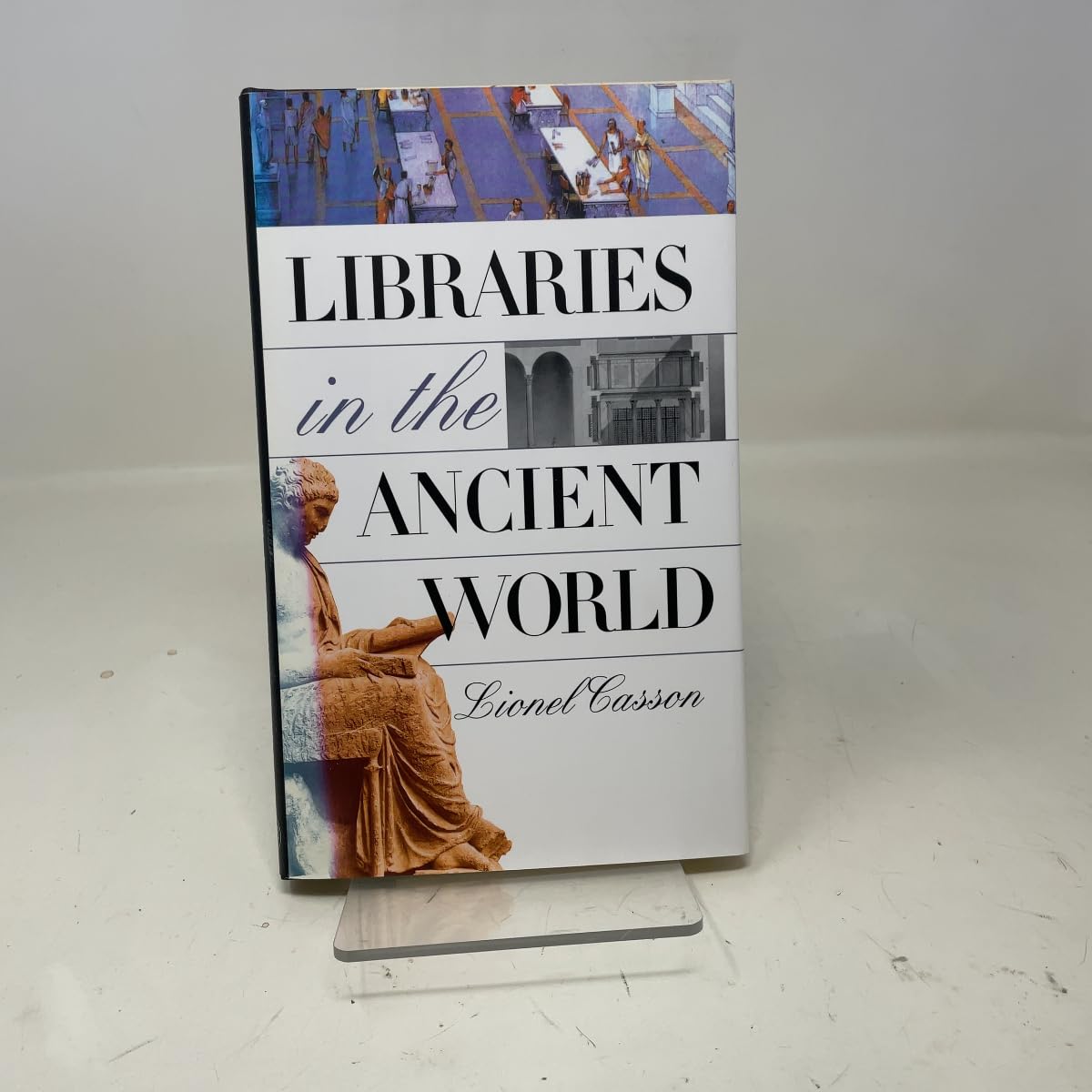



This delightful book tells the story of ancient libraries from their very beginnings, when "books" were clay tablets and writing was a new phenomenon. Renowned classicist Lionel Casson takes us on a lively tour, from the royal libraries of the most ancient Near East, through the private and public libraries of Greece and Rome, down to the first Christian monastic libraries. To the founders of the first public libraries of the Greek world goes the credit for creating the prototype of today's library buildings and the science of organizing books in them. Casson recounts the development of ancient library buildings, systems, holdings, and patrons, addressing questions on a wide variety of topics, such as: What was the connection between the rise in education and literacy and the growth of libraries? Who contributed to the early development of public libraries, especially the great library at Alexandria? What did ancient libraries include in their holdings? How did ancient libraries acquire books? What was the nature of publishing in the Greek and Roman world? How did different types of users (royalty, scholars, religious figures) and different kinds of "books" (tablets, scrolls, codices) affect library arrangements? How did Christianity transform the nature of library holdings? Just as a library yields unexpected treasures to a meandering browser, this entertaining book offers to its perusers the surprising history of the rise and development of ancient librariesa fascinating story never told before. The Dewey decimal system of cataloguing and its modern successors are relatively new, and they sometimes seem inadequate as ways of organizing knowledge in ever-changing fields of study. But the idea of bringing order to collections of written material is an ancient one, as Lionel Casson writes in this lucid survey of bibliophilia in the ancient Mediterranean. Among the earliest examples of written material that we have are lists of library holdings, clay tablets from Mesopotamia that archive commercial inventories, scholarly texts, and a surprising number of works on witchcraft and remedies against it. Ancient libraries grew, Casson writes, by many means: by peaceful trade, as when book-hungry Romans spent extravagant sums on Greek texts made in southern Italy; by conquest, as when the Assyrian king Ashurbanipal looted the libraries of his ancient rival Babylon, carting the contents to his capital of Nineveh; and by fiat, as when the Egyptian pharaohs appropriated private collections to round out their own. Those libraries nourished the great philosophers and writers of old, shaping world culture into our own time. But, as Casson ably shows, the enemies of books are many, among them floods, fires, insects, and intolerance. As it is today, so it was in the past, and contending empires and ideologies too often expressed themselves by sacking and burning the collections of their enemies--by reason of which we have only a few of the works that engaged readers in the distant past. Casson's slender book enhances our understanding of the role of books and their collectors in the ancient world, and bibliophiles and historians alike will find much of value in its pages. --Gregory McNamee To find an English-language work comparable to this one in content, size, and scope, one has to go all the way back to James Westfall Thompson's 1940 Ancient Libraries (Univ. of California. o.p.). Casson, a professor emeritus of classics at New York University and author of numerous books on ancient history, provides an overview of the development of libraries (and, to some extent, of writing, literacy, bookselling, and archives), starting with Egypt and Mesopotamia in the third millennium B.C.E. and continuing through the periods of the political and cultural predominance of Greece and then Rome, ending around the fifth century C.E. Among the libraries featured are those of Ashurbanipal in Nineveh, Alexandria, Pergamum, and the Forum of Trajan in Rome. Numerous other specific royal, temple, private, and public libraries are also mentioned. Drawing upon the scholarship of the last several decades, Casson describes, wherever possible, the acquisition, format, cataloging, arrangement, subjects, and use of the library materials and the staffing, architecture, and size of the libraries. He makes clear when the archaeological or literary evidence is scant or lacking. General readers will find this book informative and engaging. Scholars will also be interested in the 18 pages of notes at the end. Libraries in the Ancient World now supersedes Ancient Libraries and should be in library science and ancient history collections in public and academic libraries.DThomas F. O'Connor, Manhattan Coll. Libs., Bronx, NY Copyright 2001 Reed Business Information, Inc. "A wonderful book for those who love libraries and the books within." -- History Magazine "A wonderful book on a wonderful subject. Casson knows what is interest