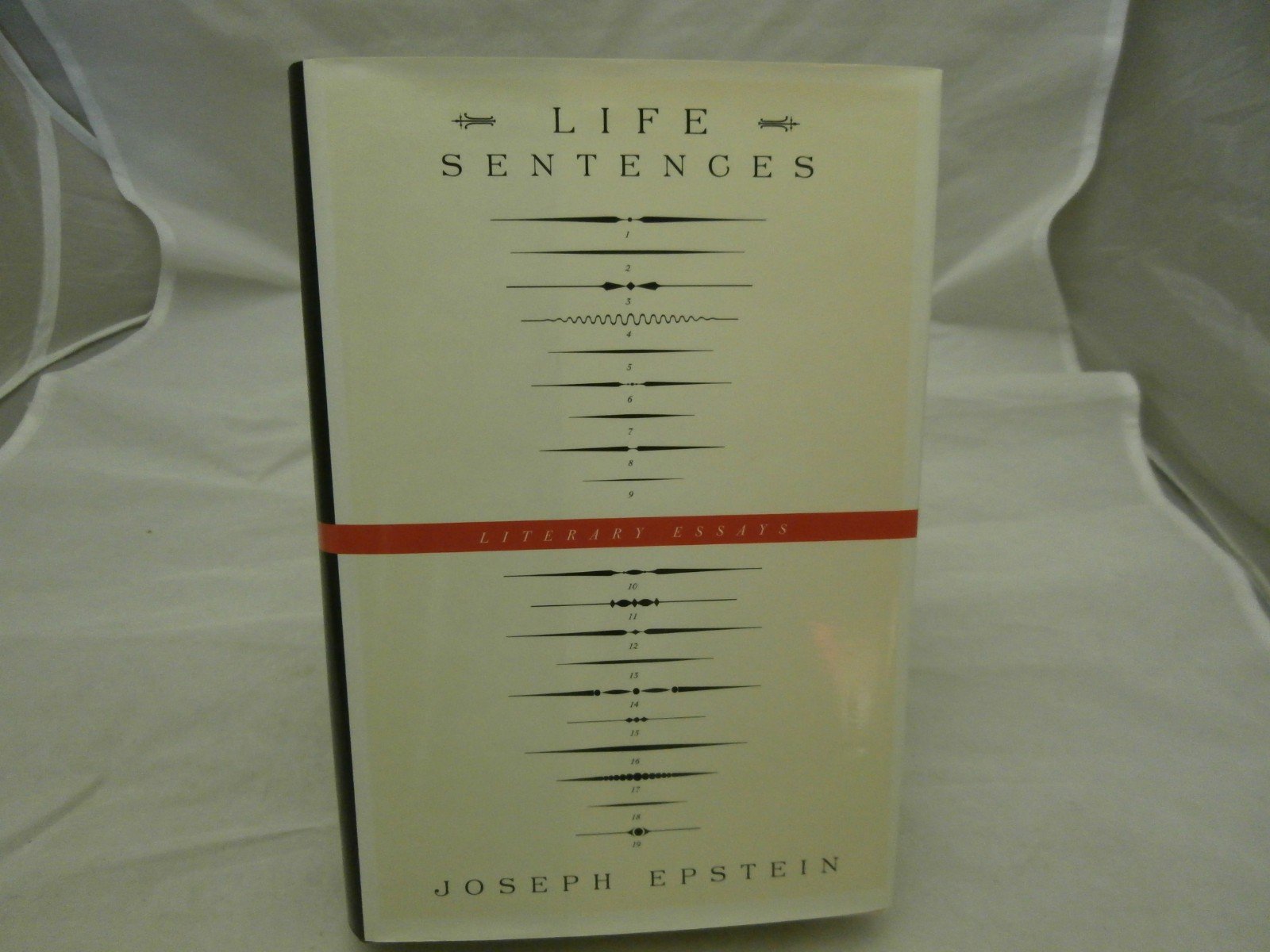



Essays representing a lifetime's reading discuss Montaigne, Cavafy, Fitzgerald, Solzhenitsyn, and fifteen other authors Epstein (Pertinent Players, 1993, etc.) delivers literary appreciations and depreciations of an eclectic set of members of the Republic of Letters. In his fourth collection of literary essays, Epstein knowledgeably displays his affinity for the old school of bare-knuckles criticism as practiced by H.L. Mencken and Edmund Wilson. The former editor of the American Scholar is no more afraid of airing personal preferences (or prejudices) in literature's service--from Montaigne to Solzhenitsyn--than Mencken or Wilson were when promoting Theodore Dreiser and F. Scott Fitzgerald or deflating overlarge reputations. Dreiser and Fitzgerald are reappraised here, along with John Dos Passos and Ambrose Bierce, and are judged selectively on aesthetics, moral purpose, and charm. Thus, Dreiser is pardoned for writing badly but seriously, Dos Passos for writing overambitiously but inventively, and Fitzgerald for writing self-pityingly but lyrically. Robert Lowell and Elizabeth Bishop get off less lightly, with Epstein castigating them as much for muddled personal lives as for poetic weaknesses. By contrast, Philip Larkin gets a sympathetic hearing for posterity, despite charges of alcoholism, misogyny, and bigotry. Epstein's double standard--defending those under attack and vice versa--is most telling in his two essays on that improbable married couple of letters, Edmund Wilson and Mary McCarthy. The prickly Wilson proved a repugnant character in his journals, especially the priapic, misanthropic senior citizen of The Sixties, but Epstein still asserts his greatness on the basis of such books as Shores of Light and Patriotic Gore. McCarthy, no less prickly or ambitious than Wilson, instead gets relegated to the merely clever and outdated, though her literary instincts were arguably sharper (especially about their friend Nabokov) and her fiction demonstrably better. Life Sentences, however unexpectedly and puzzlingly lenient or harsh, at least shows that literature is worth arguing over, and it reminds us that there is much in it to profitably argue about. -- Copyright ©1997, Kirkus Associates, LP. All rights reserved. Epstein's own writing is pleasantly discursive, if marred chiefly by his desire to sum up each writer in the time-honored essay-question style.... When his critical skills are wholly engaged ... Epstein offers refreshingly straightforward essays about writers' works and lives. -- The New York Times Book Review, Emily Barton The modern essay has regained a good deal of its literary status in our time, much to the credit of Joseph Epstein. -- Chicago Tribune Writing literary essays is risky business. If you can't convey the excitement of reading other writers, and the passion that makes them tick, you're likely to be a crashing bore. If, on the other hand, you can pull this off, you'll produce a piece that conveys the delight of good reading and teaches something about life in the bargain. In this regard Life Sentences ... Joseph Epstein's fourth collection of literary essays, is a lesson from a master.... What's interesting here is what you might call professional psychology: Through exhaustive study Mr. Epstein internalizes the work of another writer, makes that writer part of himself. With this "line of vision" established, he is then able not only to say new things about a writer but also to show how the writing that he discusses reflects on personal experience and human nature. This is a difficult achievement, and a substantial one. -- The Wall Street Journal, Robert Grudin Joseph Epstein is the author of eight previous essay collections, two nonfiction works, and a short story collection. His work appears regularly in Commentary, The New Yorker, the Weekly Standard, and the American Scholar, of which he is the editor. He lives in Evanston, Illinois. He is the editor of The Norton Book of Personal Essays.