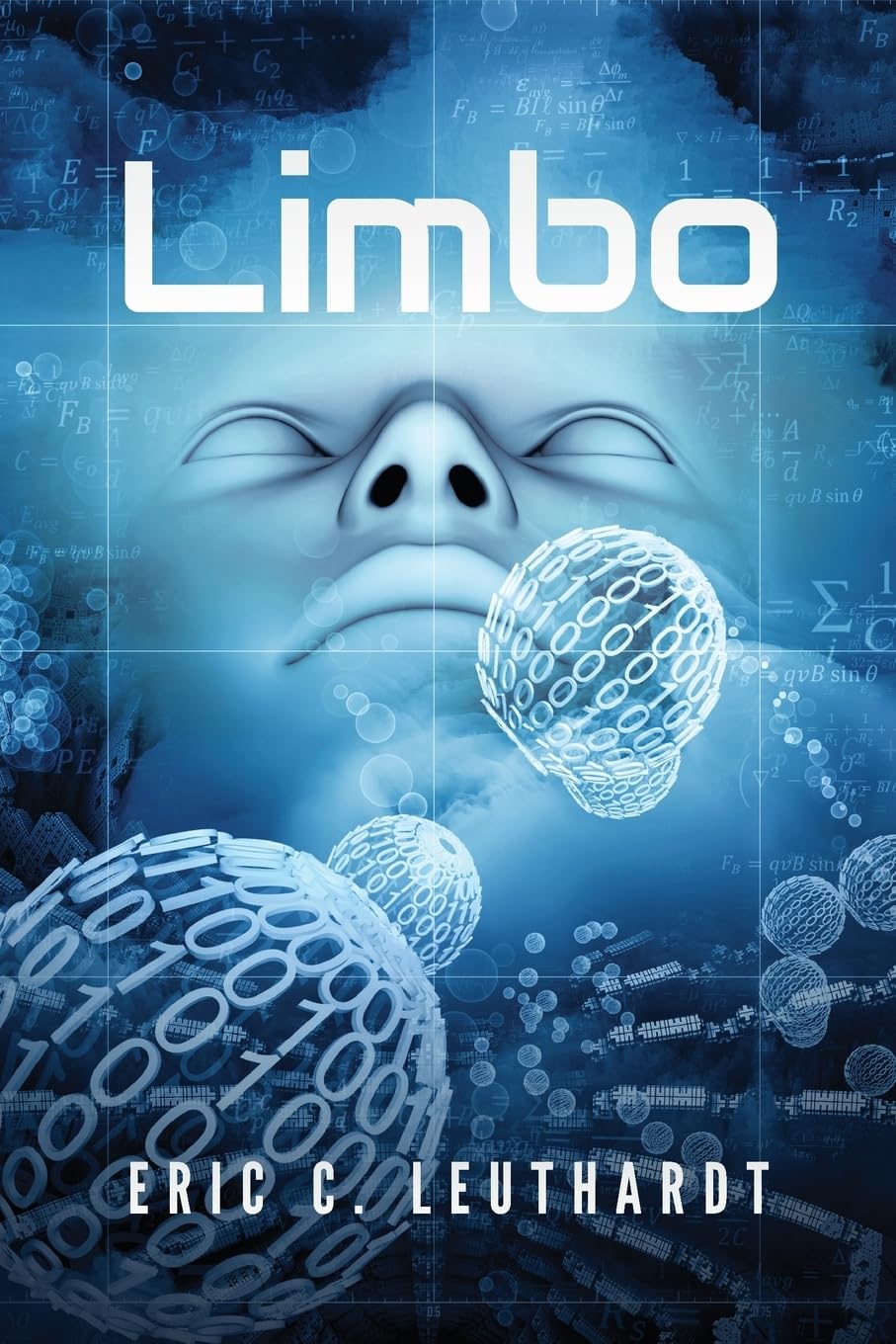



Ander Raleigh is recovering from the grief of loosing his identical twin brother, Ben. Julia Fehr, is a rebellious Amish teen with a troubled past. Through an unlikely series of events the two find their fate and their survival irreversibly entwined. Before dying, Ander’s brother downloaded his memories from his in-brain computer system to Charon Corporation. An icon of high tech, the company creates a virtual rendition of the deceased loved one. A great solace at first, Ander realizes that something is very wrong. As Ander begins to penetrate the company’s darker intentions, the corporation identifies him as a threat. Soon the very hallmarks of Ander’s modern identity – his implants, his connectivity, his access – are turned against him. By chance, Julia’s expulsion from her community leads to her interfering with Charon’s attempts to eliminate Ander. As a result, both become targets of a corporation that will stop at nothing to preserve its dark secrets. Eric Leuthardt was born in Boston in May of 1973. After a few year stint in Stuttgart Germany as a toddler, Leuthardt spent his youth in the Midwestern city of Cincinnati. After many years of taking apart every electrical appliance in the house, catching snakes and crawdads in the nearby creeks, and doing his best to endure the Catholic grade school system, he finally found his calling in a laboratory at the University of Cincinnati. There he spent his summers and most of his free time working on how electric and magnetic fields influence the growth of neurons. He would also frequent the operating rooms early in the morning to watch some of the neurosurgeons remove brain tumors. After a time, while working under a microscope, one of the surgeons working in the lab told him he should think about neurosurgery. The idea took hold (in a big way). Leuthardt went on to Saint Louis University to enroll in a premedical track where he earned degrees in Biology and Theology and then subsequently matriculated to the University of Pennsylvania School of Medicine. After having earned his medical degree, he was accepted into the prestigious neurosurgery program at Washington University School of Medicine. During his training he also took time off to pursue a post-doctoral fellowship in biomedical engineering where he developed a novel brain-computer interfacing platform- technologies that enable people to control machines with their thoughts alone. His work in the field has yielded him numerous accolades as a scientist, a neurosurgeon, and an inventor. He was named one of the Top Young Innovators by MIT's magazine Technology Review. The magazine names individuals under the age of 35 each year whose work in technology has global impact. In addition to numerous peer reviewed publications, Leuthardt has over a 1600 issued or pending patents on file with the U.S. Patent and Trademark Office and has founded several companies. Leuthardt is currently a professor with the Departments of Neurological Surgery, Neuroscience, Biomedical Engineering, and Mechanical Engineering at Washington University in St. Louis. He is also the Director of the Center for Innovation in Neuroscience and Technology, an institute that is creating advanced next generation medical technologies. When not juggling his frenetic schedule, Leuthardt spends his time at home in St. Louis. He enjoys trying to keep up with his two children Ellie and Hunter.