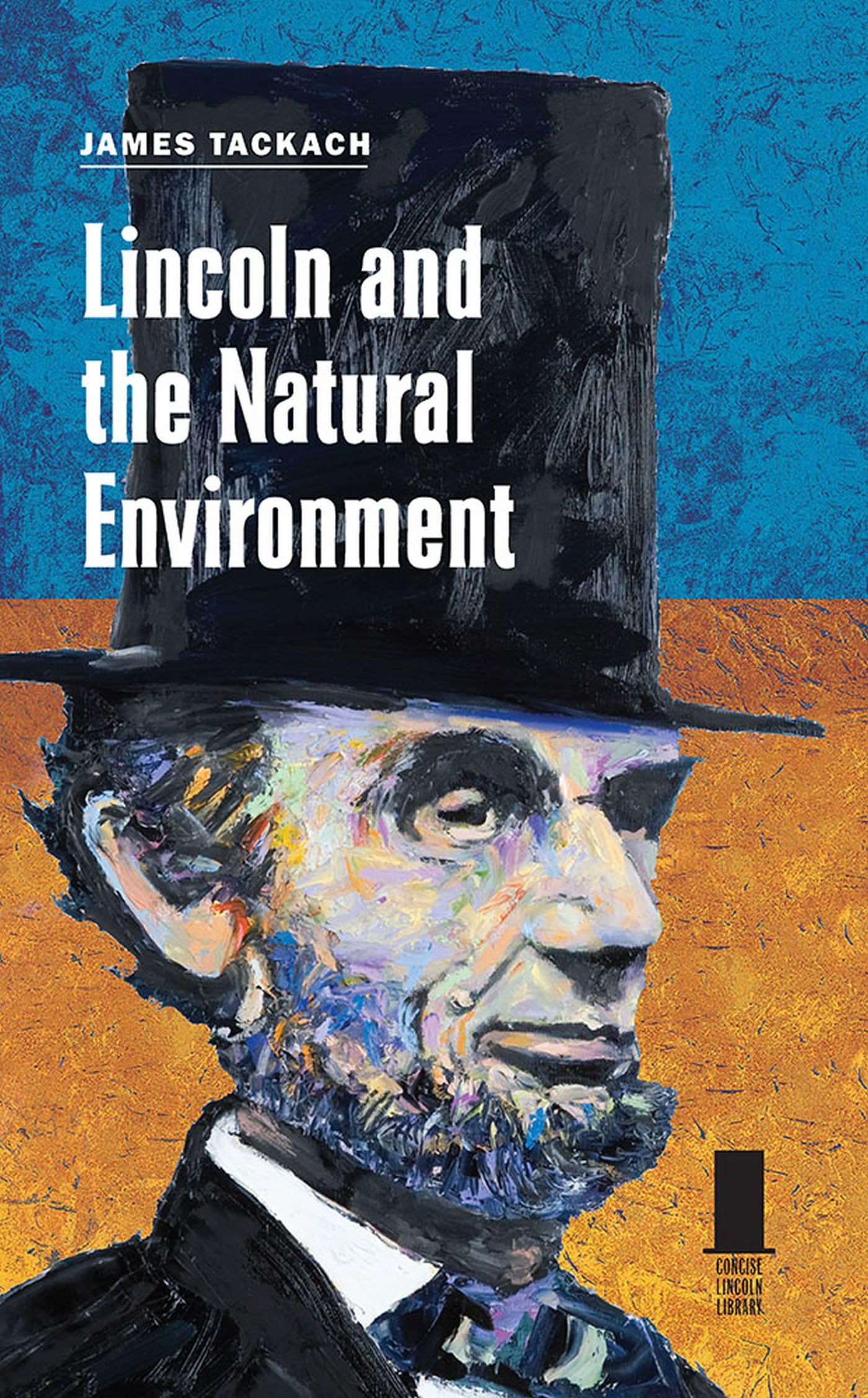



Winner, ISHS Best of Illinois History Award, 2019 In this groundbreaking environmental biography of Abraham Lincoln, James Tackach maps Lincoln’s lifelong relationship with the natural world from his birth and boyhood on Midwestern farms through his political career and presidency dealing with the effects of the Industrial Revolution and the Civil War. Lincoln was born in a generation that grew up on farms but began to move to cities as industrialization transformed the American economy. Turning away from the outdoor, manual labor of his youth, he chose careers in law and politics but always found solace outside first on the prairies of Illinois and, later, at the woodsy presidential retreat. As Tackach shows, Lincoln relied on examples and metaphors from the natural world in his speeches and writings. As a member of the Whig Party Lincoln endorsed the Industrial Revolution, which transformed the nation’s economy and its physical, social, and cultural landscapes, and advocated for the creation of railroads, canals, roads, and bridges to facilitate growth and the distribution of products. But he and his party failed to take steps to protect the natural environment. Surveying the destruction of the environment in the mid-nineteenth century, Tackach outlines how some American writers, the first voices for protection and conservation, began to call attention to the results of deforestation and the overhunting of animals during Lincoln’s lifetime. As commander in chief during the Civil War, Lincoln approved a strategy that included significant infrastructure and environmental damage. In the South, where most of the battles occurred, Union troops burned cities and towns and destroyed plantations, farms, and natural landscapes. Tackach argues that, midway through his presidency, Lincoln seemed to sense that postwar Reconstruction would have to be spiritual, political, economic, and environmental in order to heal the nation’s wounds. He signed the Morrill Act, creating the land-grant colleges, and the environmentally progressive Yosemite Grant Act, which preserved thousands of acres of forest in California. The first scholar to thoroughly investigate Lincoln’s lifelong relationship with the natural environment, Tackach paints Lincoln’s personal and professional life against the backdrop of nineteenth-century American environmental history, issues, and writers, providing insights into contemporary environmental issues. "James Tackach's Lincoln and the Natural Environment presents a concise environmental biography of Abraham Lincoln. Tackach considers Lincoln's rural agricultural upbringing, Whig politics, and rhetorical strategies based on nature to assess Lincoln's ideas about the environment."— Christine Dee , Journal of American History “ Lincoln and the Natural Environment serves as an important contribution to the ever-growing number of works that focus on the various facets of Lincoln’s life.”— Ryan Bixby , H-CivWar "Tackach's fascinating study offers a survey of the environmental framework of Lincoln's life and time. He demonstrates that Lincoln's attitudes about nature permeated his life in subtle ways, imperceptibly influencing his decisions at every turn." —Journal of the Illinois Historical Society "The first scholar to thoroughly investigate Lincoln's lifelong relationship with the natural environment, Professor Tackach paints Lincoln's personal and professional life against the backdrop of nineteenth-century American environmental history, issues, and writers, providing insights into contemporary environmental issues. Impressively informative and exceptionally well organized and presented, "Lincoln and the Natural Environment" is a unique biographical study and essential addition to community and academic library Abraham Lincoln collections." —James A. Cox, Midwest Book Review “In this engaging and innovative study, James Tackach situates Abraham Lincoln within the context of the natural environment, persuasively rereading Lincoln’s life and career against the backdrop of an American landscape that underwent revolutionary transformations during his lifetime. From his birth in the proverbial log cabin to his coming of age on the frontier, and even as president in conducting a catastrophic Civil War, Lincoln always remained attuned to the dictates of the natural environment. Although hardly a ‘green’ president, Lincoln intuitively grasped the human impact on the environment, Tackach convincingly argues, and he anticipated protections that later generations would adopt. Tackach offers a refreshing take on what we thought was a familiar story.”—John C. Rodrigue, author of Lincoln and Reconstruction “Agrarian, industrialist, inventor—Abraham Lincoln was all of these as well as a politician and lawyer. The beauty of Tackach’s very original book is how he connects Lincoln to his environment in a meaningful way. He signed the bill for the transcontinental railroad and su