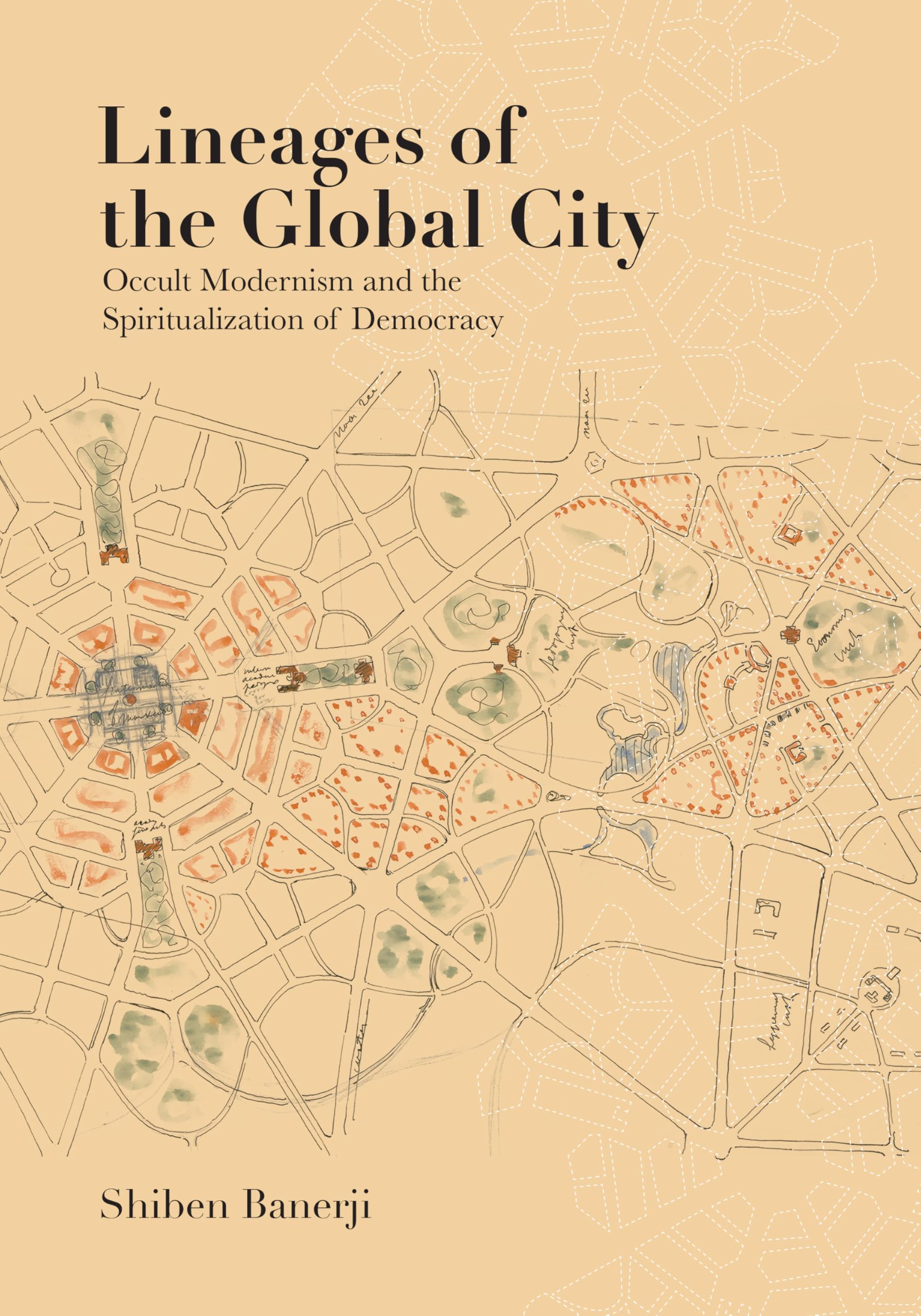
Lineages of the Global City: Occult Modernism and the Spiritualization of Democracy (Lateral Exchanges: Architecture, Urban Development, and
$45.00
by Shiben Banerji



The forgotten history of the occult foundations of the early twentieth-century global city. War, revolution, genocide, rebellion, slump. The economic and political turmoil of the early twentieth century seemed destined to rip asunder the ties that bound colonizers and the colonized to one another. The upheaval represented an opportunity, and not just to nationalists who imagined new homelands or to socialists who dreamed of international brotherhood. For modernists in the orbit of various occultisms, the crisis of empire also represented an opportunity to reveal humanity’s fundamental unity and common fate. Lineages of the Global City recounts a continuous, if also contentious, transnational exchange among modernists and occultists across the Americas, Europe, South Asia, and Australia between 1905 and 1949. At stake were the feelings and affect of a new global subject who would perceive themselves as belonging to humanity as a unified whole, and the urban environment that would foster their subjectivity. The interventions in this debate, which drew in the period’s most renowned modernists, took the form of a succession of plans for cities, suburbs, and communes, as well as experiments in building, drawing, printmaking, filmmaking, and writing. Weaving together postcolonial, feminist, and Marxist insight on subject formation, Shiben Banerji advances a new way of understanding modernist urban space as the design of subjective effects. This is a beautifully researched and realized work of scholarship, which unveils a remarkable archive of urban images that connect occultism, modernism, globality, and architecture. It will be of great value to historians, architects, planners, and scholars of cultural modernity due to its powerful argument for the cosmological underpinnings of modern urban thought. -- Arjun Appadurai, New York University, author of The Future as Cultural Fact: Essays on the Global Condition In the contemporary era of climate crisis, growing concerns about the exploitation of nature, resurgent nationalism, and what is looking to be a new global political and economic order that will impact not just nations but also cities, this provocative book will spark considerable debate about what kinds of urban habitats we want to build and whether historical models relegated to the dustbin of twentieth-century architectural history can indeed offer new food for thought in these turbulent times. -- Diane E. Davis, Harvard Graduate School of Design; CIFAR Fellow and Project Co-Director, Humanity’s Urban Future Sprawling and wonderful. ― A is for Architecture Published On: 2025-11-27 This is a beautifully researched and realized work of scholarship, which unveils a remarkable archive of urban images that connect occultism, modernism, globality, and architecture. It will be of great value to historians, architects, planners, and scholars of cultural modernity due to its powerful argument for the cosmological underpinnings of modern urban thought. -- Arjun Appadurai, New York University, author of The Future as Cultural Fact: Essays on the Global Condition This fascinating book offers a global historical accounting of a spiritually based movement of early twentieth-century architects and urban planners that has been ignored in most contemporary scholarship on cities and modernism, despite its clear influences on such luminaries as Le Corbusier. More than just an original accounting of how and why occultist architects sought to activate humanistic impulses and otherworldly sensibilities within modern metropolitan landscapes across the US, India, Australia, and elsewhere in the years between 1905 and 1950, Banerji shows that the occultists offered an alternative political theory of modernity, grounded in nature and the human condition. Their use of design, art, and a range of verbal tools to create a new urban experience was informed by a utopian desire for global unity among human subjects, many of whom suffered from the legacies of colonialism. But occultists also hoped their urban visions could help transcend political divisions between socialists and nationalists, who felt that twentieth-century cities could never escape the legacies of capitalism and empire. In the contemporary era of climate crisis, growing concerns about the exploitation of nature, resurgent nationalism, and what is looking to be a new global political and economic order that will impact not just nations but also cities, this provocative book will spark considerable debate about what kinds of urban habitats we want to build and whether historical models relegated to the dustbin of twentieth-century architectural history can indeed offer new food for thought in these turbulent times. -- Diane E. Davis, Harvard Graduate School of Design; CIFAR Fellow and Project Co-Director, Humanity’s Urban Future Shiben Banerji is an associate professor in the Department of Art History, Theory, and Criticism at the School of the Art Institut