Lineages of the Literary: Tibetan Buddhist Polymaths of Socialist China
$35.00
by Nicole Willock



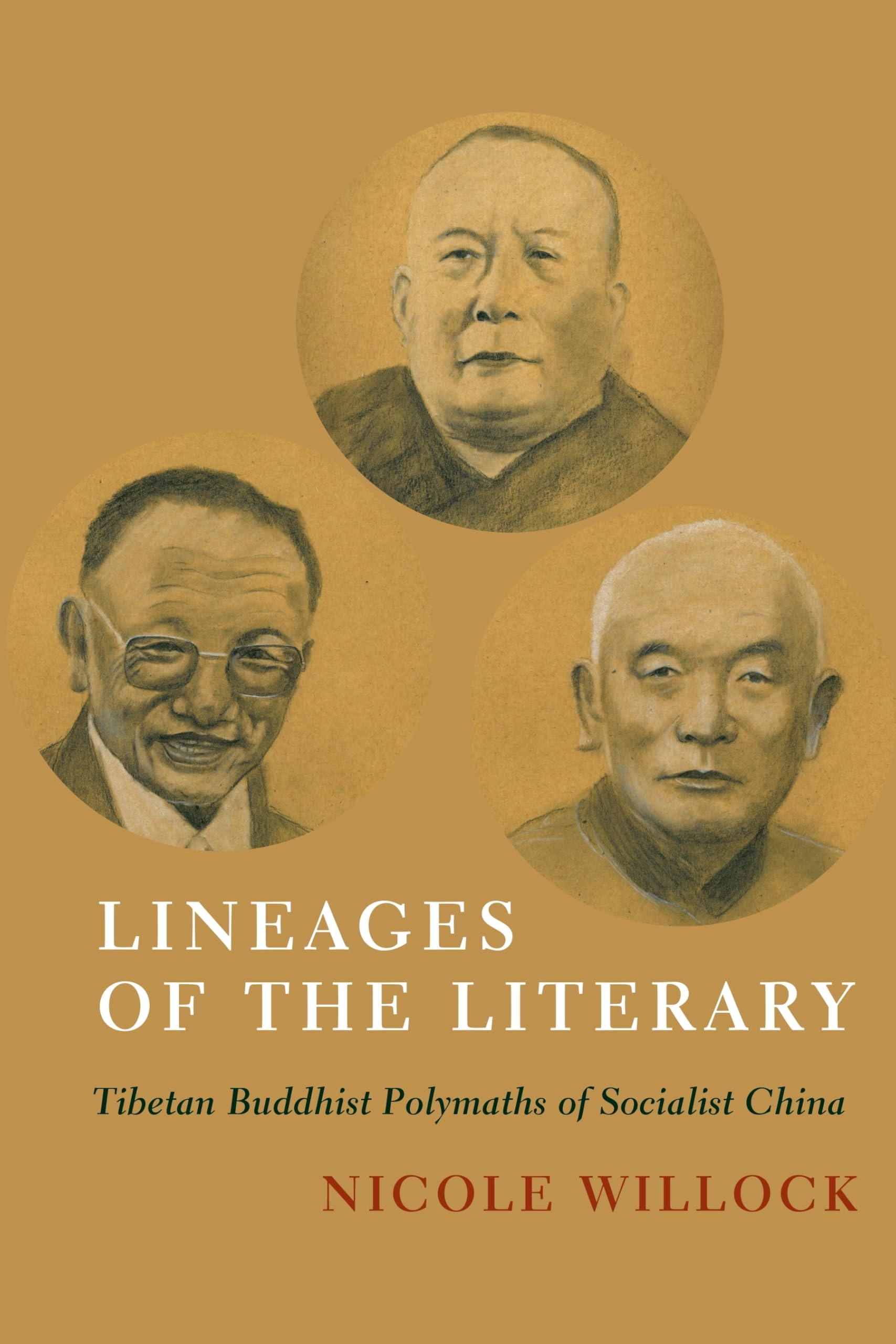
Winner, 2024 E. Gene Smith Inner Asia Book Prize, Association for Asian Studies Honorable Mention, 2023 Joseph Levenson Prize Post-1900, Association for Asian Studies In the aftermath of the cataclysmic Maoist period, three Tibetan Buddhist scholars living and working in the People’s Republic of China became intellectual heroes. Renowned as the “Three Polymaths,” Tséten Zhabdrung (1910–1985), Mugé Samten (1914–1993), and Dungkar Lozang Trinlé (1927–1997) earned this symbolic title for their efforts to keep the lamp of the Dharma lit even in the darkest hour of Tibetan history. Lineages of the Literary reveals how the Three Polymaths negotiated the political tides of the twentieth century, shedding new light on Sino-Tibetan relations and Buddhism during this turbulent era. Nicole Willock explores their contributions to reviving Tibetan Buddhism, expanding Tibetan literary arts, and pioneering Tibetan studies as an academic discipline. Her sophisticated reading of Tibetan-language sources vivifies the capacious literary world of the Three Polymaths, including autobiography, Buddhist philosophy, poetic theory, and historiography. Whereas prevailing state-centric accounts place Tibetan religious figures in China in one of two roles, collaborator or resistance fighter, Willock shows how the Three Polymaths offer an alternative model of agency. She illuminates how they by turns safeguarded, taught, and celebrated Tibetan Buddhist knowledge, practices, and institutions after their near destruction during the Cultural Revolution. An interdisciplinary work spanning religious studies, history, literary studies, and social theory, Lineages of the Literary offers new insight into the categories of religion and the secular, the role of Tibetan Buddhist leaders in modern China, and the contested ground of Tibet. An illuminating study of the lives and writings of three highly influential Buddhist figures in modern Tibet: Tseten Zhabdrung, Muge Samten, and Dungkar Lozang Trinle. In Lineages of the Literary , Nicole Willock masterfully demonstrates how their embodiment of the Geluk scholarly ideal allowed these polymaths to play a prominent role in Sino-Tibetan relations and create a pivotal generational transmission of Tibetan history, language, and culture in secular terms within China’s minzu (ethnic minority) universities. -- Holly Gayley, author of Love Letters from Golok: A Tantric Couple in Modern Tibet This book details the careers of three outstanding Tibetan figures during the Cultural Revolution who creatively drew on Buddhist and other traditional resources as forces for good in a troubled society. It also aims to illustrate how such appropriation can be effective in the modern context more generally. Insightful and capacious, the book studies how friendship in particular can serve the negotiation of conflicting pressures. An excellent analysis of Tibetan culture and religion during most challenging times. -- Janet Gyatso, Hershey Professor of Buddhist Studies, Harvard Divinity School It is often assumed that when the Dalai Lama fled from Tibet to India in 1959, Tibetan Buddhism followed him into exile. In Lineages of the Literary , a work that is at once highly original and deeply inspiring, Nicole Willock demonstrates that this was emphatically not the case. -- Donald Lopez, Arthur E. Link Distinguished University Professor of Buddhist and Tibetan Studies, University of Michigan Lineages of the Literary is one of the most important contributions to the history of Sino-Tibetan relations in the second half of the twentieth century to date. Nicole Willock’s exploration of the lives and writings of Tséten Zhabdrung, Mugé Samten, and Dungkar Rinpoché provides a missing link in our understanding of a contested and polarized era of modern Sino-Tibetan history. -- Gray Tuttle, coeditor of The Tibetan History Reader The importance of this volume cannot be overstated. Willock has not only offered an invaluable window into the lives and works of three highly influential albeit overwhelmingly understudied (especially in English) monks, but has also constructed an equally invaluable narrative of Tibetan Buddhism during and after the Cultural Revolution. ― Religious Studies Review Important and innovative . . . Willock’s careful study of officially produced but quietly subversive writings by elite members of a marginalized community offers an exciting alternative for scholars wishing to similarly decentre the state and to explore diverse communities and subjectivities from within their own epistemological frameworks. ― China Quarterly Nicole Willock is associate professor of Asian religions in the Department of Philosophy and Religious Studies at Old Dominion University.