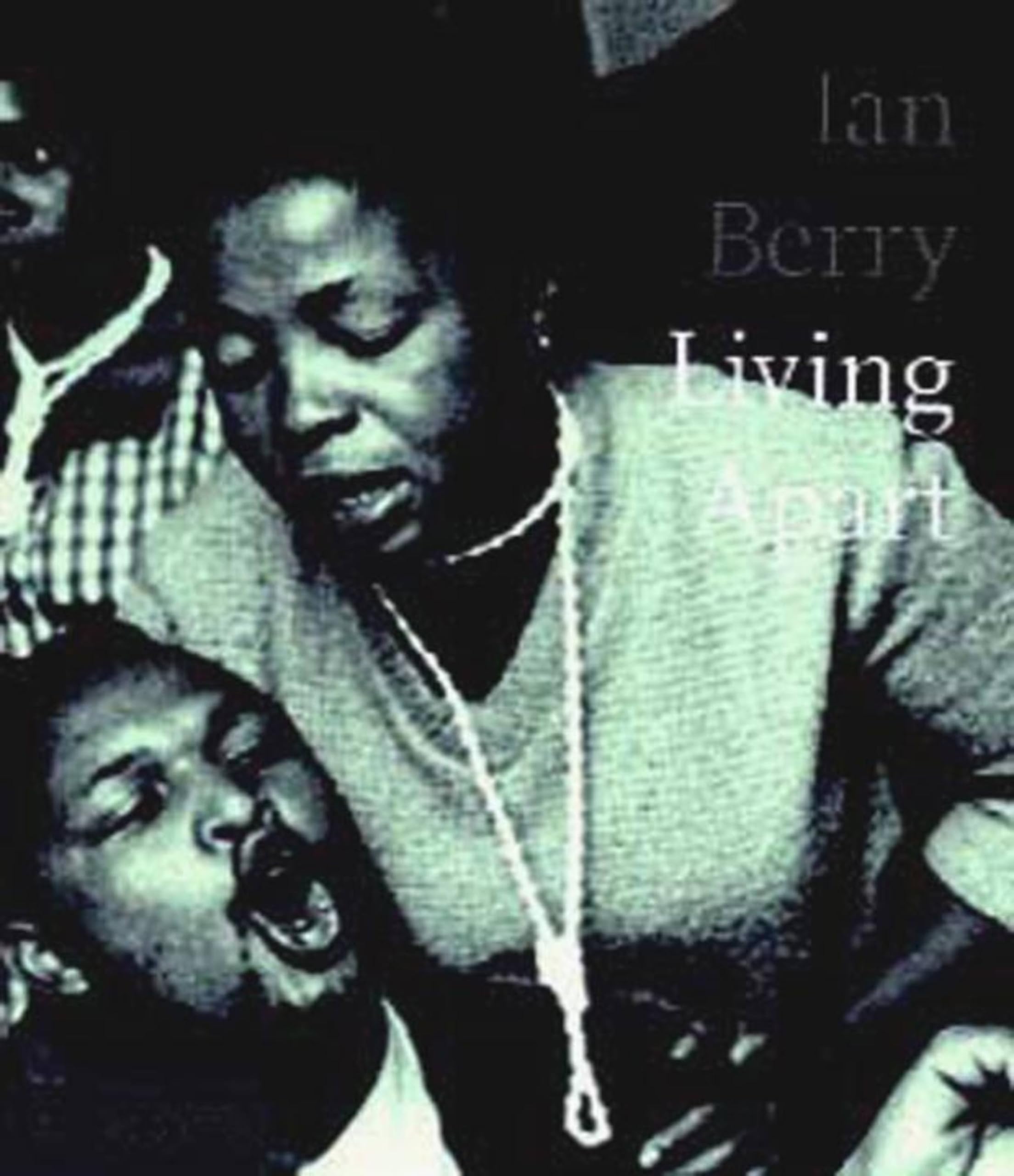



In the post-war period, the South African government gradually developed a policy that was meant to retain forever the rights and privileges of a white minority: apartheid. Racial prejudices and tensions may create difficulties in many societies, but only in South Africa was segregation actually institutionalized and regulated. The results were tragic and disturbing. This aspect of the South African history, the 'duty' to 'live apart' while occupying the same space, has been uniquely recorded by the camera of Ian Berry. He first set out for South Africa as a boy of 17 and thus began an incredible career of recording ordinary lives in extraordinary circumstances. Present at the Sharpeville riots in 1960, Berry has returned to South Africa many times during the course of the succeeding decades to capture many of its most significant moments, including the historical election of Nelson Mandela and its remarkable aftermath. Berry, an Englishman who first made his way to South Africa as a teenager, has spent four decades documenting ordinary lives in extraordinary circumstances. After photographing the Sharpeville riots of 1960--a pivotal event--he elected to concentrate not on "the violent concentration between black and white, but the society that gave cause to it." His efforts to get "under the skin" of that tense society have resulted in a rich and enlightening chronicle of segregation that recalls the powerful photojournalism of W. Eugene Smith. Before being invited to become a member of the prestigious Magnum photography collective, Berry came to South Africa in 1956 as a 17-year-old Englishman with no awareness of apartheid, South Africa's politics, or its history. He found that apartheid permeated all of South African life. The young photojournalist saw the visual world constructed by that racial framework to be grotesque and fascinating and captured it on film, building a valuable record of the daily horror of apartheid. Overall, this very subjective book offers an inevitably grim look at South Africa's journey from white rule to majority rule. But its chronological layout, moving from hopelessness to hope, makes its black-and-white photographs a useful and perhaps unique visual evolution for researchers. Recommended for most collections.?David Bryant, New Canaan P.L., Ct. Copyright 1996 Reed Business Information, Inc. Both a graphic history and a stunning art book, this huge, handsome volume showcases the work of a great photojournalist whose black-and-white pictures bear witness to the truth of South Africa over more than 40 years. Berry's photos of the 1960 Sharpeville massacre are here (horrifying images of police shooting fleeing crowds of people), and there are hundreds more pictures that show individuals in the squatter camps, on the segregated beaches, on the streets of Johannesburg now. There are black and white people separate and together, living apart in the same place. In a matter-of-fact, quiet, personal voice, Berry comments on how it was and how it has changed; a detailed chronology fills in the background facts. Archbishop Desmond Tutu, who now heads the Truth Commission in South Africa, talks in his foreword about Berry's pictures as indictment and essential record. Display this book where people can stop and look. Hazel Rochman "A compelling history that is beautifully presented."― American Photo In the postwar period the South African government gradually developed a policy that was meant to retain forever the rights and privileges of a white minority - apartheid. Whereas in many other societies racial prejudices and tensions create difficulties, only in South Africa was segregation institutionalized and regulated, producing bizarre and often absurd situations. This aspect of the South African experience, the duty to "Live Apart" while occupying the same space, has been uniquely recorded by the camera of Ian Berry. Berry first set out for South Africa as a boy of seventeen and thus began a career of recording ordinary lives in extraordinary circumstances. While working as a photojournalist for Drum, the major magazine of the black community, he was present at the Sharpeville riots in 1960 and over the course of the following decades he was to return to South Africa many times and capture many of its most significant moments. In the 1990s the collapse of apartheid and the rise of Mandela have resulted in a remarkable form of reconciliation at the same time as an alarming escalation of urban problems and violence. Once again Berry has been back with his camera, recording the election and its aftermath. Ian Berry (b.1934) moved to South Africa in 1952. There he worked for several newspapers and journals, among them the magazine Drum . The recipient of many awards, including the Arts Council's first major photographic bursary in 1974 and Nikon's Photographer of the Year Award in 1977, Ian Berry is a member of Magnum Photos and has exhibited worldwide. Archbishop Desmond Tutu was award