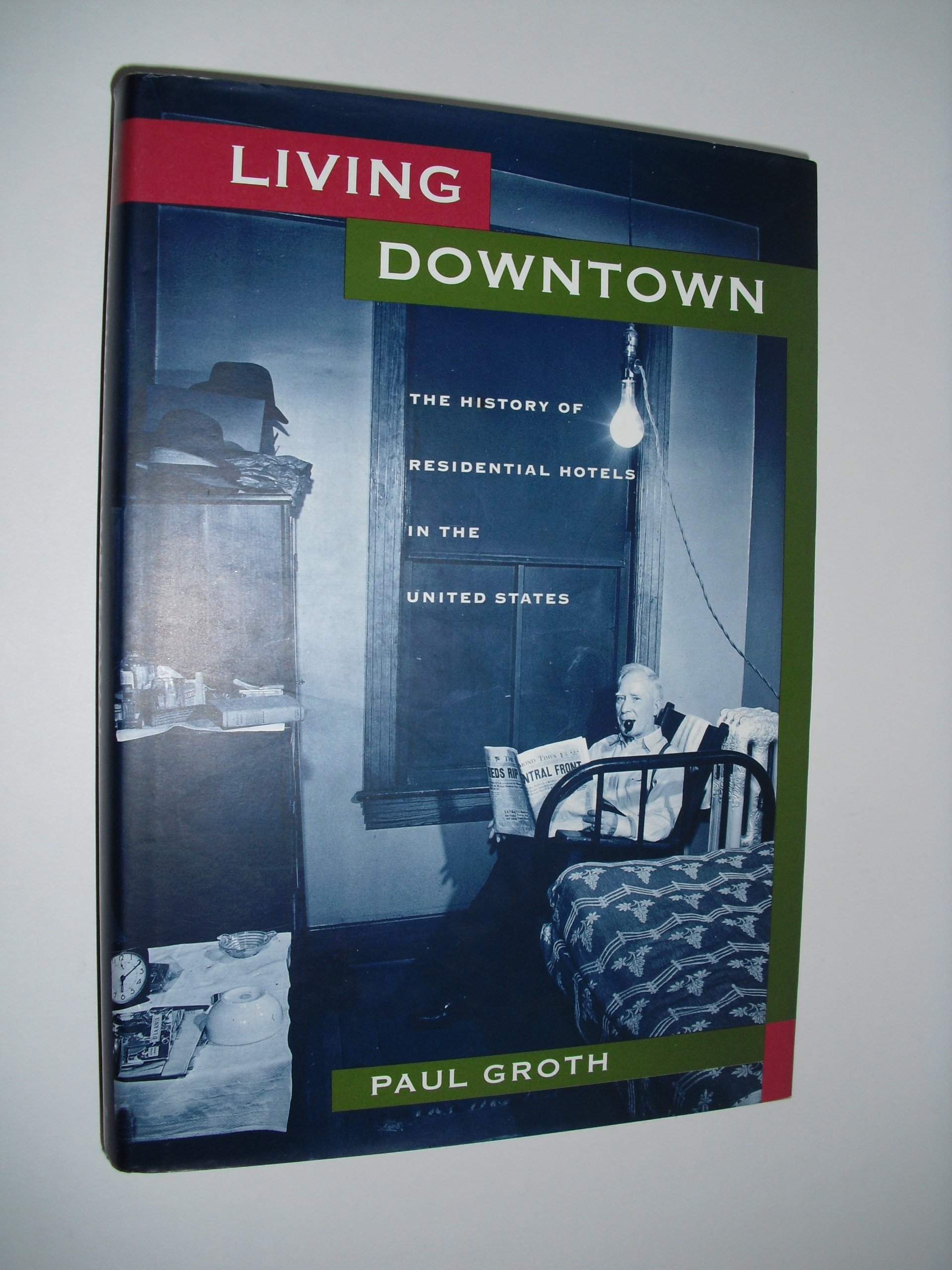
Living Downtown: The History of Residential Hotels in the United States
$128.98
by Paul Groth



From the palace hotels of the elite to cheap lodging houses, residential hotels have been an element of American urban life for nearly two hundred years. Since 1870, however, they have been the target of an official war led by people whose concept of home does not include the hotel. Do these residences constitute an essential housing resource, or are they, as charged, a public nuisance? Living Downtown , the first comprehensive social and cultural history of life in American residential hotels, adds a much-needed historical perspective to this ongoing debate. Creatively combining evidence from biographies, buildings and urban neighborhoods, workplace records, and housing policies, Paul Groth provides a definitive analysis of life in four price-differentiated types of downtown residence. He demonstrates that these hotels have played a valuable socioeconomic role as home to both long-term residents and temporary laborers. Also, the convenience of hotels has made them the residence of choice for a surprising number of Americans, from hobo author Boxcar Bertha to Calvin Coolidge. Groth examines the social and cultural objections to hotel households and the increasing efforts to eliminate them, which have led to the seemingly irrational destruction of millions of such housing units since 1960. He argues convincingly that these efforts have been a leading contributor to urban homelessness. This highly original and timely work aims to expand the concept of the American home and to recast accepted notions about the relationships among urban life, architecture, and the public management of residential environments. This fascinating book examines residential hotels, from luxurious palace hotels for rich people like the Ritz Tower in New York City to single-room-occupancy dwellings for the poor like the Sierra House above Big Al's North Beach nightclub in San Francisco. This is largely social history and sociology organized topically and chronologically, emphasizing the years from 1880 to 1930, when most American residential hotels were built and thrived. Groth is an architectural historian at the University of California at Berkeley, and his book is an outgrowth of his doctoral dissertation. But this is no dry and dusty tome. Instead, Groth breathes new life into the continuing battle over housing in America by praising, not burying, his topic. Recommended for academic collections. Peter Kaufman, Boston Architectural Ctr. Copyright 1994 Reed Business Information, Inc. "Complements Kenneth T. Jackson's history of suburban development, Crabgrass Frontier. . . . Will undoubtedly change historians' understanding of the urban landscape." -- Daniel Bluestone, Journal of American History "Groth's lively and multifaceted analysis examining architecture, real estate development, social history, and planning thought (inspires appreciation for a land use that planners have too often dismissed as 'blight.' . . . Should be required reading for every planner and public official concerned with housing and urban revitalization. Living Downtown deserves a place on the bookshelf next to Herbert Gans' classic study, The Urban Villagers." -- Thomas W. Hanchett, Planning Perspective Paul Groth is Associate Professor of Architecture History at the University of California, Berkeley. Living Downtown: The History of Residential Hotels in the United States By Paul Groth University of California Press Copyright 1994 Paul Groth All right reserved. ISBN: 0520068769 Chapter One Conflicting Ideas about Hotel Life People live in hotels, full-time, throughout the United States. Americans have done so for over two hundred years, often choosing hotel life over other housing options. Hotel rooms have provided indispensable housing units, sheltered important social groups, supported essential industries and businesses, and represented cosmopolitan diversity in American society. Hotel homes have also revealed deep conflicts in urban life, helped industrialists exploit workers, generated fortunes in downtown real estate, and challenged the dominant cultural values of how homes should shape American culture. Most American hotels are now run exclusively for either tourist use or residential use. Until about 1960, however, a majority of hotel keepers not only offered travelers rooms for the night but also provided rooms or suites for permanent residents who rented by the month. Although residential hotels have moved into the shadows, they still provide a significant share of America's urban homes. In 1990, hotel residents numbered between one million and two million people. More people lived in hotels than in all of America's public housing.1 In 1980, San Francisco's permanent hotel residents numbered three times the population in the city's public housing projects. Permanent