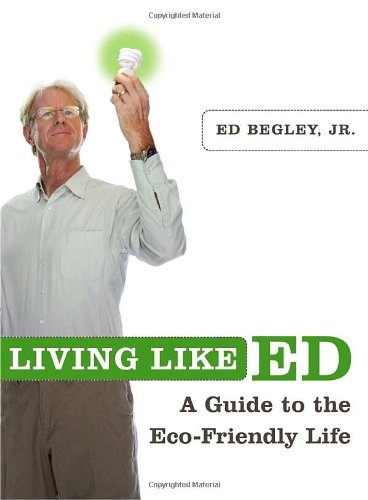



FROM THE PIONEER OF ECO-CONSCIOUS LIVING A committed environmentalist for more than thirty years, Ed Begley, Jr., has always tried to “live simply so others may simply live.” Now, as more and more of us are looking for ways to reduce our impact on the planet and live a better, greener life, Ed shares his experiences on what works, what doesn't–and what will save you money! These are tips for environmentally friendly living that anyone–whether you own or rent, live in a private home or a condo–can try to make a positive change for the environment. From quick fixes to bigger commitments and long-term strategies, Ed will help you make changes in every part of your life. And if you think living green has to mean compromising on aesthetics or comfort, fear not; Ed's wife, Rachelle, insists on style–with a conscience. In Living Like Ed , his environmentalism and her design savvy combine to create a guide to going green that keeps the chic in eco-chic. From recycling more materials than you ever thought possible to composting without raising a stink to buying an electric car, Living Like Ed is packed with ideas–from obvious to ingenious–that will help you live green, live responsibly, live well. Like Ed. “Filled with sound advice and first-hand experience from someone who has been walking the walk for more than 38 years, Living Like Ed provides a wide array of practical options for anyone who wants to make his life a little-or a lot-greener. Ed Begley is more than a beloved Hollywood figure; he¹s an all-American hero, and Living Like Ed is a comprehensive yet accessible guide to becoming more environmentally savvy that light greens and bright greens alike will find themselves dog-earing for years to come.” —Treehugger.com ED BEGLEY, JR., is a veteran actor who has appeared in numerous film and television roles. He and Rachelle reside in L.A. in a self-sufficient home powered by solar energy. Visit him at LivingLikeEd.net. HOME TAKING AN OLD HOME AND MAKING IT GREEN I bought our house in 1988, a simple little two-bedroom house on a small lot in Studio City, California. Given my financial position at the time, it was a great move that has also turned out to be great for my career—I’ve never felt pressured to take a role I didn’t love just so I could make a huge mortgage payment. Of course, by Hollywood standards, this house is a shack. But by world standards, as I’m sure you know, it is a palace. Retrofitting an Old House vs. Building New Few of us have the resources to build a more energy-efficient house from the ground up. I didn’t have the money to do that, and I didn’t have the will to do that. Plus I liked my house. So, I set out to make my home as environmentally sound as I could in every aspect. I knew that with insulation, a drought-tolerant garden, double-pane windows, an energy-saving thermostat, and solar panels I eventually put on the roof, I could make this a much more efficient structure. Indeed, by the time I was done, I had made my home nearly as energy efficient as a new one. And you can do the same for your home, wherever you live. The key to saving energy in your home is controlling energy use. Clearly, there are many ways to do this, from simple changes in what you do and how you do it to more-intense home improvement projects. Because so much of the energy used in your home is used to keep it warm in the winter and cool in the summer, we’ll start with ways you can control your heating and cooling needs. And there’s another important point I want to mention right up front: You don’t have to own your home to make many of these changes. There’s a lot you can do even if you’re renting, or if you own a condominium or another type of structure where you might be limited as to the kinds of changes you can make. So why bother making these changes? Because they’ll make your home more energy efficient, which means you’ll be helping the environment by saving natural resources. It also means you’ll be helping yourself and saving money—sometimes really big money. So no matter where you live right now, you can make some changes that will make a real difference. A Fresh Filter Perhaps the easiest thing you can do today is change the air filter for your heating and air-conditioning system. Many people think, “Filter? There’s a filter?” If that’s you, yours probably hasn’t been changed in a while. Most central heating and air-conditioning systems have a filter at the air intake—on a wall or on the ceiling—and many window and wall-unit air conditioners have a filter element on the front that needs to be changed, too. I change mine regularly, sometimes six times a year, because we have two cats and a dog, and pet hair is always blowing around. I check the air inlet for my heating and air-conditioning system regularly and often realize, “Whoa! It’s time to change this thing again.” Why is changing the filter so important? Because when the filter gets dusty or dirty or clogged, it’s harder for your syst