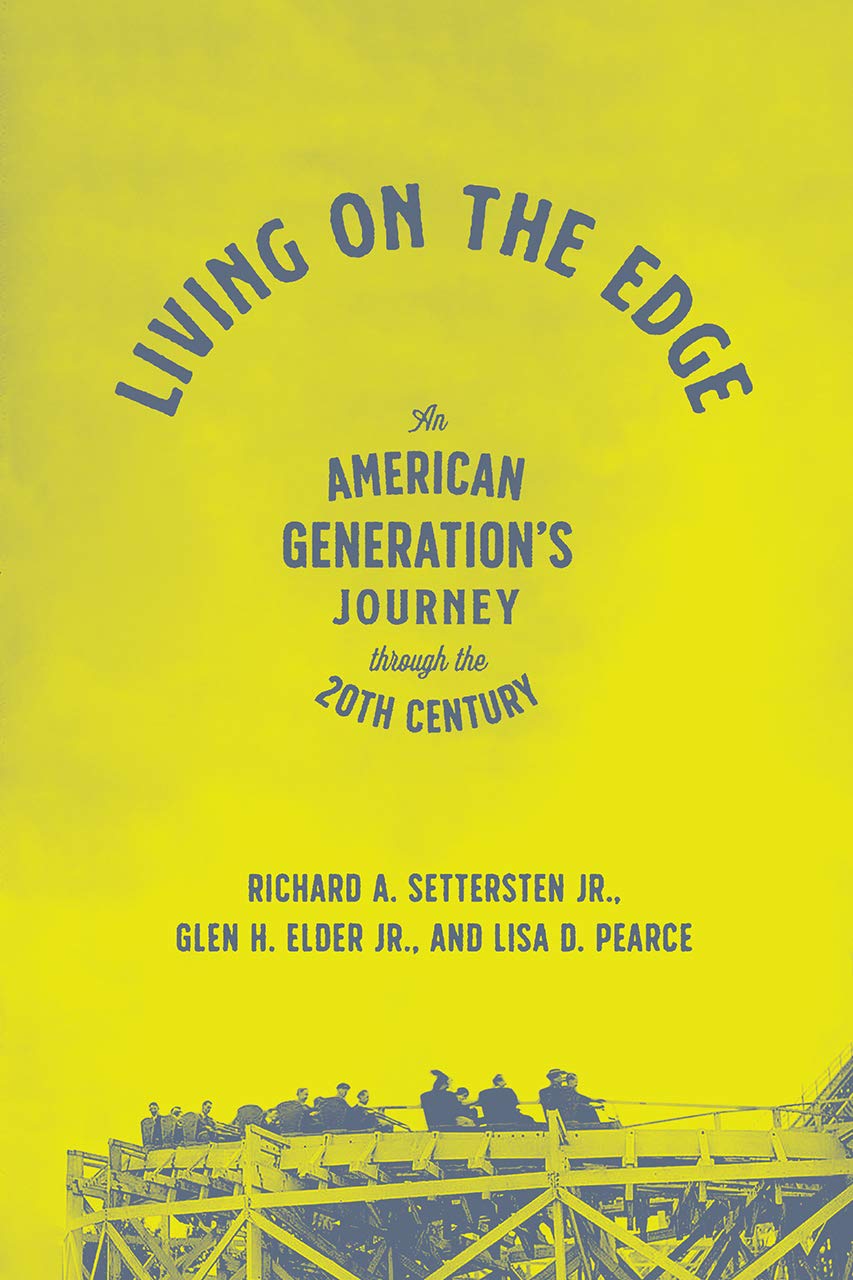
Living on the Edge: An American Generation's Journey through the Twentieth Century
$28.00
by Richard A. Settersten Jr



History carves its imprint on human lives for generations after. When we think of the radical changes that transformed America during the twentieth century, our minds most often snap to the fifties and sixties: the Civil Rights Movement, changing gender roles, and new economic opportunities all point to a decisive turning point. But these were not the only changes that shaped our world, and in Living on the Edge , we learn that rapid social change and uncertainty also defined the lives of Americans born at the turn of the twentieth century. The changes they cultivated and witnessed affect our world as we understand it today. Drawing from the iconic longitudinal Berkeley Guidance Study, Living on the Edge reveals the hopes, struggles, and daily lives of the 1900 generation. Most surprising is how relevant and relatable the lives and experiences of this generation are today, despite the gap of a century. From the reorganization of marriage and family roles and relationships to strategies for adapting to a dramatically changing economy, the challenges faced by this earlier generation echo our own time. Living on the Edge offers an intimate glimpse into not just the history of our country, but the feelings, dreams, and fears of a generation remarkably kindred to the present day. “ Living on the Edge is a must read for all interested in the promises and perils of social change and how individuals adapt to rapid successions of boom and bust, entering an uncharted world.” -- Ingrid Schoon, University College London “ Living on the Edge presents a singularly creative example of the power of the life- course perspective to provide a unique and compelling account of how the lives of Americans in the 1900 generation were shaped by the rapidly changing world through World War I-II and the Great Depression. In what is certain to be regarded as a classic, the study exemplifies how master scientists can illuminate the ways in which individual and context shape lives within each moment and across the life span.” -- Richard M. Lerner, Tufts University “By looking to past generations, Living on the Edge offers remarkable insights into how disruptive social changes transform life course paths and possibilities in myriad unanticipated ways. A must read for all of us living on the edge in these tumultuous times.” -- Phyllis Moen, University of Minnesota “A pleasure to read, well-organized, beautifully written, and, most important, fascinating, this book teaches us about the rarely studied 1900 generation. This is the generation that made initial forays into major societal changes that emerged full-blown in the 1960s and 1970s, especially with respect to marriage and women’s rights and lifestyles. This book makes a unique and excellent contribution to literature.” -- Linda K. George, Duke University “This is a remarkable culmination of a research project extending over a half-century, capturing nearly the entire lives of the Berkeley '1900' generation. Guided by bedrock principles of life course analysis, it shows how each phase of life must be understood in the context of the entire life course and its historical setting.” -- Jeylan T. Mortimer, University of Minnesota A rewarding account that supports the adage that what’s past is prologue. ― Kirkus Reviews "Three scholars assess the historic, social, and cultural implications for those who were part of the Berkeley Guidance Study initiated by Jean Walker Macfarlane in the late 1920s. Settersten, Elder, and Pearce analyze those participants’ responses to determine how they coped with challenges, often traumatic and devastating, through the World Wars, the Great Depression, the Korean War era, the conflicts of marriage, changing notions of women’s work and women's role in the marketplace, child rearing and the challenges associated with it, and the attitudes expressed about social status (or the lack of it) in the Bay area over time. Members of this generation, which lived during the era from 1900 to approximately 1970, had to adapt to rapid changes in their lives, as documented in the study. . . . Recommended." ― Choice "Analyzes how rapid socioeconomic changes influenced the lives of middle- and working-class Americans of the 1900 generation, investigating how they adapted to the disruptive and ever-changing world using data from the near-century-long Berkeley Guidance Study launched at the Berkeley Institute of Child Welfare in the late 1920s." ― Journal of Economic Literature "The book is highly recommended and may be of particular interest to sociologists, psychologists, gerontologists and social historians. There is much to be gained by the lay reader both from an American audience or beyond, perhaps having particular relevance to Westernised developed countries that experienced modernity and industrialisation in the 20th century. It is an exciting read and gives a real sense of connection with the lives of those who have gone before. It is