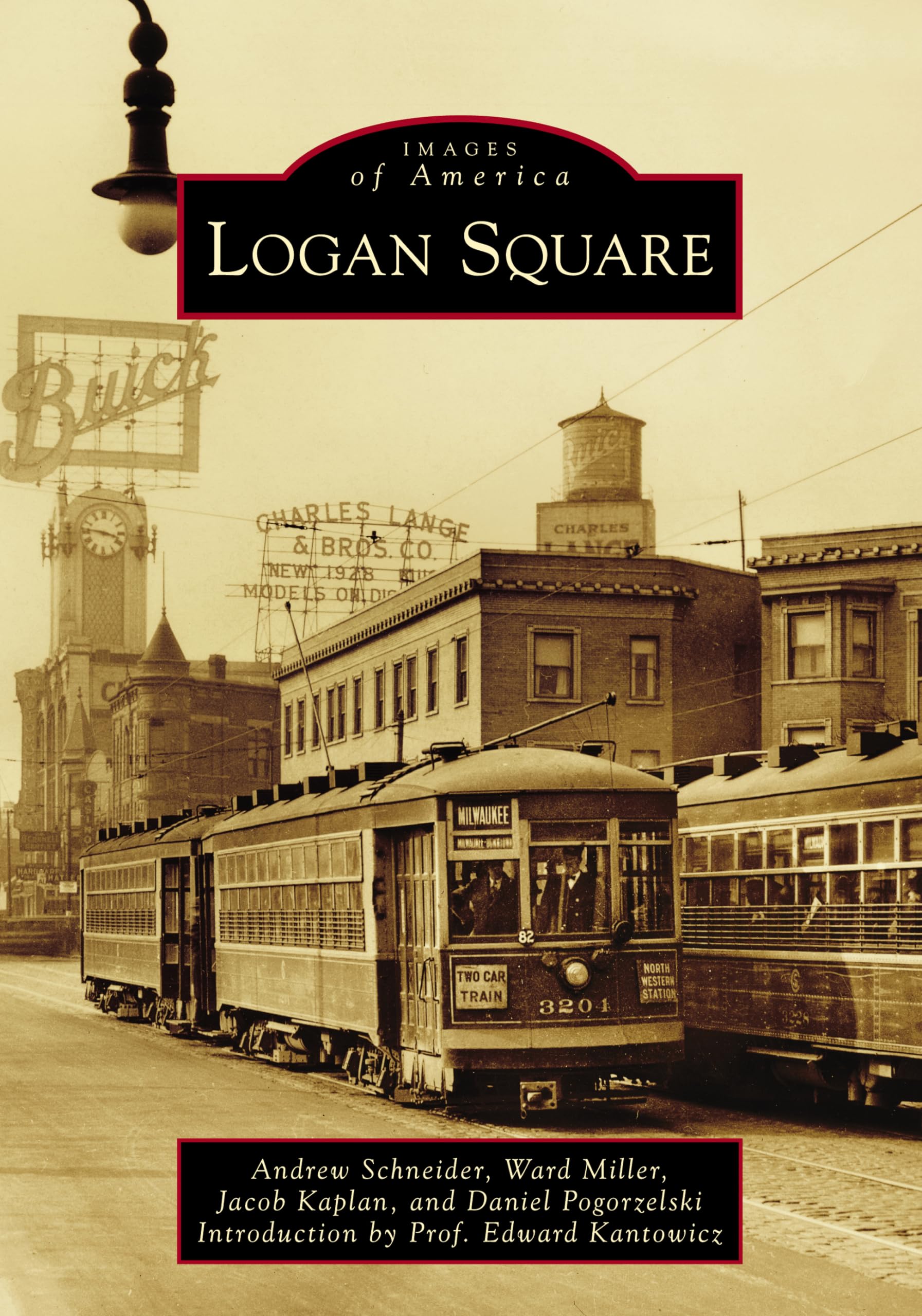



The community now called Logan Square began as a patchwork of farms, hay fields, subdivisions, and small towns in rural Jefferson Township. Subsumed into the rapidly expanding city of Chicago at the end of the 19th century, the elegant residences lining the boulevards would gain prominence as an ethnic gold coast. Over time, a shifting kaleidoscope of peoples would call Logan Square home, including Yankee farmers, Scandinavian proprietors, German tradesmen, African American freedmen, Polish shopkeepers, Jewish merchants, Filipino laborers, and Cuban refugees--a diversity further enriched with the many nations of the former Soviet Bloc, as well as Latin America and the Caribbean, that would later settle here. Like many other Chicago neighborhoods, change is the one constant, as the arts have brought a renaissance to this working-class corner of the city. The photographs that appear in this book were compiled by the authors from a variety of private and institutional collections. Andrew Schneider is the president of Logan Square Preservation. Ward Miller is the executive director of Preservation Chicago. Jacob Kaplan is the editor and cofounder of Forgotten Chicago . Daniel Pogorzelski is the vice president of the Northwest Chicago Historical Society. Logan Square's Evolution: From Rural Farming to Urban Artistic Hub Logan Square's Origins in Jefferson Township Logan Square's Integration into Chicago and Rise as a Midwest Gold Coast Diverse Population Throughout Logan Square's History Logan Square's Renaissance through the Arts