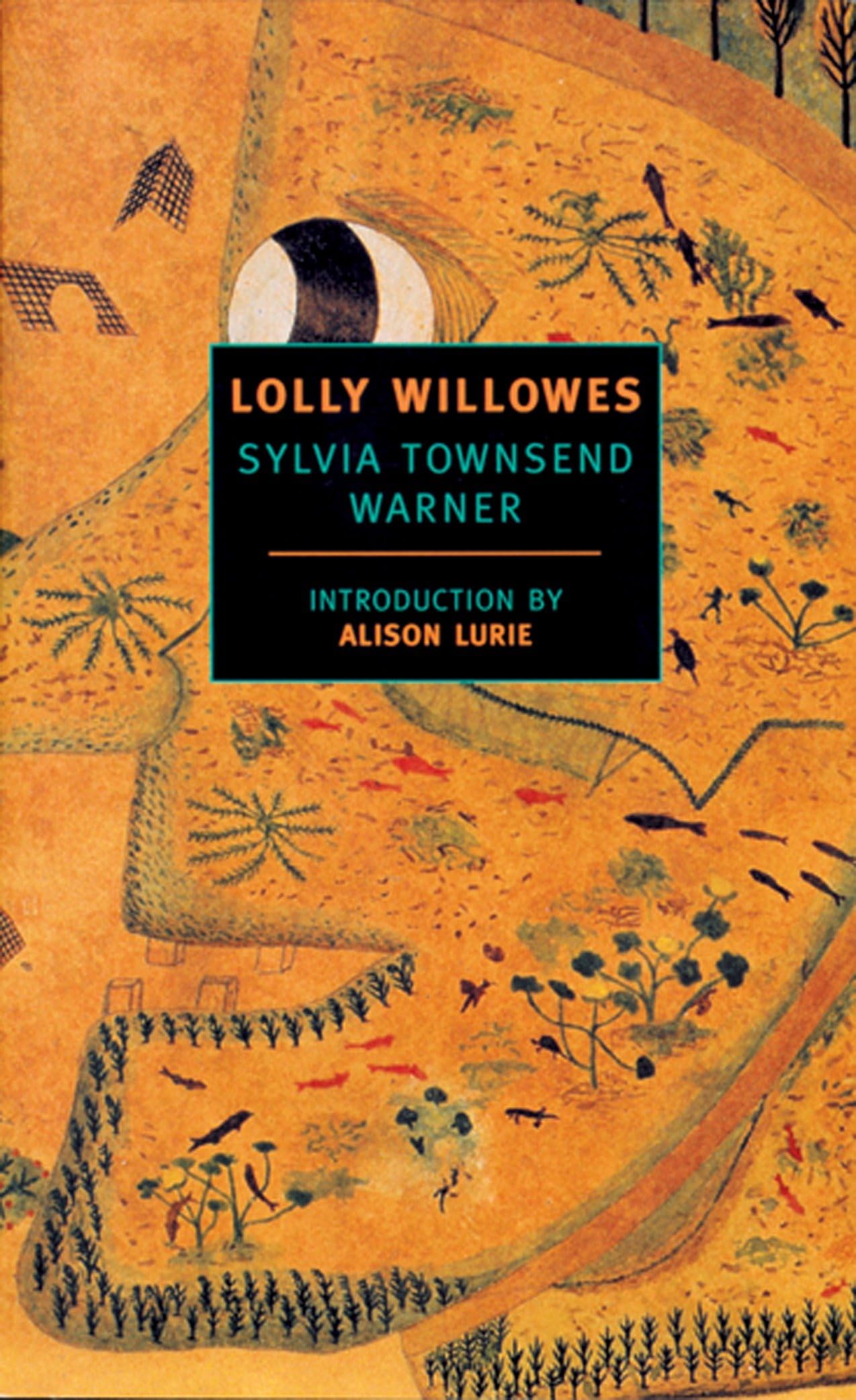
Lolly Willowes : Or the Loving Huntsman (New York Review Books Classics)
$13.45
by Sylvia Townsend Warner



“[The book] I’ll be pressing into people’s hands forever is Lolly Willowes , the 1926 novel by Sylvia Townsend Warner. It tells the story of a woman who rejects the life that society has fixed for her in favor of freedom and the most unexpected of alliances. It completely blindsided me: Starting as a straightforward, albeit beautifully written family saga, it tips suddenly into extraordinary, lucid wildness.” —Helen Macdonald in The New York Times Book Review 's “By the Book." In Lolly Willowes , Sylvia Townsend Warner tells of an aging spinster's struggle to break way from her controlling family—a classic story that she treats with cool feminist intelligence, while adding a dimension of the supernatural and strange. Warner is one of the outstanding and indispensable mavericks of twentieth-century literature, a writer to set beside Djuna Barnes and Jane Bowles, with a subversive genius that anticipates the fantastic flights of such contemporaries as Angela Carter and Jeanette Winterson. Sylvia Townsend Warner began her literary career as a poet, and her first novel is as nimble and precise as poetry and reads as if it might have been composed to a meter. Like some of Jane Austen's fiction, Lolly Willowes is a comedy about the perils, pleasures, and consolations of spinsterhood, and the predicament of its heroine is at first deliberately and deceptively commonplace. "Aunt Lolly, a middle-aging lady, light-footed upon stairs, and indispensable for Christmas Eve and birthday preparations," is nevertheless troubled by vague, indefinable longings, a hankering after the solitude of woods and dark rural places. At last a revelation in a greengrocer's leads her to abandon her outraged London family and take rooms in an obscure hamlet, Great Mop. Here her neighbors keep curiously late and noisy hours, but otherwise allow her to pass the time "in perfect idleness and contentment." She is eventually pursued into her idyll, however, by her nephew, and Titus's familiar small demands drive her to rage and despair: "No! You shan't get me. I won't go back. I won't.... Oh! Is there no help?" She is promptly visited by a mysterious black kitten, who fastens its claws upon her hand and draws blood. At once she understands. The kitten is her familiar, and has been sent by dark forces. "She, Laura Willowes, in England, in the year 1922, had entered into a compact with the Devil." She has, in short, become a witch--or, rather, she has rediscovered her own slumbering diabolical potential, in the unlikely setting of a Buckinghamshire hamlet that--as she now realizes--is peopled entirely by witches. Laura soon attends a rollicking but ultimately rather disappointing midnight Sabbath; she is visited by Satan in the shape of a pleasant-faced man in a corduroy coat and gaiters who rids her of Titus and restores her to privacy and peace. She is left with a vision of the women "all over England, all over Europe ... as common as blackberries, and as unregarded" to whom he has offered the promise of adventure, "the dangerous black night to stretch your wings in." It is this vision that lends the novel its subversive edge, that ultimately allies it less with the work of Austen than with that of Virginia Woolf, and with later feminists. They "know they are dynamite," says Laura of Satan's women, "and long for the concussion that may justify them." --Sarah Waters “[The book] I’ll be pressing into people’s hands forever is “Lolly Willowes,” the 1926 novel by Sylvia Townsend Warner. It tells the story of a woman who rejects the life that society has fixed for her in favor of freedom and the most unexpected of alliances. It completely blindsided me: Starting as a straightforward, albeit beautifully written family saga, it tips suddenly into extraordinary, lucid wildness.” - Helen Macdonald in The New York Times Book Review 's “By the Book." "I wish I could understand how fluidly [ Lolly Willows ] handles time and how it manages to be both utterly savage and strangely gentle at once. The turns of phrase that gleam on every page often seem nearly miraculous to me." —Garth Greenwall, LitHub Sylvia Townsend Warner’s brilliantly varied and self-possessed literary production never quite won her the flaming place in the heavens of repute that she deserved. In Lolly Willowes , her first novel, she moves with somber confidence into the realm of the supernatural, and her prose, in its simple, abrupt evocations, has something preternatural about it. This is the witty, eerie, tender but firm life history of a middle-class Englishwoman who politely declines to make the expected connection with the opposite sex and becomes a witch instead. — John Updike Silvia Townsend Warner…is perhaps the most unjustly neglected of all the modern masters of fiction. She is remembered as a writer of historical novels, but her novels are written with such extraordinary immediacy that they stretch the possibilities of long-disparaged genera and blur the dist