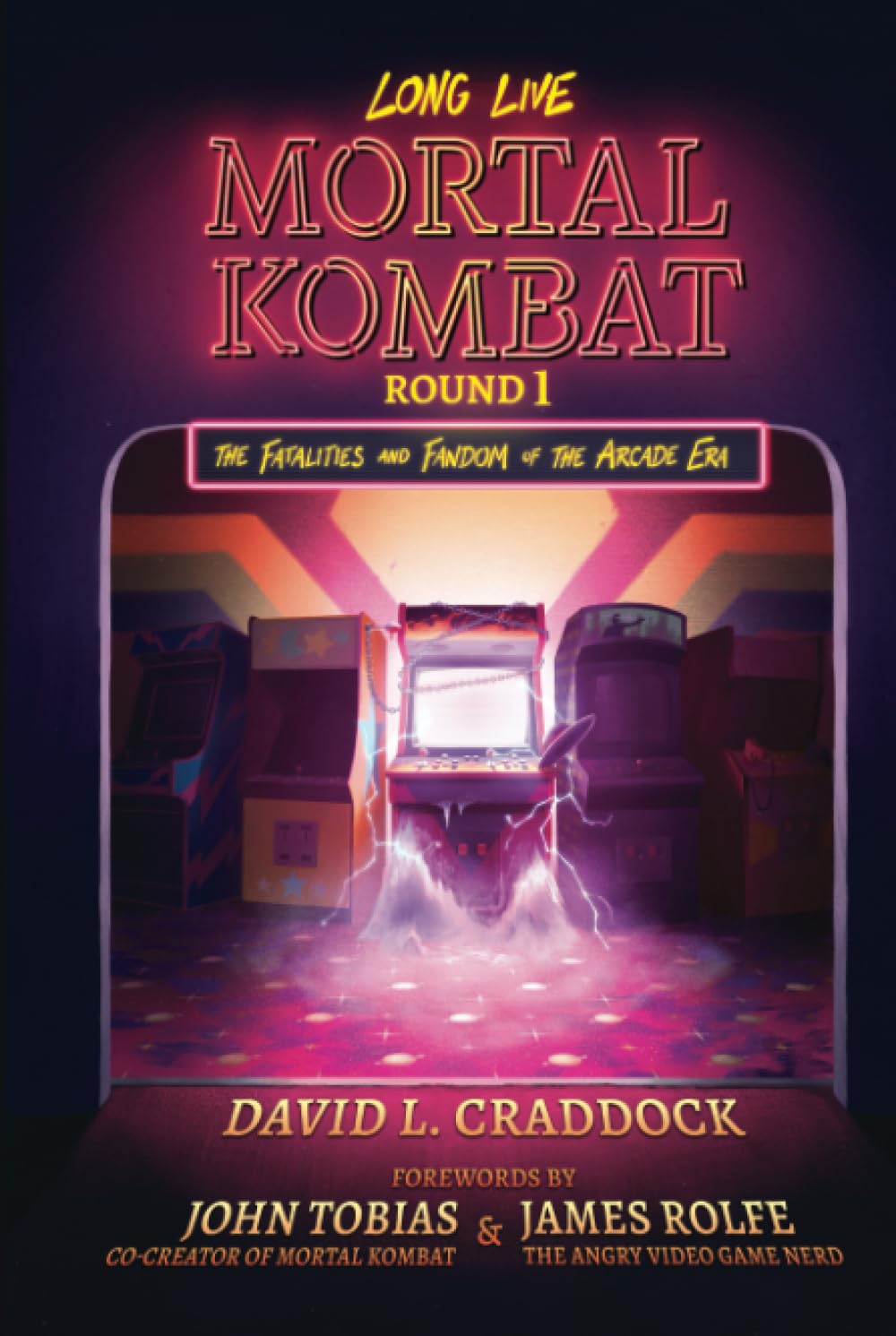
Long Live Mortal Kombat: Round 1: The Fatalities and Fandom of the Arcade Era
$49.95
by David L. Craddock



To politicians and parents, Mortal Kombat was a menace to society. To gamers, it was a way of life. From dedicated hustlers who put thousands of miles on their odometers driving coast to coast to challenge the top players in arcades, to fans who devote their free time to collecting action figures, setting world records, and plumbing the depths of its lore, the Mortal Kombat franchise has topped sales charts for 30 years, and its popularity shows no signs of waning. But before Mortal Kombat offended politicians, flooded arcades with quarters, and sold over 12 million units (and counting), executives at Midway saw it as filler—a stopgap between more promising games like NBA Jam. Co-creators Ed Boon and John Tobias felt differently. They believed their creation had potential. But not even they could have imagined the phenomenon Mortal Kombat would become when it hit arcades in October 1992, or the controversy that would follow in its wake. Based on extensive interviews, Long Live Mortal Kombat: Round 1 chronicles the arcade era of the video game industry's most infamous fighting series, the creative and technical hurdles its team had to clear, and the personal stories of the fans whose passion has made Mortal Kombat a pillar of popular culture. Long Live Mortal Kombat is utterly comprehensive, delving into the behind-the-scenes details of how this cultural phenomenon of a beautifully violent fighting game was made. More importantly, it goes deep into the 'kommunity' behind the games. As a former game developer, I felt the true love of fandom coming through in this book. Few things are as special in this world as positive fandom. A must read! -Cliff Bleszinski, creator of Gears of War and Unreal David's passion for Mortal Kombat is evident in this very enjoyable and heavily researched history. -Warren Davis, co-creator of Q*BERT David L. Craddock's Long Live Mortal Kombat is a bloodstained love letter to an unforgettable era in gaming history. Using an extensive palette of voices, this book is a blow-by-blow study of the fighting game franchise that sent arcades—and pop culture—into an uproar. Craddock's passion and commitment to detail pop off the page. -Reyan Ali, author of NBA Jam (Boss Fight Books) A wonderful telling of the story of Mortal Kombat. Craddock puts you in the room with the creators and players who breathed life into the most iconic fighting game of them all. -Jamieson K. Price, actor (Mortal Kombat 9 through 11, Naruto, Persona 5) Working on the marketing for the original Mortal Kombat was such a memorable period of my life. David Craddock has written a rich and detailed history of this game-changing brand. This book is a great read for anyone who is inspired by the magnificent art form of video games. -Holly Newman, marketing director at Acclaim Entertainment, Inc. Get over here and read the definitive history of the early life of Mortal Kombat. David L. Craddock leaves nothing to wonder as he digs deep into the founding and success of one of the greatest fighting series of all time. This is a must for anyone who considers themselves a Mortal Kombat fan. -Hilary Goldstein, former editor-in-chief, IGN Long Live Mortal Kombat isn't just an entertaining and informative history lesson of MK's origin and its colossal impact on gaming and pop culture. The insightful personal stories detailing how the franchise's spine-ripping Fatalities and delightfully absurd fighters positively impacted the lives of its biggest fans gave me a newfound appreciation for the games that no critical or sales accolade could. A must-read for the MK faithful. - Marcus Stewart, associate editor at Game Informer Long Live Mortal Kombat is the first time anyone has uncovered the players and stories behind Mortal Monday and the culture-changing phenomenon, Mortal Kombat. It's about time. -Rob Holmes, Founder and President of Acclaim Entertainment, Inc. Exhaustively researched but easily approachable, Long Live Mortal Kombat is a superb read for anyone interested in the history of fighting games or the development of video games as a medium. Hearing straight from the folks that made them is always the best way to learn how games are made, and David compiles more than you would ever think you need and more. -John Learned, games journalist