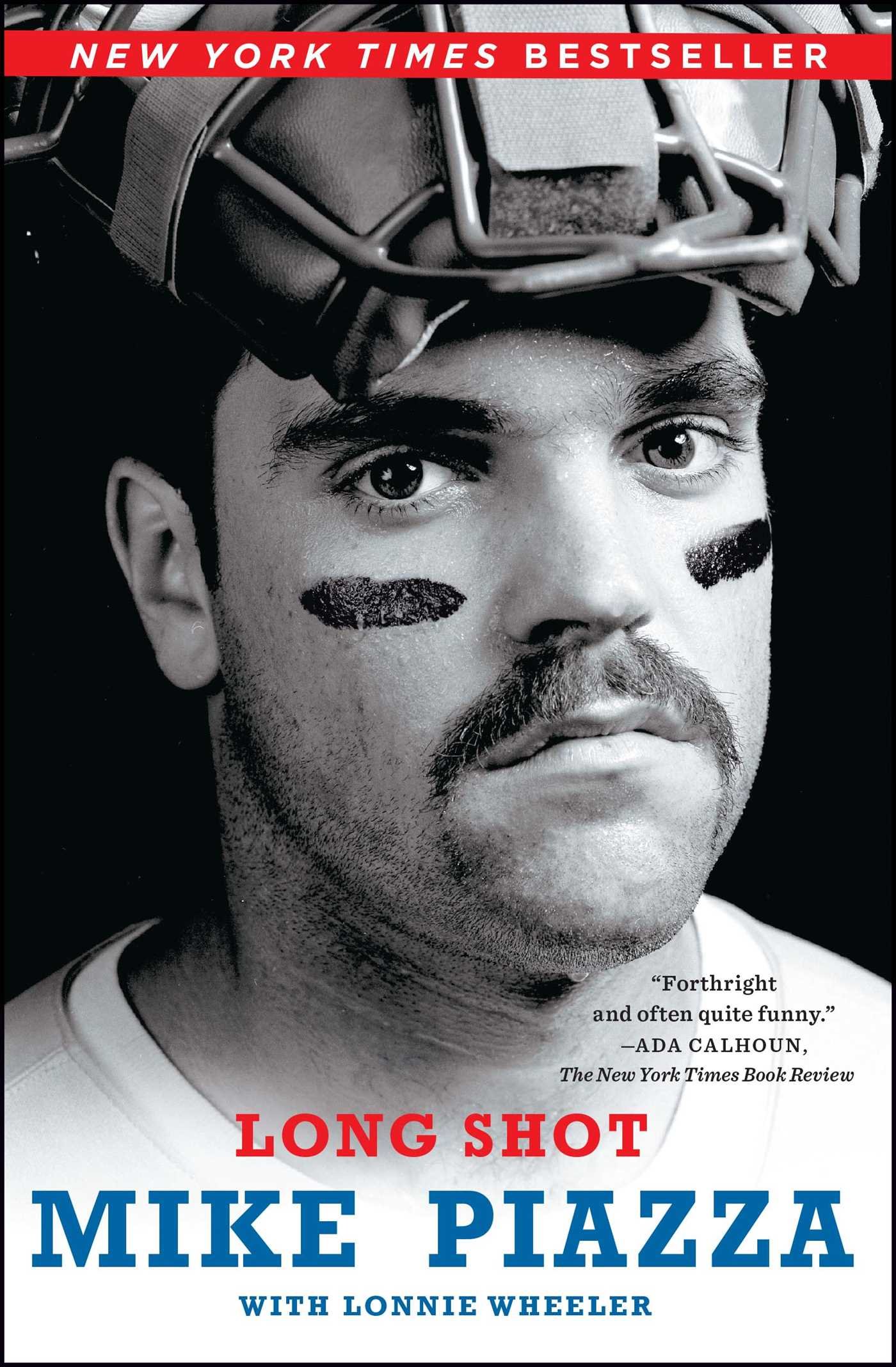



In this New York Times bestselling autobiography, baseball legend Mike Piazza takes readers into his exceptional and storied career—from the rumors and controversies to his proudest achievements. In this remarkably candid autobiography, superstar Mike Piazza takes readers inside his life and career to show what it takes to make it to the major leagues and to stay on top. Piazza was drafted in the sixty-second round of the 1988 MLB draft, a courtesy pick because of a family connection to Los Angeles Dodgers manager Tommy Lasorda. No one expected Mike Piazza to play in the major leagues except Mike and his dad—not even the Dodgers. But with talent, determination, and a formidable work ethic, long shot Piazza learned the demanding position of catcher and not only made it to the majors, he became one of the great players in the history of the game. With resolute honesty Piazza addresses the issues that swirled about him during his career: the rumor that he was gay, the infamous bat-throwing incident with Roger Clemens, and the accusations of steroid use that plagued nearly every power hitter of his era. But above all, Long Shot is the story of a superstar who rose to the top through his talent and his deep drive to succeed. "Piazza applies the single-minded drive he showed at the plate to making the case for his legacy. . . . [He] is forthright and often quite funny. . . . Mets fans will find insights, if not solace, in Piazza's account of the team's woes." -- Ada Calhoun ― The New York Times Book Review "Mr. Piazza has had one of the stranger and more inspiring careers in baseball history. . . . [ Long Shot ] explain[s] how this non-prospect blossomed into a legendary hitter." -- Tim Marchman ― The Wall Street Journal "Beloved Mets catcher Mike Piazza comes out swinging in a new memoir—confronting rumors about being gay and taking steroids, detailing his romantic home runs and finally setting the score with his hated rival, Roger Clemens." -- Michael Gartland and Cynthia R. Fagen ― The New York Post Mike Piazza grew up in Phoenixville, Pennsylvania, and was chosen by the Los Angeles Dodgers in the sixty-second round of the 1988 Major League Baseball amateur draft. He was National League Rookie of the Year in 1993 and was a twelve-time All-Star selection. He holds the record for most home runs by a catcher (396) and held the record for highest batting average in a season by a catcher (.362) until it was recently broken. He lives with his family in Miami Beach, Florida. Lonnie Wheeler’s numerous books include collaborations on the autobiographies of Hank Aaron ( I Had a Hammer ), Bob Gibson ( Stranger to the Game ), Mike Piazza ( Long Shot ), a baseball dialogue between Gibson and Reggie Jackson ( Sixty Feet, Six Inches ), and reflections on a summer at Wrigley Field ( Bleachers ). The author of Intangiball: The Subtle Things That Win Baseball Games , he lives in New Richmond, Ohio. Long Shot PROLOGUE Including Pudge Rodriguez, who was dressed for work in his Detroit Tigers uniform, the greatest living catchers were all gathered around, unmasked, on the grass of Shea Stadium. From the podium, where my stomach tumbled inside the Mets jersey that I had now worn longer than any other, the Cooperstown collection was lined up on my right. Yogi Berra. Gary Carter. Johnny Bench, the greatest of them all. And Carlton Fisk, whose home run record for catchers I had broken the month before, which was the official reason that these illustrious ballplayers—these idols of mine, these legends—were doing Queens on a Friday night in 2004. I preferred, however, to think of the occasion as a celebration of catching. Frankly, that was the only way I could think of it without being embarrassed; without giving off an unseemly vibe that basically said, hey, thanks so much to all you guys for showing up at my party even though I just left your asses in the dust. I couldn’t stand the thought of coming across that way to those four. Especially Johnny Bench. As far as I was concerned, and still am, Johnny Bench was the perfect catcher, custom-made for the position. I, on the other hand, had become a catcher only because the scouts had seen me play first base. Sixteen years after I’d gladly, though not so smoothly or easily, made the switch, the cycle was doubling back on itself. Having seen enough of me as a catcher, the Mets were in the process of moving me to first. It was a difficult time for me, because, for one, I could sense that it signaled the start of my slow fade from the game. What’s more, I had come to embrace the catcher’s role in a way that, at least in the minds of my persistent doubters and critics, was never returned with the same level of fervor. As a positionless prospect who scarcely interested even the team that finally drafted me, catching had been my lifeline to professional baseball—to this very evening, which I never could have imagined—and I was reluctant to let it go. To tell the truth, I