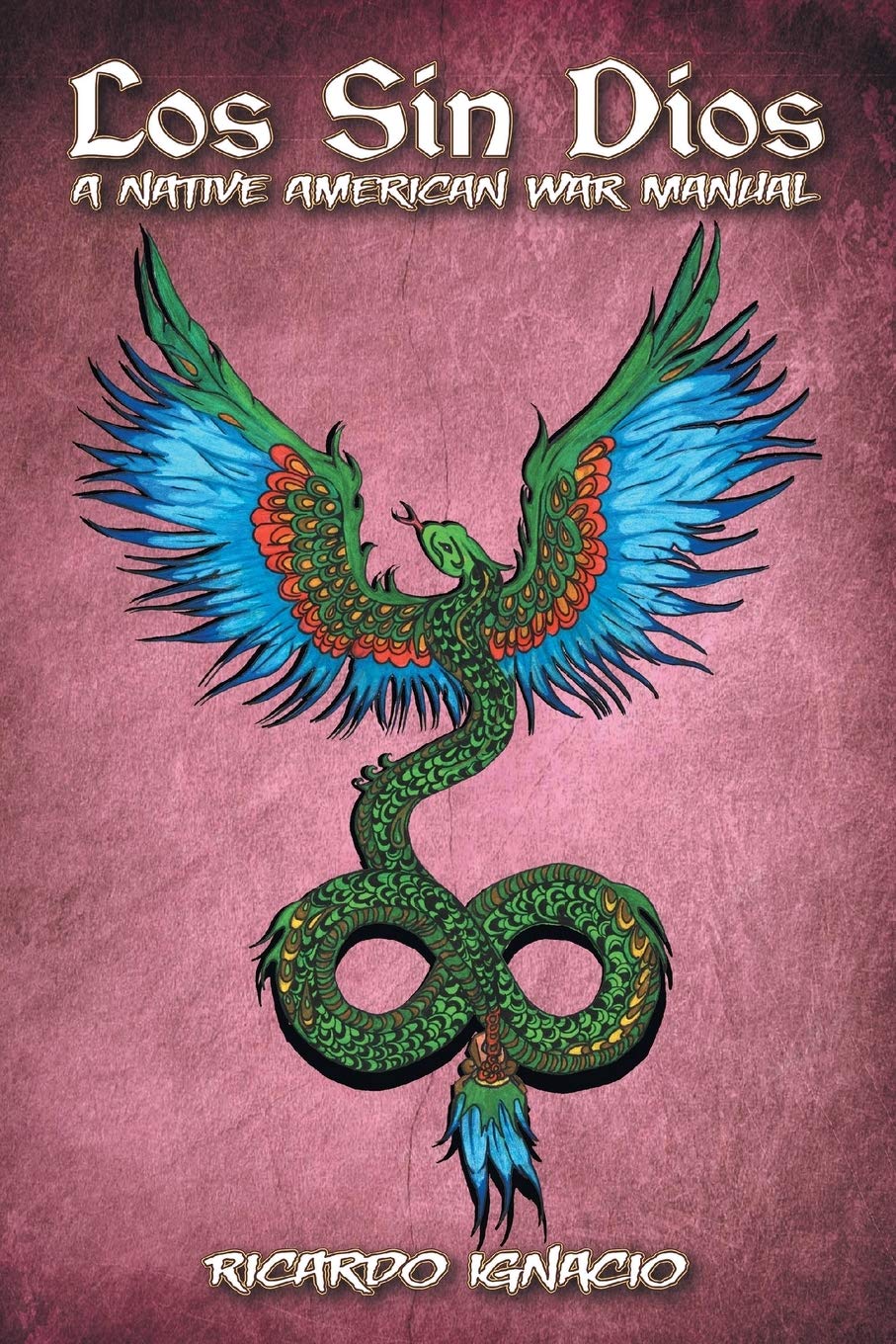



The battle of a young indigenous American man who grows up like most other indigenous Americans suffering from the aftermath of ethnic cleansing, displacement, internalized racism, Stockholm syndrome, forced assimilation, and the ongoing colonialism that began in the year 1492. The young man grows up with deep-rooted self-hatred, ashamed of his indigenous American roots--bleaching his hair, buying whitening creams, and using blue contact lenses--desperately attempting to erase all physical evidence of the obvious proof of who he is. Until, one day, his grandfather asks him why he hates himself so much and gives him an antique scroll written in the 1500s, which contains the root of where his problem of internalized racism began. The ancient scroll is written in Nahuatl, and the only way to learn Nahuatl is to return to Oaxaca, Mexico, where he was born and find someone that could teach him. The question is does it matter enough to know what was written so long ago in an ancient language? And, if so, what will he discover? But, more importantly, what will he do with the information learned? Los Sin Dios By Ricardo Ignacio AuthorHouse Copyright © 2016 Ricardo Ignacio All rights reserved. ISBN: 978-1-5246-2680-8 CHAPTER 1 Why Do You Hate Your Own Reflection? I was told that I am a descendant of a man named Ezekiel de Colon. Ezekiel was the son of Cristobal Colon, but his mother was an Arawak, specifically of the Taino tribe. According to legend, Ezekiel's father took him to Spain, but then Ezekiel fled Spain and sailed back home on his own. Before I get into that story, let me give you some background about me: I grew up ashamed of being called what is known today as el Indio in Spanish, or "the Indian" in English — a label referring to the indigenous people of the Americas. I was mostly ashamed of my dark skin, my short stature, and my high cheekbones. My almond-shaped eyes made people refer to me as el Chino in Spanish, which meant "the Chinese" in English. My big lips caused me embarrassment in elementary school; all the kids teased me. Throughout my childhood, I did my best to stay away from the sun for fear of getting darker. I'd always found short, dark-skinned women hideous; I didn't want my children to be cursed with this inferior skin color, which was the identity of el Indio. So throughout elementary school until high school, I denied who I was. Instead, I claimed to be Spanish and proudly spoke Spanish unless I was mingling with all my Caucasian friends, in which case I spoke English. I tried never to befriend a dark-skinned person. Yes, that's how much I hated my own reflection. I dated only white women with blue eyes and blond hair, hoping that one day I'd be blessed enough to have children with one of these beautiful princesses. My children wouldn't be born with dark skin, but instead would have that superior white appearance. I use the phrase "beautiful princess" because many misinformed people tend to label Native American women as such. However, the word princess is degrading and racist in this context. When Europeans began to settle in North America, they claimed not to see beauty in Native American women. When European men began raping Native women or having children with them consensually, some of the female children were born with light skin, blue eyes, and blond hair. The European settlers would view such a girl as more desirable than a Native girl, without European features were inferior. When I was a child, my grandfather tried hard to teach me about my indigenous roots, but I refused to listen. In Spanish, I would shout, "Dejame en paz y fuera con esas cosas de Indios condenados!" which means, "Leave me in peace, and go away with that stuff belonging to those condemned Indians!" My grandfather would look down at the floor in sorrow and weep, but I felt no mercy for him. He was not a righteous soul, but just a pair of hands. He was a fieldworker with no brains. How could I be proud of something that was mocked and humiliated by everyone? I was ashamed to have descended from those uneducated, miniature people with dark skin. I wanted absolutely nothing to do with them! Instead of claiming my Indigenous American identity, I claimed to be Latino or Hi spanic, even though those are European identities. I wanted to be European; I wanted to claim that I was a descendant of Spain. Schoolbooks, the media, and society had taught me that European features were beautiful and superior, while the features of my people were ugly and inferior. As a result, looking and claiming to be white was my greatest endeavor, even if the mirror proved otherwise. I hated my reflection; I hated mirrors because they revealed to me the image of what English speakers in the United States called a "wetback." The term was highly degrading. Who in the world would want to embrace that? In high school, the trend for kids like me was hair dye and colored contact lenses. I took to the trend. My