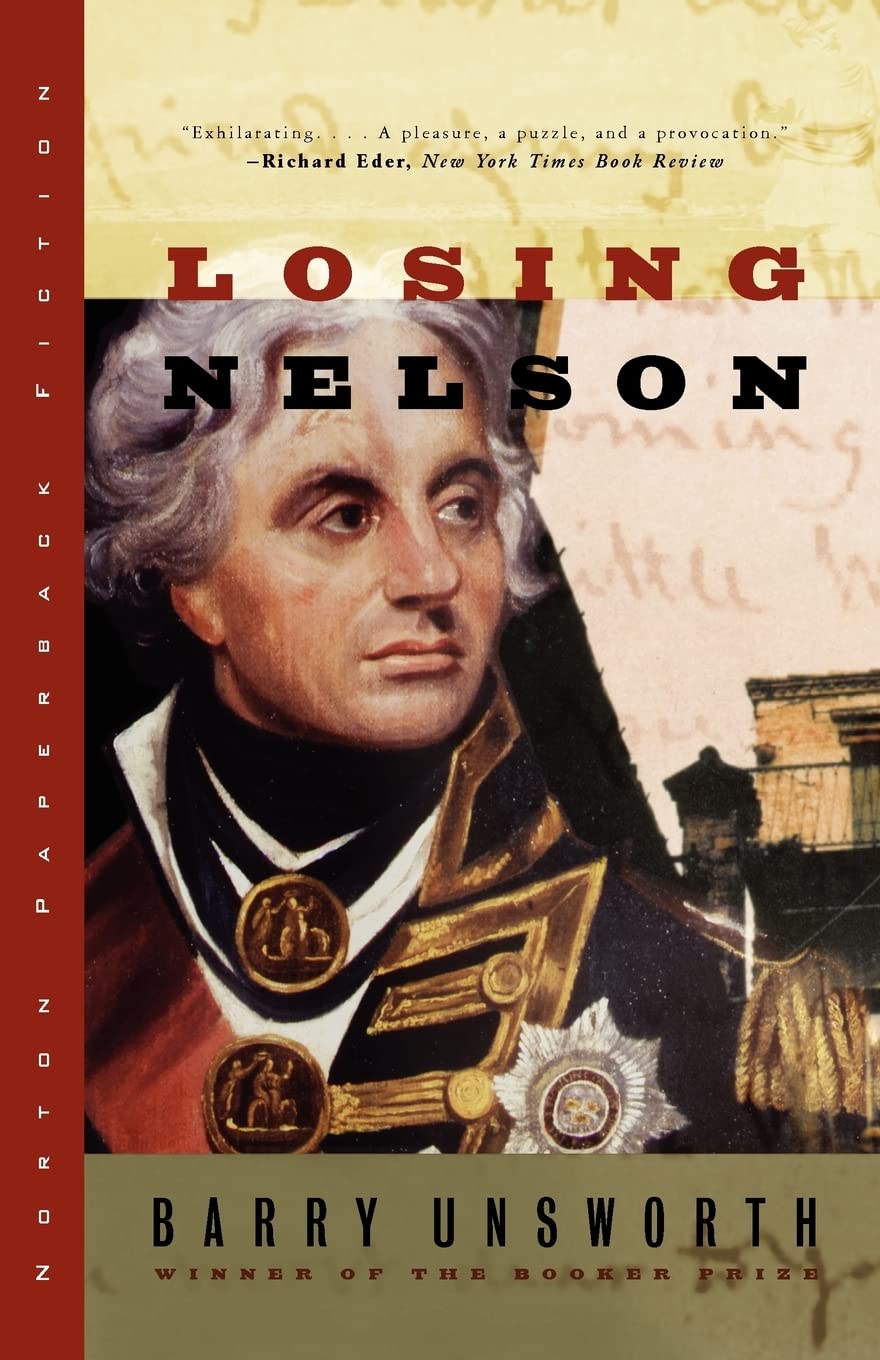



"Stunningly original. . . . Pulpy and juicy, full of wisdom and horror." ― Los Angeles Times Book Review Losing Nelson is a novel of obsession, the story of Charles Cleasby, a man unable to see himself separately from the hero―Lord Horatio Nelson―he mistakenly idolizes. He is, in fact, a Nelson biographer run amok. He is convinced that Nelson, Britain's greatest admiral, who lost his own life defeating Napoleon in the Battle of Trafalgar, is the perfect hero. However, in his research he has come upon an incident of horrifying brutality in Nelson's military career that simply stumps all attempts at glorification. "Books about the sea and those who sail it are much in vogue. This seems to have been set off by the surprising and much deserved popularity of Sebastian Junger's The Perfect Storm , not to mention the Aubrey/Maturin novels of Patrick O'Brian. . . . [ Losing Nelson is] the best book of the lot."―Jonathan Yardley, Washington Post Book World (1999 Critic's Choice). A Publishers Weekly Best Book of 1999; A New York Times Notable Book of 1999. Reading group guide available. Stunningly original. . . . Pulpy and juicy, full of wisdom and horror. -- Los Angeles Times Book Review Barry Unsworth on Lord Nelson Most British people, if asked to name the national hero, would unhesitatingly say Lord Nelson. A large part of the reason for this lies in the manner of his death. He was shot on the quarterdeck of his flagship, HMS Victory, by a French sniper at the height of the battle of Trafalgar. The issue of the battle was in doubt when he received the wound, but he was still alive when they brought him the news of the greatest British naval victory since the defeat of the Spanish Armada two centuries earlier -- a victory that destroyed French naval power, removed the threat of invasion by Napoleon, and gave Britain total supremacy in the Mediterranean for a century to come. When the news arrived in London, instead of rejoicing at the victory, people wept -- a measure of the love that was generally felt for Nelson. They gave him a state funeral unrivaled in pomp and ceremony, but they did not honor his dying wish -- the only thing he asked of his country -- that provision be made for his mistress, Lady Hamilton. She died in France, completely destitute, ten years later. Barry Unsworth (1930-2012), who won the Booker Prize for Sacred Hunger , was a Booker Prize finalist for Morality Play and was long-listed for the Man Booker Prize for The Ruby in Her Navel . Books about the sea and those who sail it are much in vogue. . . . [this is] the best of the lot.