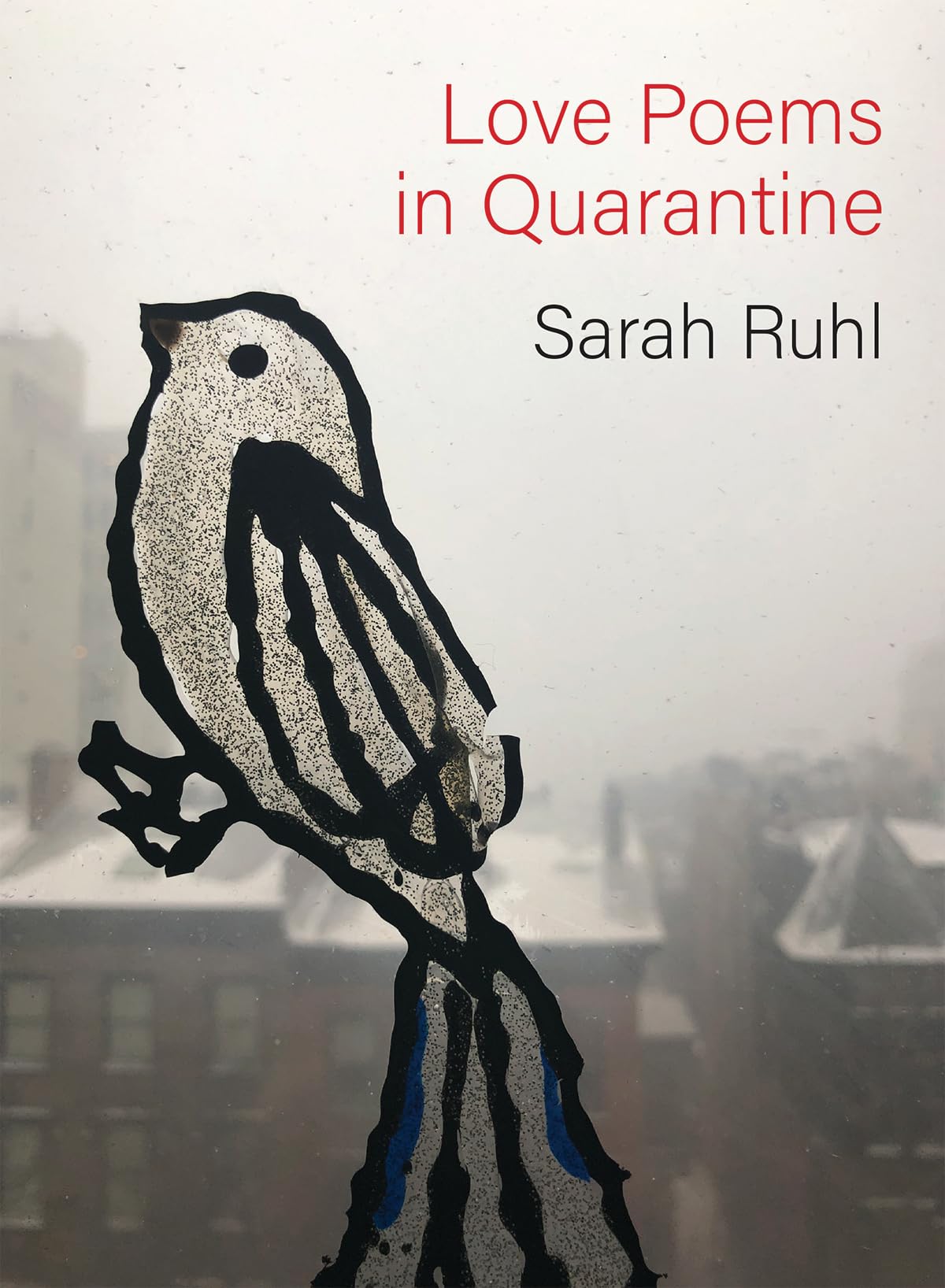



An award-winning, multi-genre writer grapples with the pandemic, death of George Floyd, and other crises of our times in gnomic poems written from inside the purgatory (and sudden revelations) of quarantine. Writing from and toward “the endless desire / to be at home in the world,” Sarah Ruhl wrote Love Poems in Quarantine to mark the passage of time when all familiar landmarks disappeared. From the dawn of the COVID-19 pandemic, to the murder of George Floyd, to months of simultaneous quarantine and protest, this is―in free verse and form, lamentation and meditation―a book of days, a survival kit for spiritual malady. These poems find small solace in domestic absurdities. Even in global crisis, there is the laundry. The dog rolls in something putrid, the child interrupts a Zoom meeting, and dinner must get made, again and again. Using language to travel and touch when bodies could not, Ruhl has drawn with great care a portrait of a year unlike any other in history. Praise for Love Poems in Quarantine “Ruhl, a celebrated playwright, brings to these poems of lockdown and social unrest the same tender appreciation for resonant absurdities that she puts onstage. 'Poems are good company / when people disappoint,' she writes; 'people are good company / when poems disappoint.'"— New York Times “Anyone who went through the last two years—which is to say, everyone—will feel embraced by these pieces."— Washington Post “Structurally, Ruhl's poems vary in stanza and syllable count, but tonally, they fall in line with the same gentle, inquisitive voice she uses in our interview on Zoom. This softness, however, should not be confused for weakness—her words still pack a punch. It's a trick the collection plays on its readers well; while part one takes a microscope to the menial, part two (“poems written after May 25, the day George Floyd was murdered") reveals how those small moments of life can actually carry a heavy and harmful load. From a less than heartwarming comment from Ruhl's grandmother about going to prom with the only Black boy in the neighborhood to deceptively “innocent" badgering from a white lady at a theater party about her half-Thai husband's dark skin, the second chapter is sobering. It exposes a link between the micro-aggressive moments of discrimination that fuel the overtly violent, knee-on-neck ones."— Observer “MacArthur-honored playwright/poet Sarah Ruhl's Love Poems in Quarantine shows how small things still matter in times of pandemic and protest."— Booklist “In these fleet, homey, frank, and funny lyrics, most of them haiku or tanka, Ruhl seeks deep lessons in the everyday, from folding laundry to making a meal to the turn of the seasons."— Booklist Publications , American Library Association Sarah Ruhl is a playwright, poet, and essayist. She has been a two-time Pulitzer prize finalist, a Tony award nominee, and the recipient of the MacArthur "genius" award. She teaches at the Yale School of Drama and lives in Brooklyn with her children and husband. What are we folding when we are folding laundry in quarantine Standing four feet apart, you take one edge of the sheet, I take the other. We walk towards one another, creating order. Like solemn campers folding a flag in the early morning light. But this is no flag. This is where we love and sleep. There was a time we forgot to do this― to fold with and toward one another, to make the edges clean together. My grandmother might have said: There is always more laundry to do― and that is a blessing because it means you did more living which means you get to do more cleaning. We forgot for a while that one large blanket is too difficult for one chin to hold and two hands to fold alone― That there is more beauty in the walking toward the fold, and in the shared labor. For my sister Kate because I can’t fly to Chicago to dance with you on your big birthday during quarantine We two sisters made up dances in the cold room. You flung me over your shoulder. I skiddled through your legs. You were strong enough to hold me. You still are. At weddings we shocked and delighted all the man-lady wedding pairs by dancing together crazy, sisters. You dipped me, my head grazing the ground. You were strong so I didn’t hurt my head. You still are. The body in flight was never easy for me but you leant me that joy, that motion. Giddy. Laughing at the air, so insubstantial, when the arms slice through. On Homesickness, Back when we Traveled What is your malady? Asked the form at the community acupuncture clinic. My pen hovered―so many to choose from: the thyroid, the gut, the face. I found myself writing: Homesickness. I handed in my form. I wondered if the doctor with the needles would laugh at me, but he said instead: I am homesick too. And then he put needles in my ears and my ankles and I fell asleep. Around me, strangers slept needled dreams, under warm