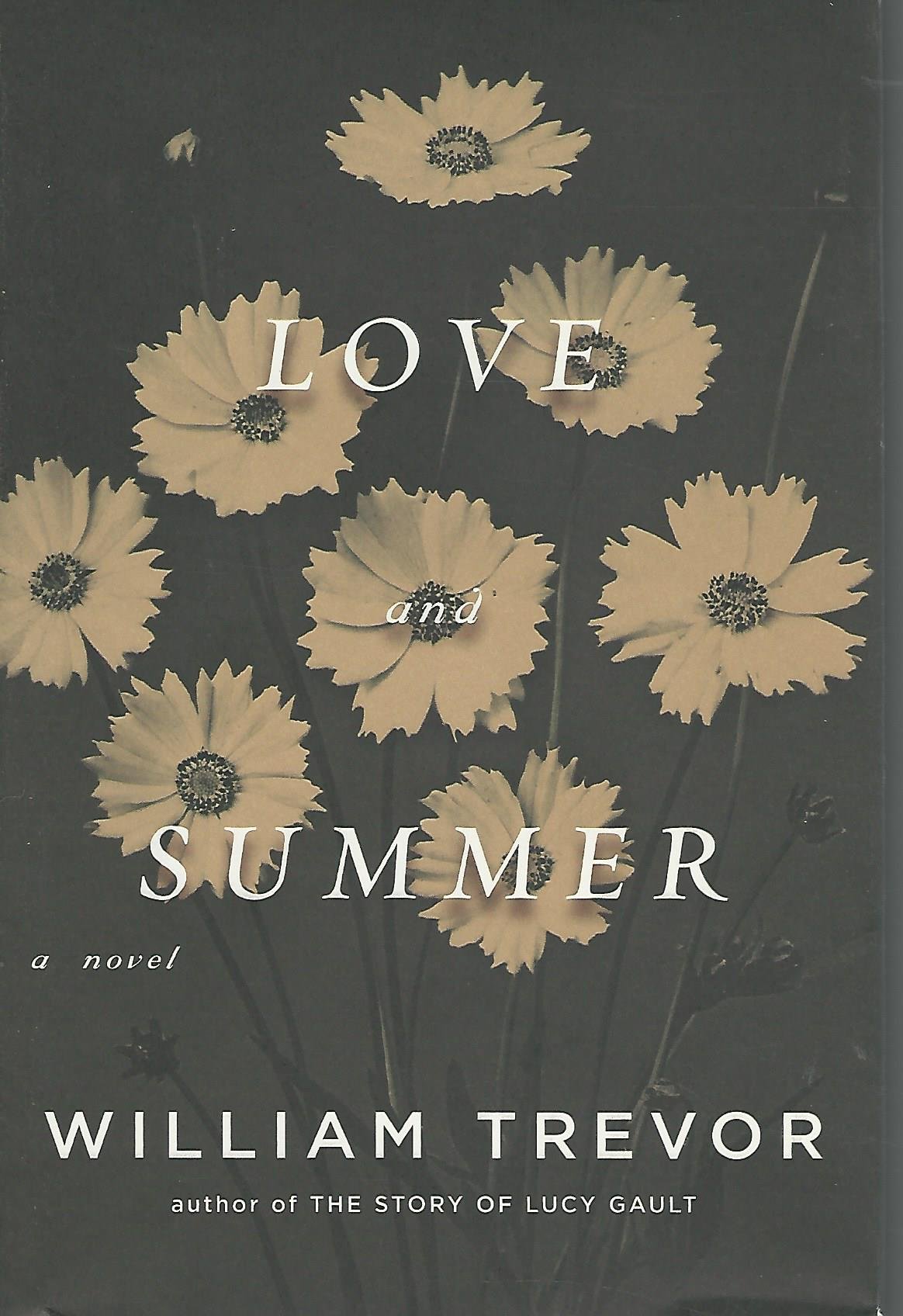



It?s summer and nothing much is happening in Rathmoye. So it doesn?t go unnoticed when a dark-haired stranger appears on his bicycle and begins photographing the mourners at Mrs. Connulty?s funeral. Florian Kilderry couldn?t know that the Connultys are said to own half the town: he has only come to Rathmoye to photograph the scorched remains of its burnt- out cinema. A few miles out in the country, Dillahan, a farmer and a decent man, has married again: Ellie is the young convent girl who came to work for him when he was widowed. Ellie leads a quiet, routine life, often alone while Dillahan runs the farm. Florian is planning to leave Ireland and start over. Ellie is settled in her new role as Dillahan?s wife. But Florian?s visit to Rathmoye introduces him to Ellie, and a dangerously reckless attachment begins. In a characteristically masterly way Trevor evokes the passions and frustrations felt by Ellie and Florian, and by the people of a small Irish town during one long summer. Trevor is a master storyteller, and Love and Summer exhibits all the hallmarks of his most luminous works: his stark and graceful prose; his profound insight into the human heart; and his hauntingly authentic characters, precisely sketched in just a few short lines. In Trevor's provincial Ireland, every person has a story—a secret hope or a heartache—and he teases them out and weaves them together subtly and seamlessly. Gentle, naïve Ellie is the highlight of this "spare and nuanced portrayal of fragile humans dwarfed by life's circumstances" ( Philadelphia Inquirer ), and while Trevor offers no easy answers or tidy endings, he provides a believable and satisfying denouement. Readers, along with the critic from the Boston Globe , will "find it hard to leave Rathmoye." William Trevor is the author of twenty-nine books, including Felicia’s Journey , which won the Whitbread Book of the Year Award and was made into a motion picture. In 1996 he was the recipient of the Lannan Award for Fiction. In 2001, he won the Irish Times Literature Prize for fiction. Two of his books were chosen by The New York Times as best books of the year, and his short stories appear regularly in the New Yorker . In 1997, he was named Honorary Commander of the British Empire. He lives in Devon, England. From The Washington Post's Book World/washingtonpost.com Reviewed by Elizabeth Strout A middle-aged woman whispers that "love was a madness" to the young and guileless Ellie Dillahan in William Trevor's new novel, "Love and Summer." She ought to know: The conveyor of this knowledge, Miss Connulty, had an earlier brush with love that cost her a great deal, the particularities of which are given to the reader with the delicacy and precision of a master storyteller. Miss Connulty's private woe is only one of the secret tales of loss that circulate through the Irish town of Rathmoye. Everyone, as Trevor knows so well, has a story. No character in this book goes unnoticed; no one is forgotten. For those readers who have loved the generosity and beauty of Trevor's work (he has written 27 books of fiction), "Love and Summer" will be one more entry into a world that is both heart-breaking and deeply fulfilling. The main story belongs to Ellie Dillahan. Parentless, raised in a convent, Ellie is sent to work for a widowed farmer who has lost both wife and child in an accident. By the time the story begins, Ellie is married to the kind-hearted farmer, and "she hadn't been aware that she didn't love her husband." If the two had been able to have children, it's easy to imagine that Ellie's attention would have been taken up with them. But this is not the case, and her days are spent in isolation as she does her chores around the farm and prepares the meals for her husband, who "was not by nature an inquisitive man." When Florian Kilderry bicycles into town taking random photographs of a funeral, Ellie catches sight of him, and as the summer progresses, she falls in love with him. With her husband busy tending to his sheep and his fields, Ellie bicycles to her meetings with Florian in a remote spot in the countryside. Trevor's understanding of the human heart is large, and he shows us what most of us realize is true: The appearance of paying attention can inflame deep feelings. "The more he asked her about her childhood at Cloonhill the more Ellie loved her interrogator." Florian is a young dilettante, whose own heart was captured long ago in an unrequited love for a cousin, but he enjoys the company of Ellie; she is a distraction. Trevor, also the author of "The Story of Lucy Gault" and "Death in Summer," moves around this story with breathtaking ease; he can change point of view quickly -- his narrative voice is that sure. We learn what it is to be the bitter and brittle Miss Connulty; we are allowed inside the mind of Orpen Wren, who has for years lived in his own dementia; we inhabit the vague worry that Dillahan experiences as he considers his wife's