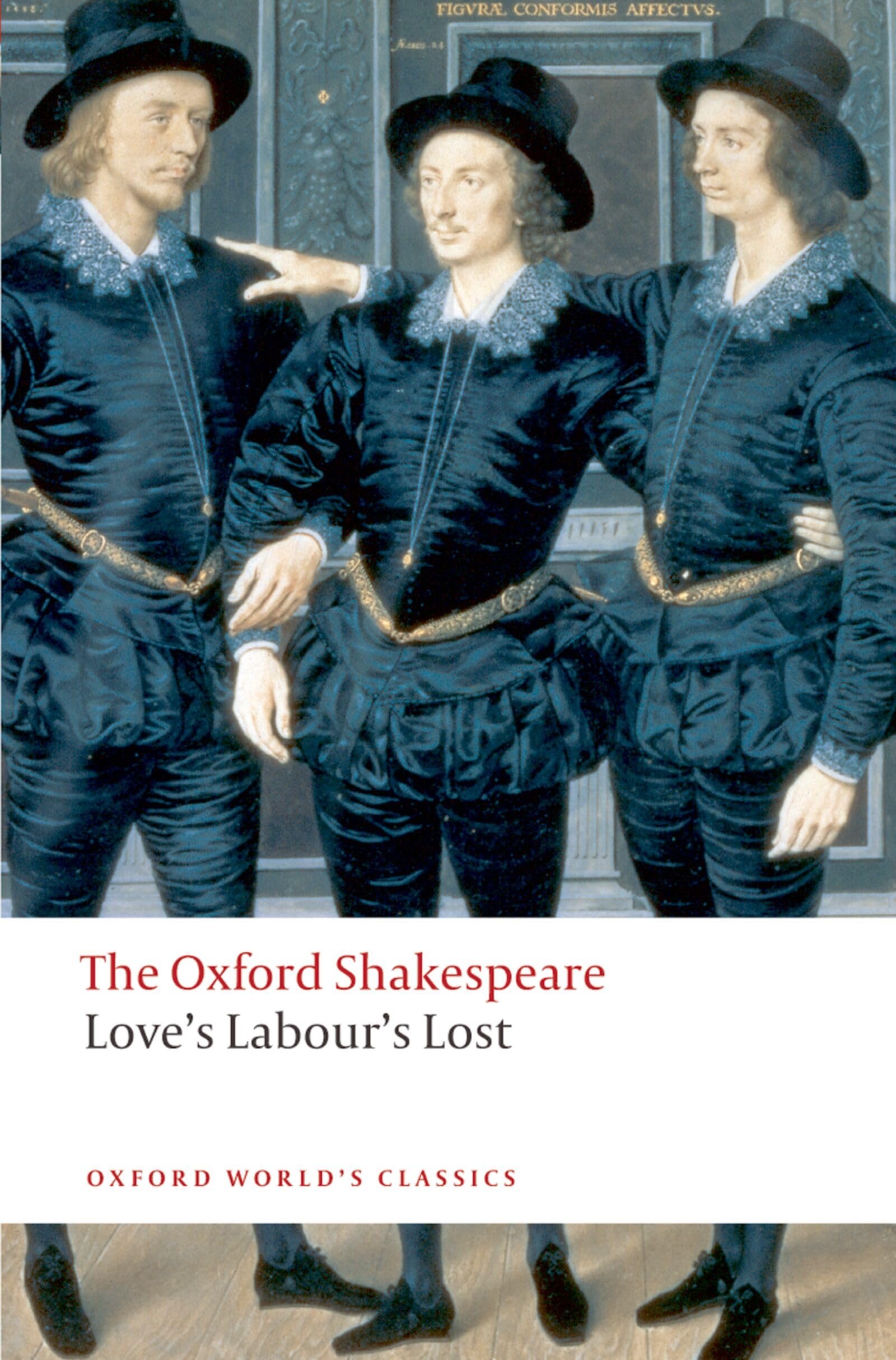
Love's Labour's Lost: The Oxford Shakespeare (Oxford World's Classics)
$10.95
by William Shakespeare



Love's Labour's Lost , now recognized as one of the most delightful and stageworthy of Shakespeare's comedies, came into its own both on the stage and in critical esteem only during the 1930s and 1940s--after nearly three hundred years of neglect by the theater and misuse by critics. In this new critical edition, Hibbard pays particular attention to this process of rehabilitation. Based on the quarto of 1598, and drawing on recent scholarly analysis, he proposes that the quarto goes back, probably by way of a "lost" quarto, to an authorial manuscript that represents the play in a state prior to "fair copy." He offers numerous original readings of difficult and disputed passages, and a helpful commentary to the play's scintillating language. About the Series: For over 100 years Oxford World's Classics has made available the broadest spectrum of literature from around the globe. Each affordable volume reflects Oxford's commitment to scholarship, providing the most accurate text plus a wealth of other valuable features, including expert introductions by leading authorities, voluminous notes to clarify the text, up-to-date bibliographies for further study, and much more. `Hibbard lucidly expounds the intricately patterned structure of his play ... and he dispatches the largely distracting question of its 'topicality' with heartening promptness.' English Studies, Volume 72, Number 6, December 1991`This Oxford text of Love's Labour's Lost is lucidly informative, scrupulous but concise,. and in general a model of restrained and level-headed editing.' Cedric Watts, University of Sussex, Review of English Studies, Vol. 43, 8/92'Stanley Wells' OUP Complete Works of Shakespeare is now eight years old and has spawned a new Oxford Shakespeare which appears now in splendidly affordable volumes in that nonpareil of libraries of good reading The World's Classics.' The Oxford Times The late George Hibbard was Emeritus Professor of English at the University of Waterloo, Ontario, Canada.