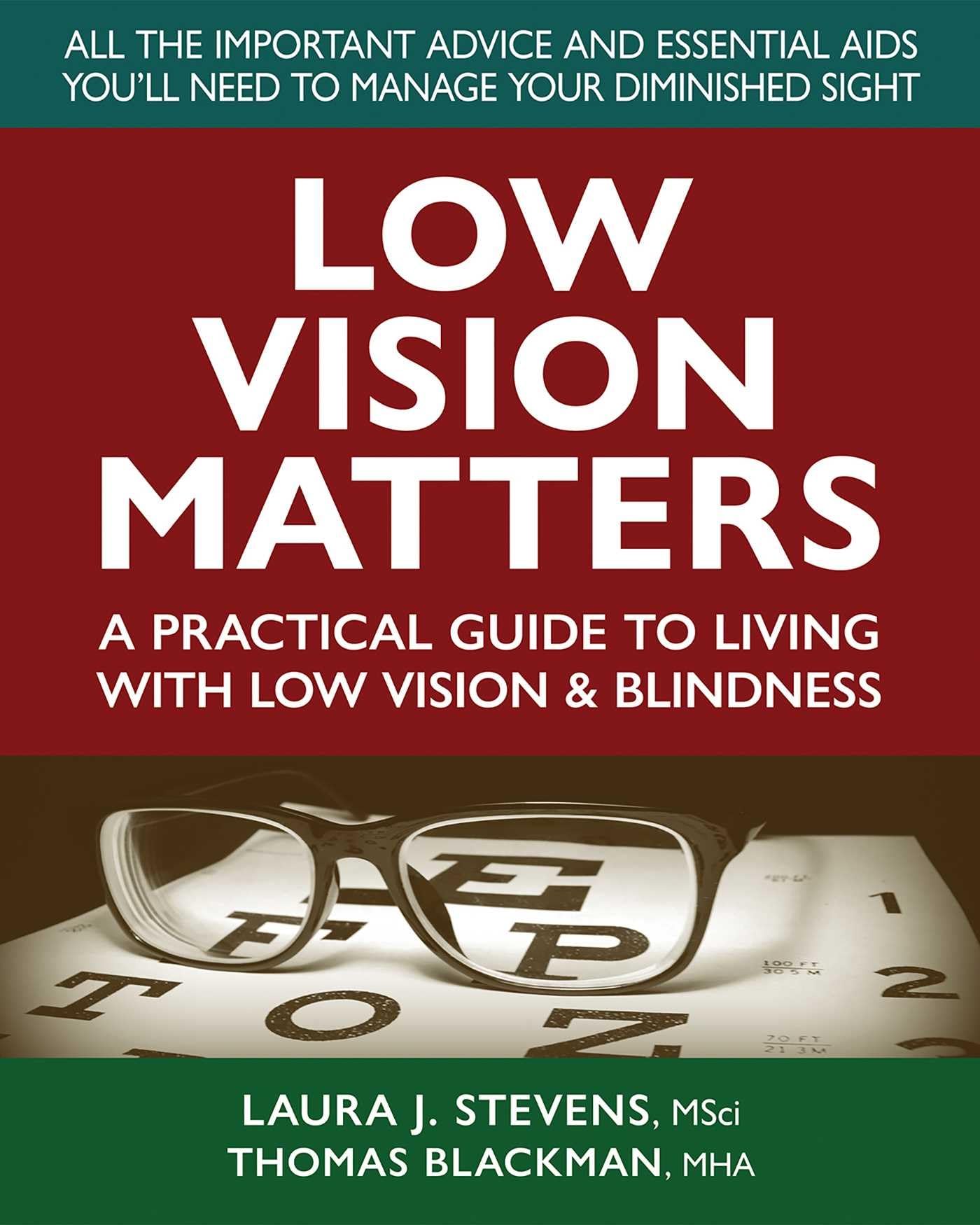
Low Vision Matters: A Practical Guide to Living With Low Vision & Blindness
$21.95
by Laura Stevens MSci



Accordingto the Centers for Disease Control and Prevention (CDC), over seven millionpeople in the US alone suffer from severe vision loss or blindness. In thepast, low vision was truly a life-altering condition. Those seemingly everydaytasks that were once so simple instead became difficult—whether one had towork, cook, read, drive, go out to shop, or even turn on a light switch, one’sworld had been completely turned upside down. Today, however, things havebegun to change. With the revolution of Artificial Intelligence (AI) alreadyunderway, many of the major barriers caused by diminished or fully lost visionhave been lessened or completely eliminated. In Low Vision Matters , authors Laura Stevens and Thomas Blackmanprovide a comprehensive guide to all the aids and equipment now available—alongwith important practical advice—to those who are vision-challenged. Thebook is divided into two parts. Part One focuses on the day-to-day activitiesthat low vision can affect—from safety in your home or traveling outside, tothe handling of finances or one’s home entertainment system. It discusses thelatest technologies that can enable a person with eyesight problems toturn on a light, start a dishwasher, or even answer a phone through the use oforal commands—and that’s just the tip of the iceberg. Part Two then provides abreakdown of the various kinds of helpful vision-aid products now available.Because the authors understand the costs involved in purchasing such equipment,they include the names of those organizations and associations in an extensiveResources section along with various other crucial contacts about which thosewith low vision and their loved ones and caretakers need to know. Timeshave changed. Low Vision Matters provides a wealth of information that can vastlyimprove the daily life of a person living with vision loss or blindness. "[A] practical, potentially life-saving guide . . . The authors also promote working since, after all, visiondoesn’t determine intelligence or skill level, and the 1990 Americans with Disabilities Actprovides protection. They also share an excellent list of resources, including the AmericanCouncil of the Blind Job Connection, the Free White Cane Program, and Guide Dogs for theBlind." — Booklist (ALA) -- Karen Springen ― Booklist (ALA) "According to the Centers for Disease Control and Prevention (CDC), over seven million people in the US alone suffer from severe vision loss or blindness, yet there are few, if any, books that are written specifically for these people, their families, or their caretakers—until now . . . In Low Vision Matters , authors Laura J. Stevens and Thomas Blackman provide a comprehensive guide to all the key aids and equipment now available—along with important practical advice—to those who are vision-challenged . . . [this is a] book that not only provides solutions to problems, but also talks about the many moments of frustration and anger that comes with the loss of sight . . . [includes] an extensive Resources section along with various other crucial contacts those with low vision and their loved ones and caretakers need to know. Times have changed. Low Vision Matters provides a wealth of information that can vastly improve the daily life of a person living with vision loss or blindness." ― Townsend Newsletter "Ideal for the non-specialist general reader seeking reliable information on dealing with low vision issues . . . exceptionally well written and thoroughly 'reader friendly' in organization and presentation . . . especially and unreservedly recommended for personal, professional, community, senior citizen center, and college/university library Vision Health/Medicine collections and supplemental curriculum studies lists." -- Willis Buhle ― Midwest Book Review ("Reviewer's Bookwatch") ThomasBlackman, MHA, received a Master's degree in Blind Rehabilitation fromWestern Michigan University. Thomas provided Orientation & Mobilityinstruction at Bosma Enterprises in Indianapolis for several years. Hethen served as Founder and Director of the Assistive Technology program atEaster Seals Crossroads beginning in 1988. In 1998, he formed EYE Can See,Inc. in Indianapolis, which continues to provide adaptive hardware and softwareproducts for blind and low vision customers in Indiana and Kentucky. Thomascurrently resides in Westfield, Indiana. LauraStevens, MSci, received her master’sdegree in nutrition science from the Department of Nutrition Science at PurdueUniversity in West Lafayette, Indiana. Since graduation, she had worked atPurdue as a researcher who investigated the relationship between diet and healthdisorders. As an author of nine successful books on diet, behavior, andallergies, Laura now deals with low vision herself. She lives with her amazingcats, Bentley and Seis, in Lafayette, Indiana.