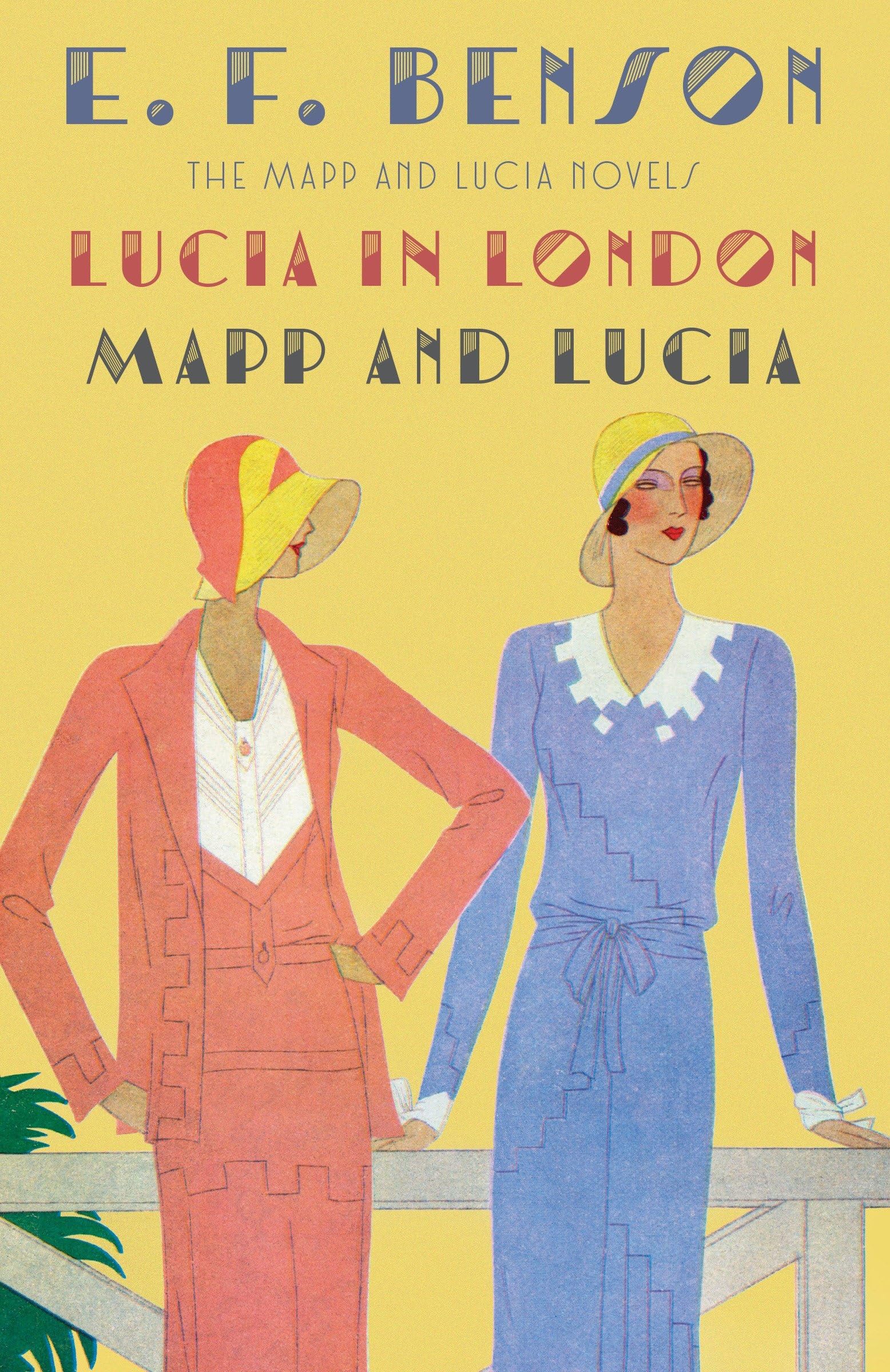
Lucia in London & Mapp and Lucia: The Mapp & Lucia Novels (Mapp & Lucia Series)
$16.95
by E. F. Benson



E. F. Benson’s beloved Mapp and Lucia novels are sparkling, classic comedies of manners set against the petty snobberies and competitive maneuverings of English village society in the 1920s and 1930s. The third and fourth novels in the series, Lucia in London (1927) and Mapp and Lucia (1931) continue the adventures of Benson’s famously irrepressible characters, and bring them into hilarious conflict. Both Mrs. Lucia Lucas and Miss Elizabeth Mapp are accustomed to complete social supremacy, and when one intrudes on the other’s territory, war ensues. Lucia sees herself as a benevolent—if ruthless—dictator, while Miss Mapp is driven by an insatiable desire for vengeance against the presumptuous interloper. Their skirmishes—played out on a battlefield composed of dinner parties, council meetings, and art exhibits—enliven the plots of Benson’s maliciously witty comedies. “Benson’s Lucia novels . . . are camp, sly, poisonous, piquant, stinging, clever, and as delightful as a glass of sweet sherry taken on a sun-dappled lawn.” — The Telegraph (UK) “Entirely delightful. . . . Superbly ridiculous. . . . Benson constructs a comedy that is as exquisite, in its way, as anything in English humorous literature.” —Auberon Waugh, The New York Times “These magic books . . . are as fresh as paint. The characters are real and therefore timeless.” —Nancy Mitford, The Times (London) “Benson’s cult novels are wicked, funny masterpieces—and thoroughly addictive. . . . Lucia, Georgie and Mapp are three of the very greatest characters in English fiction, and with them you can never go wrong.” —Edward Gorey, Vogue E. F. BENSON was born in 1867 at Wellington College in Berkshire, England, where his father (who later became Archbishop of Canterbury) was the headmaster. Benson studied archaeology at Kings College, Cambridge and at the British School of Archaeology in Athens, where he came to know Lord Alfred Douglas and Oscar Wilde. After visiting Henry James in the village of Rye, Benson eventually settled there until his death in 1940; Rye was the model for Tilling, the setting of his six popular Mapp and Lucia novels. Benson published more than one hundred books on various subjects, but remains best known for Mapp and Lucia. Chapter One Considering that Philip Lucas’s aunt who died early in April was no less than eighty-three years old, and had spent the last seven of them bedridden in a private lunatic asylum, it had been generally and perhaps reasonably hoped among his friends and those of his wife that the bereavement would not be regarded by either of them as an intolerable tragedy. Mrs. Quantock, in fact, who, like everybody else at Riseholme, had sent a neat little note of condolence to Mrs. Lucas, had, without using the actual words “happy release,” certainly implied it or its close equivalent. She was hoping that there would be a reply to it, for though she had said in her note that her dear Lucia mustn’t dream of answering it, that was a mere figure of speech, and she had instructed her parlour maid who took it across to The Hurst immediately after lunch to say that she didn’t know if there was an answer, and would wait to see, for Mrs. Lucas might perhaps give a little hint ever so vaguely about what the expectations were concerning which everybody was dying to get information . . . While she waited for this, Daisy Quantock was busy, like everybody else in the village on this beautiful afternoon of spring, with her garden, hacking about with a small but destructive fork in her flower-beds. She was a gardener of the ruthless type, and went for any small green thing that incautiously showed a timid spike above the earth, suspecting it of being a weed. She had had a slight difference with the professional gardener who had hitherto worked for her on three afternoons during the week, and had told him that his services were no longer required. She meant to do her gardening herself this year, and was confident that a profusion of beautiful flowers and a plethora of delicious vegetables would be the result. At the end of her garden path was a barrow of rich manure, which she proposed, when she had finished the slaughter of the innocents, to dig into the depopulated beds. On the other side of her paling her neighbour Georgie Pillson was rolling his strip of lawn, on which during the summer he often played croquet on a small scale. Occasionally they shouted remarks to each other, but as they got more and more out of breath with their exertions the remarks got fewer. Mrs. Quantock’s last question had been “What do you do with slugs, Georgie?” and Georgie had panted out, “Pretend you don’t see them.” Mrs. Quantock had lately grown rather stout owing to a diet of sour milk, which without plenty of sugar was not palatable; but sour milk and pyramids of raw vegetables had quite stopped all the symptoms of consumption which the study of a small but lurid medical manual had induced. Today she had eaten a large but no