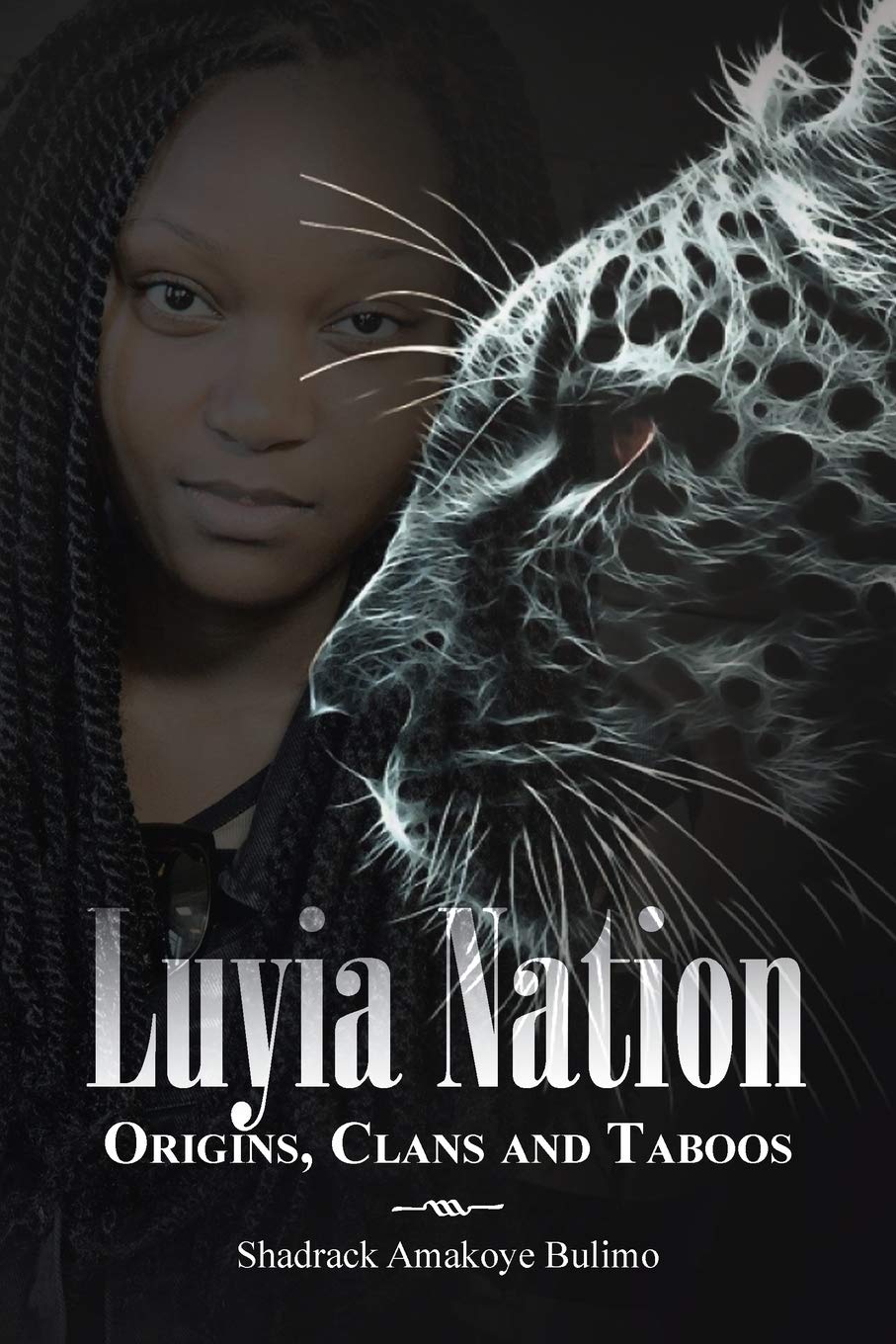



Unbeknownst to most, the Luyia Nation is a congeries of Bantu and assimilated Nilotic clans principally the Luo, Kalenjin, and Maasai. Created seventy years ago, the Luyia tribe is still evolving in a slow process that seeks to harmonize the historico-cultural institutions that define the eighteen subnations in Kenya alone. Available records indicate that geophysical spread of Luyia-speaking people extends beyond the Kenyan frontier into Uganda and Tanzania with some Luyia clans having extant brethren in Rwanda, Congo, Zambia, and Cameroon. The 862 Luyia clans in Kenya are amorphous units united only by common cultural and linguistic bonds. The political union between these clans is a pesky issue that has eluded the community since formation of the superethnic polity. Although postindependence scholars dismissed oral accounts of Egyptian ancestry, new anthropological evidence links the Bantu, including those in West Africa, to ancient Misri (Egypt). A major historical and cultural change in Buluyia occurred a little more than a century ago when natives first made contact with the Western world. The meeting in 1883 by a Scottish explorer, Joseph Thomson, with Nabongo Mumia, the Wanga king, laid the foundation for British imperialism in this part of Africa. Luyia Nation Origins, Clans and Taboos By Shadrack Amakoye Bulimo Trafford Publishing Copyright © 2013 Shadrack Amakoye Bulimo All rights reserved. ISBN: 978-1-4669-7837-9 Contents List of Tables.............................................................xiList of Maps...............................................................xiiiForeword...................................................................xvPreface....................................................................xviiAcknowledgment.............................................................xxiiiAbbreviations..............................................................xxvChapter 1: Geography.......................................................1Chapter 2: Concept of Time.................................................32Chapter 3: Luyia Origins...................................................67Chapter 4: Family, Clan, and Kinship.......................................150Chapter 5: Luyia Subnations and Clans......................................193Appendix 1: Kakamega County Administrative Units...........................391Appendix 2: Vihiga County Administrative Units.............................395Appendix 3: Bungoma County Administrative Units............................397Appendix 4: Busia County Administrative Units..............................401Bibliography...............................................................403Index......................................................................407 CHAPTER 1 Geography Background The Luyia (Luhya) populate western Kenya and parts of RiftValley, especially the adjoining Trans Nzoia District. According to2009 National Population Census, the Luyia number 5,338,666 withan estimated one million living outside native territory. They arethe second largest tribe in Kenya after the Kikuyu constituting 14percent of Kenya's total population of 38,610,097. Administratively,Luyia territory is now divided into five counties—Kakamega,Vihiga, Busia, Bungoma, and Trans Nzoia, of which the first threewere formerly in Western Province and the latter in Rift Valley.Out of the thirty-two districts in Western (including Trans Nzoia),two each are occupied by Nilotic tribes—Iteso (Wamia) and Sabaot(Sebei). In early colonial era, the Luyia and Luo were clusteredinto one administrative polity known as Kavirondo. In 1920, whenKenya became a British Protectorate and Colony, Kavirondo, untilthen part of eastern province of Uganda Protectorate was splitinto North and South Kavirondo. South Kavirondo became Luoterritory while North Kavirondo was Luyia reserve and pocketsof smaller Nilotic tribes primarily Iteso (Teso), Sabaot, and Terik.In 1948, North Kavirondo was renamed North Nyanza after theword kavirondo (see p.120) was deemed pejorative by indigenes.In 1953, Elgon Nyanza was carved out of North Nyanza, and atindependence in 1963, North Nyanza African District was renamedKakamega while Elgon Nyanza was split into Bungoma and Busiato form the three districts of Western Province. (i) Physiography Luyia territory borders Ugandan districts of Busia, Tororo,Manafwa, Sironko, and Mbale to the west and northwest. Busia isa typical example of the idiocy of the so-called Scramble for Africaunder which European colonial powers sliced the continent intospheres of influence at the Berlin Conference of 1885. The borderof Uganda and Kenya demarcates Busia almost into half-splittingfamilies (see p.289) into two different nationalities. The peopleof Samia Bugwe in Uganda belong to the same ethno-linguisticlineage as the Samia of Kenya while Abanyala have large brethrenin Uganda's Kayunga District and Sigulu Island in Lake Victori