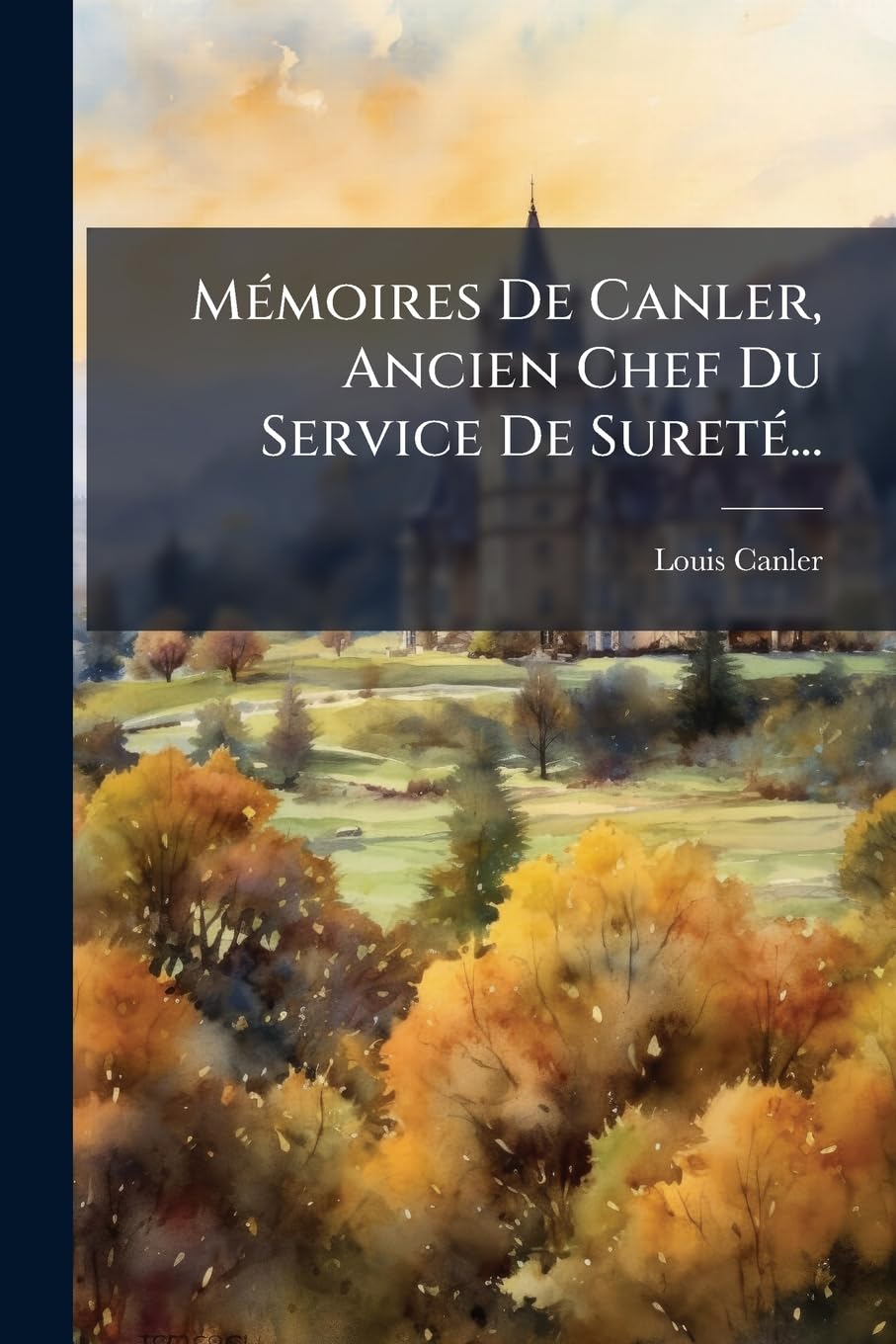
Mémoires De Canler, Ancien Chef Du Service De Sureté... (French Edition)
$26.95
by Louis Canler



Explore 19th-century France through the eyes of Louis Canler, former head of the Parisian Sûreté, in his captivating memoirs, "Mémoires De Canler, Ancien Chef Du Service De Sureté..." This historical account offers a rare glimpse into the inner workings of the French police force during a turbulent period, providing detailed narratives of investigations, criminal cases, and the social environment of the time. Canler's memoirs are not just a historical record; they are a vibrant portrayal of the era's most notorious criminals and the dedicated officers who sought to bring them to justice. With meticulous detail and insightful analysis, Canler recounts his experiences, shedding light on the challenges and triumphs of maintaining law and order in a rapidly changing society. This book offers invaluable insights into French history, true crime, and the evolution of law enforcement, making it an essential read for historians, true crime enthusiasts, and anyone interested in the rich tapestry of 19th-century Parisian life. This work has been selected by scholars as being culturally important, and is part of the knowledge base of civilization as we know it. This work was reproduced from the original artifact, and remains as true to the original work as possible. Therefore, you will see the original copyright references, library stamps (as most of these works have been housed in our most important libraries around the world), and other notations in the work. This work is in the public domain in the United States of America, and possibly other nations. Within the United States, you may freely copy and distribute this work, as no entity (individual or corporate) has a copyright on the body of the work. As a reproduction of a historical artifact, this work may contain missing or blurred pages, poor pictures, errant marks, etc. Scholars believe, and we concur, that this work is important enough to be preserved, reproduced, and made generally available to the public. We appreciate your support of the preservation process, and thank you for being an important part of keeping this knowledge alive and relevant.