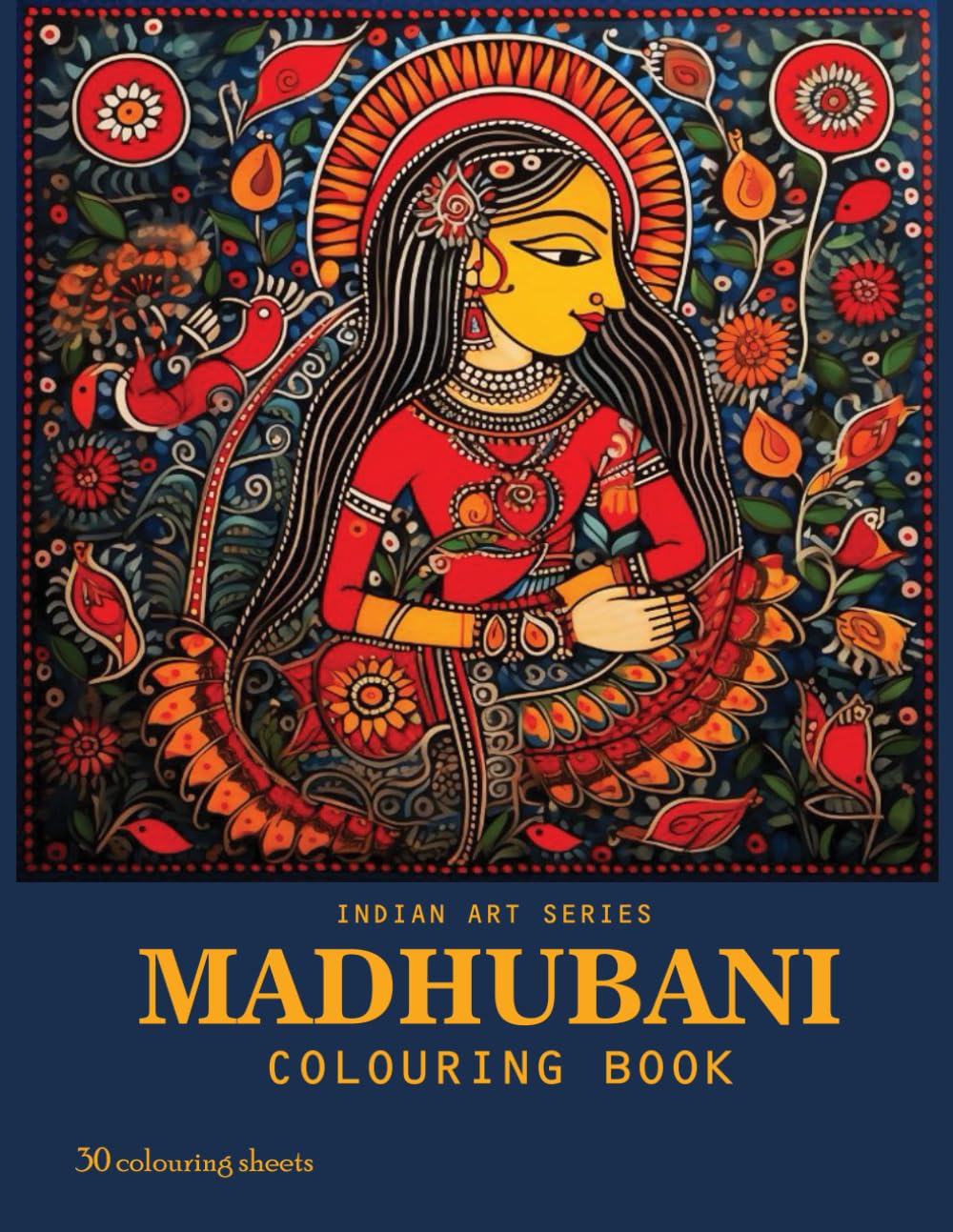



Madhubani art, also known as Mithila painting, is a traditional art form originating from the Mithila region of Bihar, India. It is characterized by its intricate designs, vibrant colors, and themes inspired by nature, mythology, and daily life. Here is an overview of Madhubani art: Historical Roots: Madhubani art has a rich historical legacy, dating back to ancient times. It finds mention in the Ramayana, where Sita, the protagonist, is said to have decorated her palace walls with beautiful paintings during her exile in the forests of Mithila. - Technique and Materials: Traditionally, Madhubani art is done by women from the region using fingers, twigs, brushes, and natural dyes and pigments. The colors are often made from natural ingredients such as turmeric, indigo, sandalwood, and flowers. The paintings are usually done on walls, floors, cloth, and handmade paper. - Styles and Themes: Madhubani art is divided into five distinct styles based on the regions they originate from: Bharni, Kachni, Tantrik, Godna, and Kohbar. Each style has its unique characteristics, motifs, and color schemes. Common themes include scenes from Hindu mythology, folk tales, flora and fauna, celestial bodies, and rituals like weddings. - Symbolism and Significance: The motifs and symbols used in Madhubani art are deeply rooted in local culture and beliefs. For example, fish symbolize fertility and prosperity, peacocks represent love and romance, lotus flowers symbolize purity and divinity, and elephants signify wisdom and good fortune. - Evolution and Recognition: While Madhubani art was traditionally confined to domestic spaces and rituals, it gained international recognition in the mid-20th century when Sita Devi and other artists began showcasing their work beyond their villages. Today, Madhubani art is celebrated worldwide and has been adapted into various forms such as paintings, murals, textiles, and even on commercial products. - Social and Economic Impact: The popularity of Madhubani art has not only preserved a traditional art form but has also empowered women economically. Many women from rural areas have found livelihoods as skilled artists, contributing to their families' income and gaining recognition for their talent globally. - Contemporary Trends: While traditional Madhubani art continues to thrive, contemporary artists are also experimenting with new techniques, styles, and themes. They often blend traditional motifs with modern elements, catering to diverse audiences while keeping the essence of this ancient art form intact. - Preservation and Challenges: Despite its growing popularity, Madhubani art faces challenges such as mass production using modern techniques, which can dilute its authenticity. Efforts are being made by organizations, artists, and the government to preserve and promote authentic Madhubani art while ensuring fair compensation and recognition for the artists. In essence, Madhubani art represents not just a visual delight but also a cultural treasure that bridges the past with the present, showcasing the timeless beauty and creativity of the Mithila region's artistic heritage.