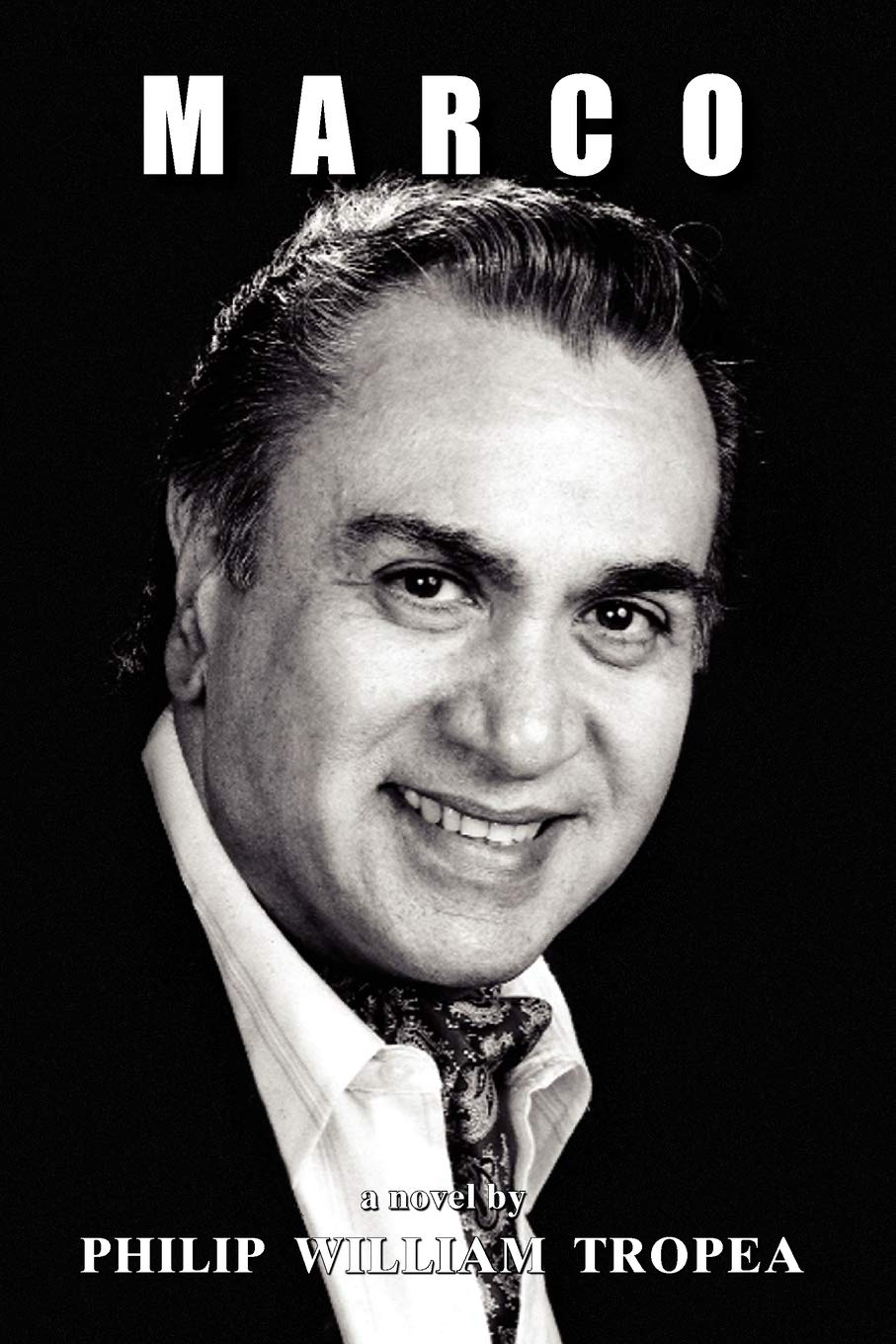



Tenor Marco Santoro, a handsome, international superstar adored by fans, especially women, is suffering from unbearable headaches and stress which leads to despair. After extensive medical tests do not diagnose any pathological disease, his doctor prescribes psychiatric evaluation and rest in an asylum, for Marco's apparent exhaustion from his 'non-stop, hyper-competitive' career. Instead Marco secretly escapes to France to consult with a friend, Dr. Dhenin, who with Dr. Casa from Rome diagnoses a rarely-detected illness. An extremely dangerous operation leaves Marco deaf, and contorted with paralysis on one side of his face, making his speech unintelligible. Marco settles in Rome for post-op care with Dr. Casa under the assumed name of 'Salvatore Parisi'. 'Salvatore' encounters conductor Giovanni Rocco, a genius shunned by the musical world because he is blind. How long can 'Salvatore' maintain his anonymity and disability secret from his family and fans, as the media world-wide burns with vicious gossip as to the 'mysterious disappearance and/or death' of the great tenor? x Read review by Elizabeth Haran, an international best-seller of ten books, under 'Reviews' 'Marco' is a truly inspiring story, giving insight into the amazing world of opera and the gifted, complex characters that inhabit such a world. It's also a courageous story of Philip's struggle to regain his wonderful voice after a life and death operation. I know virtually nothing about what goes on behind an opera curtain, but I was drawn into the story, fascinated by the technicalities involved in singing at the highest level. I was genuinely moved by the awe inspiring courage of 'Marco'. I thoroughly recommend this book. Elizabeth Haran, author of 10 bestsellers. elizabethharan.com Giovanna Parisi (my mother) was born in Boston and attended the Boston Conservatory of Music. She was fluent in four languages. After she married Salvatore Tropea, they moved into my grandparents home at 1029 Avenue X in Brooklyn, New York. Giovanna was chosen to sing the leading role of Leonora in Verdi s La Forza Del Destino (The Force of Destiny) for the New Jersey Opera Company. During the rehearsals in a brutal winter, she was stricken with facial paralysis (Bell s palsy) and shortly after became pregnant with me. Her doctor warned that she must stay in bed for the entire nine months or she would suffer another miscarriage like her first pregnancy. Several of her seven sisters especially Jessie, Elvira, and Carmela did everything to help their sister during these nine months. When I was born, my mother s facial paralysis decreased by 90 percent. Not one to quit, my mother resumed singing and thrilled parishioners as the soloist of Our Lady of Grace Church on Ocean Parkway. She also began teaching piano and voice in our home. I grew up listening to my mother s beautiful voice in church and during her students lessons. She never encouraged me to sing because she didn t want me to suffer the same fate as hers, but I fell in love with singing. At age eighteen I secretly studied with her former teacher. My father had a heart attack at age forty-nine and suffered for six years until he passed away. My mother passed away at age fifty-one, and my wife and I took my two younger brothers and sister into our home with our four children Philip, Dianne, Joanne, and Charisse. I sang in local nightclubs and on WHBI-FM radio s Summer Showcase in Nutley, New Jersey, at age twenty-two. By popular demand of radio listeners calling in, I was asked to star in a series of broadcasts, sponsored by Hormel Foods. A schoolteacher, Sam Pomerantz, became my manager and arranged an audition with Mitch Miller for his popular TV show. Mitch wouldn t hire me. He thought that I had great potential as a soloist and would become lost in a chorus. His TV director, Jim Stanley commented, You have the timbre of Lanza with the ability to be better! He referred me to a very popular singer, Guy Mitchell, who asked me to sing in his nightclub act at the I worked full-time to pay the mortgage and my growing and extended family s needs in addition to my vocal and operatic repertoire lessons. I sang throughout New York City, Long Island, and New Jersey. In 1970, I developed an irritation on my vocal cords. Dr. Nigro, a leading NYC throat doctor, warned me that I must not utter a single word, no matter how soft. In addition, he told me not to hum or whistle for at least six months or I would ruin my vocal cords and destroy my voice forever. I tried desperately not to stress my throat and voice when dealing with the children or anyone else. I walked around all day with a pen and a pad at home, work, wherever I went, and wrote everything rather than risk one spoken word. After six months, the Rock of Gibraltar was gone from my vocal cords, but my throat felt inflamed and hoarse. It took me a year to