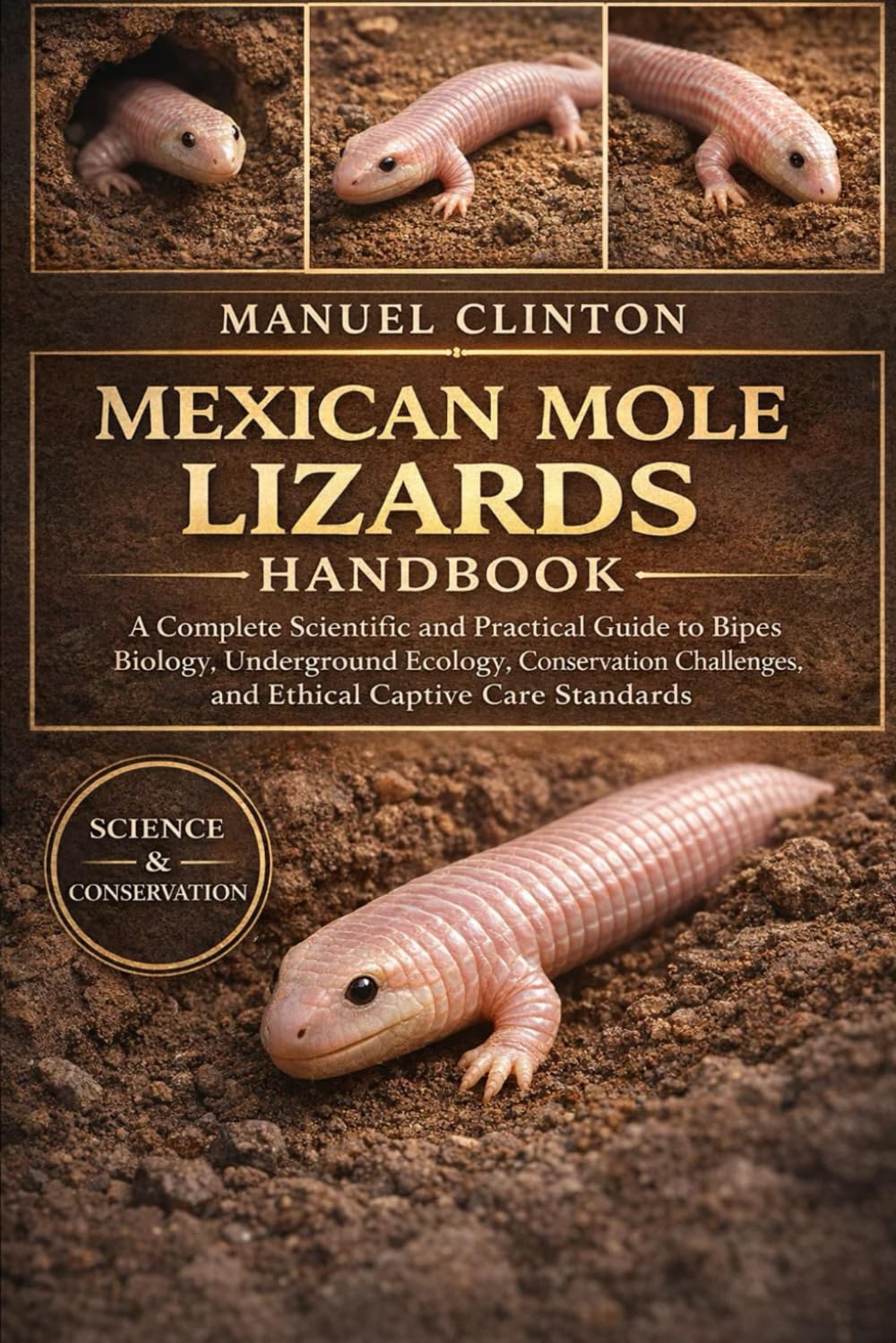
MEXICAN MOLE LIZARDS HANDBOOK: A Complete Scientific and Practical Guide to Bipes Biology, Underground Ecology, Conservation Challenges, and Ethical
$12.99
by MANUE CLINTON



Mexican mole lizards (Bipes) are among the most unusual reptiles on Earth—mysterious, rarely seen, and perfectly adapted for a life beneath the soil. With their worm-like bodies and powerful shovel-shaped forelimbs, these remarkable burrowing lizards represent one of nature’s most specialized evolutionary designs. Yet despite their scientific importance and growing public fascination, Mexican mole lizards remain widely misunderstood, poorly documented, and often overlooked in conservation discussions. Mexican Mole Lizards Handbook is a comprehensive, professional, and educational guide created for wildlife enthusiasts, reptile learners, conservation-minded readers, and anyone curious about the hidden biodiversity living under our feet. Written in a clear, structured, and authoritative style, this handbook explores the biology, behavior, habitat needs, and ecological significance of Bipes species while also addressing the realistic limitations of captivity and the ethical responsibilities of human interaction. Inside this book, you will discover: What Mexican mole lizards are, how they differ from true lizards, and why they are considered evolutionary wonders - Taxonomy, ancient origins, and how limb loss and underground adaptation shaped their unique body structure - Where they live in Mexico, including soil types, microhabitats, and seasonal patterns influencing their activity - Anatomy and physical adaptations for burrowing, including skull reinforcement, forelimb digging mechanics, and sensory specialization - Natural feeding ecology, prey selection, underground hunting tactics, and seasonal diet variation - Reproduction and hatchling development, including breeding seasons, egg-laying behavior, incubation conditions, and juvenile growth stages - Natural predators, environmental hazards, and survival strategies used to avoid danger underground - Conservation pressures such as habitat destruction, agriculture impacts, pesticide risk, climate change, and fragmentation - Captive care reality, including legality, welfare concerns, stress sensitivity, and why keeping them as pets is often harmful - Professional enclosure design principles for essential care situations, focusing on soil depth, moisture gradients, safe ventilation, and temperature management - Nutritional planning, gut-loading strategies, supplementation guidelines, hydration support, and safe feeder insect variety - Veterinary and health care guidance, including parasite control, dehydration prevention, impaction risks, skin injury management, and urgent warning signs - Advanced research technologies including genetics, environmental DNA methods, habitat modeling, monitoring tools, and citizen science involvement - Practical steps readers can take to protect mole lizards and support native ecosystems through conservation action and responsible education More than a species guide, this handbook is an invitation into an underground world that most people never witness—an ecosystem filled with remarkable adaptations, hidden life cycles, and vital ecological interactions. It also delivers a strong message of ethical wildlife stewardship, encouraging readers to value mole lizards not as exotic collectibles but as important native animals worthy of protection. If you are looking for a detailed and modern reference that combines natural history, scientific insight, conservation awareness, and responsible care standards, Mexican Mole Lizards Handbook provides an authoritative foundation for understanding these rare reptiles and supporting their future in the wild.