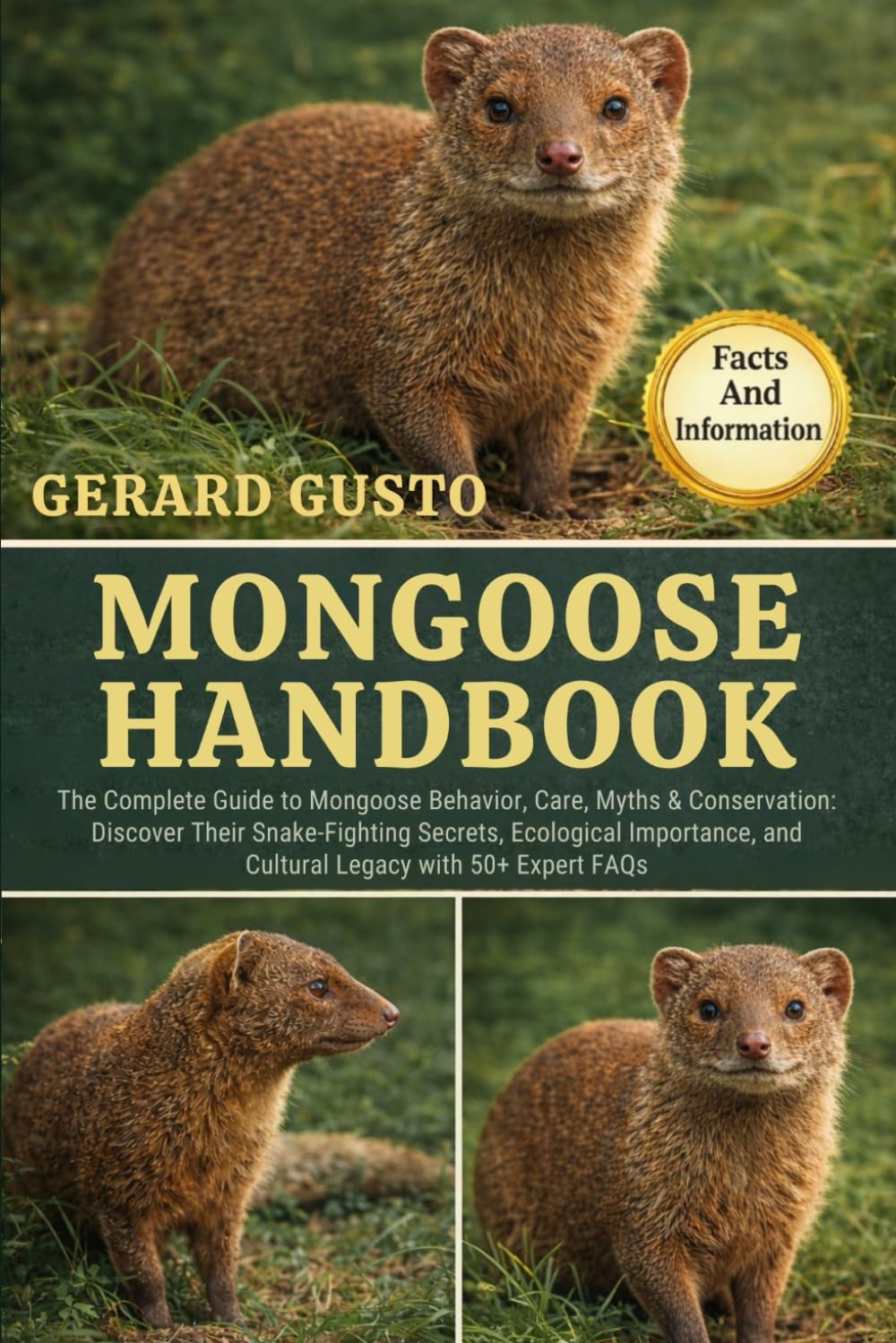
MONGOOSE HANDBOOK: The Complete Guide to Mongoose Behavior, Care, Myths & Conservation: Discover Their Snake-Fighting Secrets, Ecological Importance,
$16.89
by GERARD GUSTO



Introduction to the Mongoose Understanding the species, their global reputation, and why they are fascinating creatures The mongoose is one of the most intriguing small mammals in the animal kingdom, admired across cultures and continents for its courage, adaptability, and unique relationship with its environment. Belonging to the family Herpestidae, mongooses are carnivorous mammals that have captured human imagination for centuries, particularly because of their legendary battles with venomous snakes. These encounters, often dramatized in folklore and literature, have elevated the mongoose from a simple animal to a symbol of bravery, agility, and quick-witted survival. Their reputation is not merely built on myth; it stems from observable natural behavior, where their intelligence, lightning speed, and highly developed reflexes have made them formidable hunters despite their small size. Mongooses are typically small to medium-sized creatures with sleek, elongated bodies, short legs, and a sharp snout, traits that enable them to navigate through burrows, undergrowth, and rocky terrains with remarkable ease. Their keen sense of smell and acute vision make them efficient hunters and vigilant survivors, constantly alert to the dangers of predators and the opportunities of prey. For many communities across Asia and Africa, the mongoose is not just another animal but a cultural figure—embodying courage, intelligence, and resilience. These qualities explain why mongooses are so fascinating, and why they occupy a unique space at the intersection of natural history, folklore, and human admiration. Global Reputation of the Mongoose The reputation of the mongoose extends far beyond its biological significance; it has become a creature of legend. In India, for example, mongooses are revered for their snake-killing abilities, often depicted as fearless protectors against venomous threats. Stories of mongooses defending villages, farmers, and even households from dangerous snakes have contributed to their symbolic value. In literature, Rudyard Kipling’s famous short story Rikki-Tikki-Tavi immortalized the bravery of the mongoose, presenting it as a courageous little animal willing to risk its life for loyalty and protection. These cultural portrayals have cemented its status as more than just a small predator—it is a hero figure in the imagination of many. Beyond India, African traditions also revere mongooses, with certain tribes attributing spiritual significance to their presence. They are often seen as symbols of protection, vigilance, and cleverness. In ancient Egyptian culture, mongooses were linked to solar deities and were sometimes depicted in art as guardians of sacred spaces. In modern society, their reputation continues in documentaries, films, and nature reserves, where tourists and researchers alike marvel at their cunning behavior and their ecological importance. Why Mongooses Are Fascinating Creatures Mongooses fascinate people for multiple reasons, blending their biological uniqueness with cultural symbolism: ● Snake-Fighting Ability: Their legendary battles with venomous snakes stand at the heart of their reputation. Although not entirely immune to snake venom, mongooses possess a unique combination of physical agility, evolutionary resistance, and combat strategy that gives them an edge in such encounters. ● Social Complexity: Certain species, such as the banded mongoose, live in large cooperative groups where individuals share responsibilities of hunting, babysitting, and protecting the colony. This social behavior highlights their intelligence and adaptability. ● Adaptability: Mongooses thrive in a wide range of habitats—savannas, forests, grasslands, and even human-dominated landscapes—demonstrating remarkable ecological flexibility.